
Crafting the Future of Stop-Motion: Laika’s High-Stakes Gamble with ‘Wildwood’
Main Facts
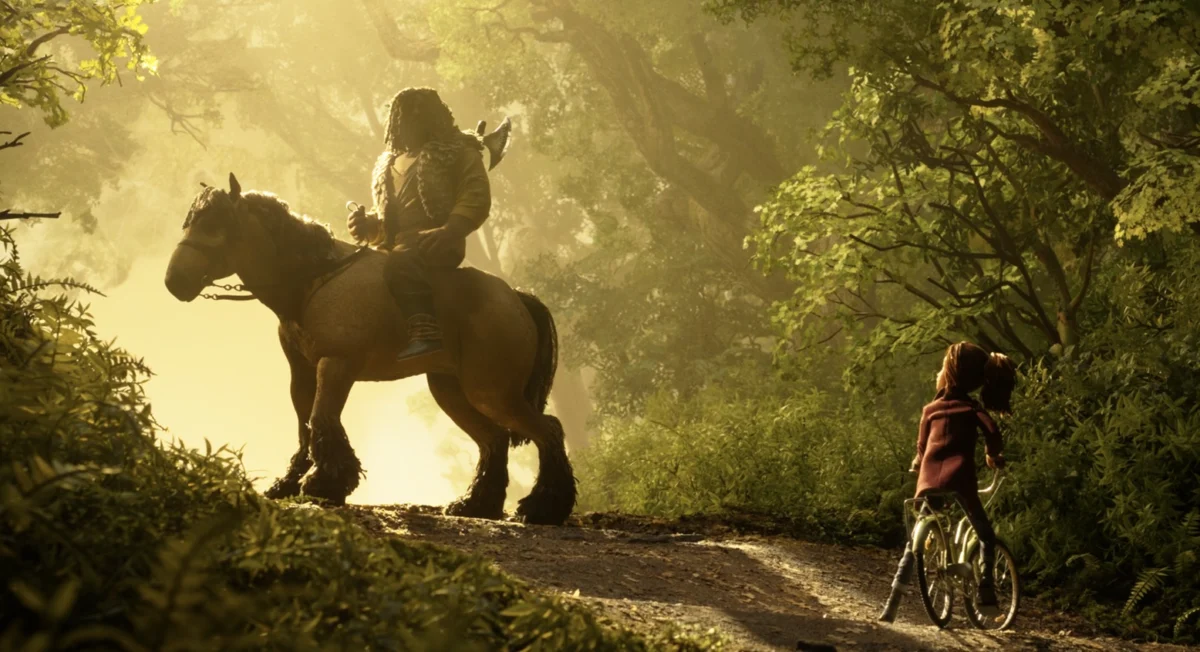
The theatrical release of Wildwood was never merely about weekend box office tallies or short-term commercial viability; it represented a critical referendum on the future of stop-motion animation and the survival of one of the industry’s most fiercely independent studios. Directed by Travis Knight and produced in Portland, Oregon, Wildwood is Laika’s sixth animated feature, arriving after a punishing seven-year hiatus since their last film.
Carrying a reported production budget in the neighborhood of $100 million, the film grossed $12.2 million domestically during its opening weekend, securing the No. 3 spot at the box office behind DC Studios’ Clayface and You Can See Everything. An additional $2.9 million rolled in from a handful of international territories, bringing its global bow to roughly $15.1 million. While financial analysts quickly pointed to these numbers as potentially indicating an uphill battle for profitability against such a steep budget, insiders and box-office historians argue that evaluating a Laika picture purely through standard opening-weekend metrics misses the point.
For Laika, Wildwood is a testament to uncompromising, hand-crafted artistry. It is an expensive, meticulously detailed passion project whose financial model relies on long-term legs, cultural staying power, and a dedicated fanbase—much like the studio’s breakout debut, Coraline, which similarly turned a modest initial theatrical footprint into an enduring cinematic legacy.
Chronology of a Long-Awaited Release
The journey to Wildwood’s premiere has been years in the making, testing the patience of stop-motion enthusiasts worldwide.
- Pre-Production and Development: Long before cameras rolled on the physical puppets, anticipation for an adaptation of Colin Meloy’s middle-grade fantasy novel (illustrated by Carson Ellis) circulated through the animation community. Discussions and early announcements regarding Laika’s adaptation stretched back years, cementing Wildwood as Knight’s most ambitious directorial undertaking to date.
- The Seven-Year Gap: Following the release of 2019’s Missing Link—which struggled commercially with a meager $5.9 million domestic opening—Laika went quiet on the feature front. During this period, the studio focused on expanding its technological capabilities, developing future slates (including branching into live-action), and navigating the post-pandemic theatrical landscape.
- The Fall 2026 Rollout: Momentum escalated in the months leading up to October 2026, driven by aggressive and targeted marketing campaigns. Partnering with Fathom Entertainment for one of its first truly wide releases of an original film, Laika sought to capitalize on the triumphant, renewed interest generated by previous theatrical re-releases of Coraline.
- Opening Weekend: Wildwood officially debuted in 2,940 domestic theaters, backed by robust per-screen averages in Premium Large Formats (PLFs) and Dolby Cinemas, alongside sold-out homecoming crowds in its setting and inspiration point, Portland, Oregon.
Supporting Data and Box Office Trajectory
While a $12.2 million domestic opening against a $100 million budget has sparked predictable industry chatter about financial headwinds, a deeper look at comparative data reveals a more nuanced narrative.

- Historical Comps: Wildwood’s opening weekend significantly outpaces Laika’s 2019 feature, Missing Link, which finished its domestic run at just $17 million. Instead, Wildwood tracks much closer to 2016’s Kubo and the Two Strings, which opened to $12.6 million on its way to a $48 million domestic and $76 million worldwide finish. It also compares favorably to DreamWorks’ Forgotten Island, which opened earlier this year to $13 million and has grossed $67.9 million globally.
- The Power of Multiples: Laika’s historical strength lies in its remarkable theatrical multipliers. Past releases demonstrate exceptional staying power: Coraline achieved a 4.5x multiple, ParaNorman a 4.1x multiple, and Kubo and the Two Strings a 3.8x multiple. If Wildwood achieves a conservative 3.8x multiple matching Kubo, its domestic total will land comfortably around $46.3 million.
- Critical and Audience Reception: Early tracking data suggests the film could outperform those conservative multiples. Wildwood earned a coveted A CinemaScore from audiences, near-universal acclaim on Rotten Tomatoes (holding a staggering 99 percent rating at the time of writing), and glowing "recommend" grades from PostTrak. Furthermore, premium formats saw packed houses, signaling strong demand for the film’s visual fidelity.
Official Responses and Industry Reactions
Studio executives are leaning into the overwhelmingly positive qualitative data to secure expanded theatrical footprints for the coming weeks. Dave Burke, Laika’s Chief Marketing Officer and an executive producer on Wildwood, spoke candidly about the studio’s strategic position and reception.
"I think we needed to prove ourselves as the new kid on the block, and I think the data points to the fact that there’s a really compelling business case for exhibition to get on even more robustly and support the film in the kind of coming weeks," Burke told IndieWire.
Rather than shying away from the film’s darker, more intense elements—which include a PG-13 rating, a complex narrative adapted from The Decemberists frontman Colin Meloy’s novel, and a sprawling, third-act battle sequence reminiscent of The Lord of the Rings—Laika embraced its mature identity. The marketing explicitly positioned the project as a general audience film rather than a sanitized children’s movie.
This transparency paid off. The studio noted a strong turnout among demographics under 34, a healthy mix of tweens attending alongside parents, and an enthusiastic five-star review from the family media organization Common Sense Media.
"People have just really recognized from the get-go this is an extraordinary undertaking, and there’s been a real sense that everyone is willing for us to succeed, and I think that is something that we don’t take lightly," Burke added. "We have a responsibility to make sure that this film gets seen by the widest possible audience, and that’s why I’m so focused on the next couple of weeks, but also its afterlife and what its legacy looks like."

Implications for Laika and the Animation Industry
The ultimate performance of Wildwood carries profound implications that extend far beyond Laika’s corporate offices in Oregon.
First, it validates the commercial viability of high-budget, artisan-driven stop-motion in an era dominated by computer-generated imagery and algorithmic filmmaking. While the studio’s willingness to treat budgets as secondary to artistic vision can invite financial volatility, it is precisely this uncompromising dedication to craft that has built Laika’s fiercely loyal global fanbase.
Second, the success of Wildwood as a wide release handled in partnership with Fathom Entertainment could redefine how independent and mid-tier original animation is distributed theatrically. Proving that audiences will show up in droves for premium formats of non-franchise stop-motion offers a blueprint for theatrical exhibition looking to diversify beyond superhero tentpoles and sequels.
Finally, Wildwood serves as a crucial bridge for Laika’s corporate evolution. As the studio prepares to venture into live-action filmmaking—spearheaded by upcoming projects under director Lulu Wang and featuring ensembles including Lucy Liu and Charles Melton—maintaining core goodwill with animation purists is essential. By delivering an artistic triumph that resonates deeply with both critics and multigenerational audiences, Laika has ensured that its artisanal soul remains intact, even as it boldly charts a multifaceted future.
