
Directing from the Frontline: Catherine Hardwicke on Street Smart, Rejecting Twilight Jet Skis, and the Ongoing Fight for Female Filmmakers
For nearly thirty years, director Catherine Hardwicke has lived in the heart of Los Angeles’ Venice Beach. As a visionary filmmaker who helped shape the cinematic landscape of the early 2000s with gritty youth dramas like Thirteen, Lords of Dogtown, and the global cultural phenomenon Twilight, her front-row seat to the city’s shifting cultural tides has rarely disappointed.
However, looking out of her front window in recent years revealed a different, more somber narrative. The famously bohemian neighborhood, long a magnet for young dreamers looking to make their mark, has increasingly become a crucible for a new generation facing a shrinking industry, exorbitant rents, and soaring costs of living. Witnessing these aspiring artists form makeshift communities on the streets of Venice sparked the inspiration for Hardwicke’s latest feature film, Street Smart.
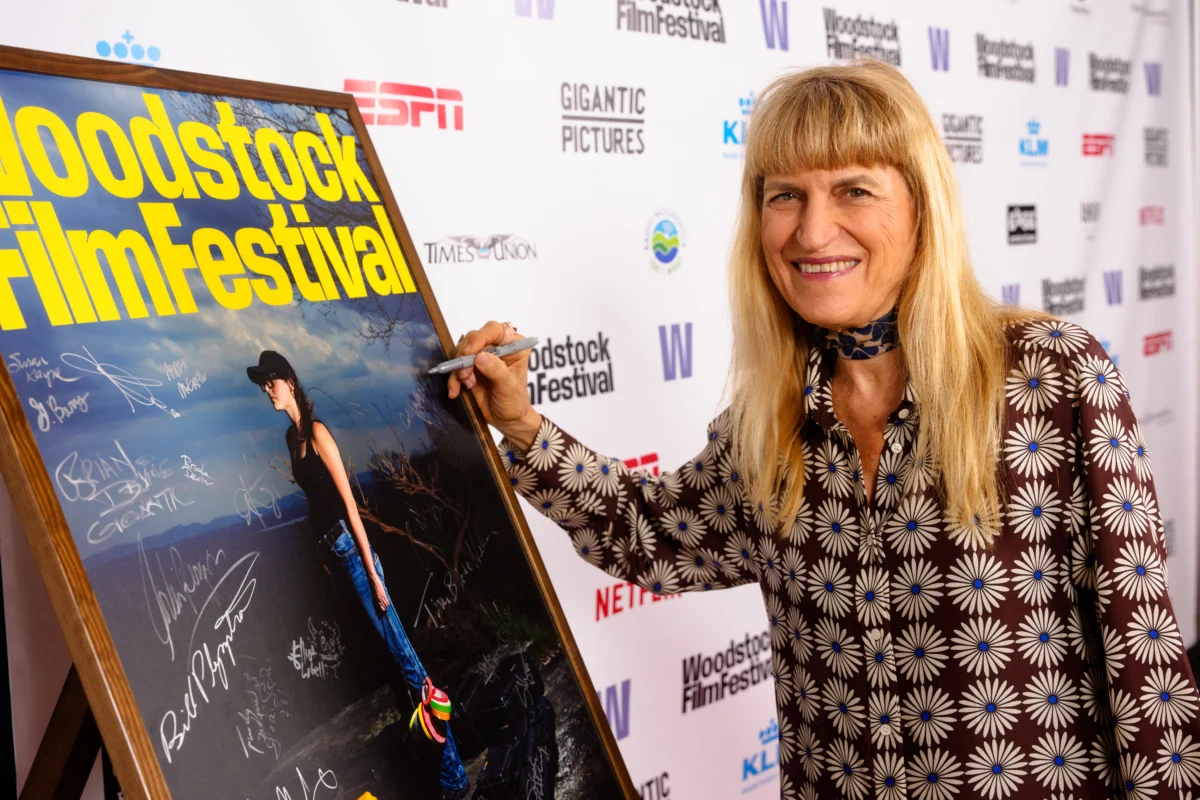
An Oliver Twist-esque tale for the modern era, Street Smart follows Ali (played by Isabelle Fuhrman), a fresh-off-the-bus singer from the Midwest who falls in with a group of young, unhoused creative types, ultimately learning the tricks of their trade. Following its recent screening at the 2026 Woodstock Film Festival—where it drew an enthusiastic audience response—Hardwicke sat down to reflect on her career, her storied battles with Hollywood studio executives, and the ongoing, uphill battle for female representation in the awards conversation.

Main Facts: The Genesis and Realities of Street Smart
Street Smart is an independently financed feature film that blends gritty realism with a Dickensian sense of community.
- The Inspiration: Venice Beach’s visible unhoused artist population directly inspired the film. Hardwicke co-written the project with Nic Sheff, who previously lived on the streets.
- The Premise: Midwestern transplant Ali navigates street life under the mentorship of a young, tight-knit group of unhoused creatives.
- The Code of Ethics: Rejecting tired tropes, Hardwicke and Sheff framed the street youths through a specific moral lens. "My co-writer, Nic Sheff, used to live on the streets and always said to me, ‘I wasn’t Oliver Twist—I was the Artful Dodger,’" Hardwicke explains. "For him, that life was about found family; his friends were fun to be with and everybody had each other’s backs… these kids also have their own moral code, which includes stuff like, ‘You can steal phones, but not credit cards,’ ‘Only take from people that can afford it,’ and ‘Don’t do harm, and always give back.’"
- The Cast: Continuing her legacy of casting fresh faces alongside seasoned veterans, Hardwicke enlisted newcomer Isiah Hilt (who modeled his character, Drex, after his own tumultuous childhood) and vlogger Miles McKenna, alongside established actors Marcia Gay Harden, Skeet Ulrich, and Yara Shahidi.
Chronology: A Career Built on Discovery and Defiance
Hardwicke’s career trajectory is defined by a consistent eye for raw talent and a fierce refusal to compromise her artistic vision, a journey that spans decades of independent and blockbuster filmmaking.
2003–2005: Launching Icons (Thirteen & Lords of Dogtown)
Hardwicke burst onto the feature film scene with Thirteen (2003), which she co-wrote with Nikki Reed. The ultra-low-budget indie famously launched Reed’s career, earned critical acclaim, and secured Hardwicke a directing award at Sundance alongside two Independent Spirit Award nominations. She followed this with the skateboarding biopic Lords of Dogtown (2005), establishing a reputation for authentic portrayals of youth subcultures via intensive actor "bootcamps."

2006: The Discovery of Oscar Isaac (The Nativity Story)
While preparing for the biblical drama The Nativity Story (2006), Hardwicke stopped in New York en route to Europe to evaluate a last-minute audition by a recent Juilliard graduate named Oscar Isaac.
"I walked into this dark theater, and he performed some scenes from the script," she remembers. "By the time he was done, I was like, ‘This guy has to be Joseph.’" Despite expectations that New Line Cinema would demand an established box-office draw opposite lead Keisha Castle-Hughes, Hardwicke stood her ground, securing Isaac’s first-ever feature film role just ahead of the movie’s 20th-anniversary milestone.
2008: Saving Twilight from the Trash Heap
Perhaps her most culturally seismic battle occurred when Paramount Pictures sent her the first draft of Twilight, adapted from Stephenie Meyer’s 2005 bestselling novel. The initial script bore almost no resemblance to the book’s intimate, high-stakes romantasy tone.
"Paramount had developed a script that was more of an action movie," she reveals. "They had Bella being chased by FBI agents on Jet Skis. I said, ‘This is not good—it goes right in the trash.’"
Hardwicke revamped the screenplay herself and successfully pitched it to Summit Entertainment (now a Lionsgate subsidiary). By leaning into the dangerous, giddy thrill of first love rather than manufactured action sequences, Hardwicke crafted a global phenomenon that grossed nearly $400 million worldwide. Though she walked away from the franchise’s subsequent sequels, her foundational touch defined the modern romantasy film genre.

Present Day: Street Smart and the Festival Circuit
Transitioning from studio tentpoles to independent filmmaking, Hardwicke brought Street Smart to the 2026 festival circuit, championing a project driven entirely by independent finance and grassroots authenticity.
Supporting Data: Box Office, Accolades, and Filmography
| Film | Release Year | Key Talent Launched / Cast | Box Office / Reception Highlights |
|---|---|---|---|
| Thirteen | 2003 | Nikki Reed, Evan Rachel Wood, Holly Hunter | Sundance Directing Award winner; 2 Indie Spirit nominations. |
| Lords of Dogtown | 2005 | Heath Ledger, Emile Hirsch, Nikki Reed | Celebrated for its authentic ’70s skateboard bootcamp preparation. |
| The Nativity Story | 2006 | Oscar Isaac, Keisha Castle-Hughes | Marked Oscar Isaac’s feature film debut straight out of Juilliard. |
| Twilight | 2008 | Kristen Stewart, Robert Pattinson | Grossed nearly $400 million globally; revolutionized the YA romantasy genre. |
| Red Riding Hood | 2011 | Amanda Seyfried, Gary Oldman | Continued Hardwicke’s exploration of gothic romantasy tropes. |
| Street Smart | 2026 | Isiah Hilt, Isabelle Fuhrman, Marcia Gay Harden | Premiered to an enthusiastic audience response at the 2026 Woodstock Film Festival. |
Official Responses & Industry Perspectives
Hardwicke’s candid reflections highlight the stark realities of navigating the contemporary film industry, particularly concerning institutional support for independent cinema and female directors.
- On Awards Campaigns: Reflecting on the differences between her early indie success and her current projects, Hardwicke notes the immense financial backing required for modern Oscar consideration. "Thirteen was picked up by Fox Searchlight back in the day, and they put a nice amount of money into that awards campaign," she recalls. "I’m in the Academy, so I go to FYC events all the time… and I know it takes a lot of money. It’s a special thing that happens to be one out of every 25 movies that gets anointed to do that."
- On Female Representation: The lack of female filmmakers represented in major awards conversations remains a central pain point. Gold Derby’s tracking notes that Olivia Wilde’s dark comedy The Invite stands as one of the few high-profile features from a female director in serious Oscar contention. Hardwicke voiced her support for Wilde’s work while acknowledging a broader systemic issue. "That was a big deal at Venice," Hardwicke said regarding this year’s Venice Film Festival, where she served as a short film jury member. "There was a lot of talk about how there were very few films directed by female directors. So we still have to get in there and fight."
- On Potential Franchises: Asked if she would ever return to the world of Twilight for a potential studio revival, Hardwicke maintains a pragmatic stance. "It would be fun, but I would have to answer what would be the new thing to do with it… How would you add a new twist to it?" She adds with a laugh, "One thing’s for sure—no jet skiing vampires would be allowed."
Implications: The Future of Indie Cinema and Female Authorship
The trajectory of Street Smart serves as both a triumph for independent filmmaking and a cautionary tale about the hurdles facing original storytelling in Hollywood. Without the backing of major studio marketing machines, independent projects directed by women must rely heavily on festival buzz, grassroots word-of-mouth, and unwavering tenacity to break through the noise.

As Hardwicke looks toward her next anticipated project—American River, a Gold Rush-era historical drama centered on women carving out their own fortunes—her career remains a masterclass in creative defiance. Whether she is rescuing a doomed Twilight script from the garbage, plucking an unknown Oscar Isaac from a dark New York theater, or translating the complex social realities of Venice Beach onto the silver screen, Hardwicke continues to prove that authenticity and raw talent will always find a way to cut through the noise.
