
Inside the Madness: How John DiMaggio Landed His Chilling Joker Role in Batman: Under the Red Hood With Just 36 Hours Notice
Main Facts
More than a decade after its 2010 release, Batman: Under the Red Hood remains a high-water mark for DC Animated Original Movies. Celebrated for its uncompromising brutality, emotional depth, and stellar voice cast, the film features one particular performance that continues to haunt fans: John DiMaggio’s terrifying portrayal of the Joker.
Best known for comedic and iconic roles like Bender in Futurama and Jake the Dog in Adventure Time, DiMaggio stepped into the shoes of the Clown Prince of Crime and delivered a raw, grounded, and deeply menacing interpretation of Batman’s arch-nemesis. However, behind-the-scenes revelations have brought to light a fascinating Hollywood near-miss. DiMaggio was not the original choice for the role, he had a mere 36 hours to prepare, and the performance that birthed a fan-favorite villain was largely improvised on the spot in the recording booth.
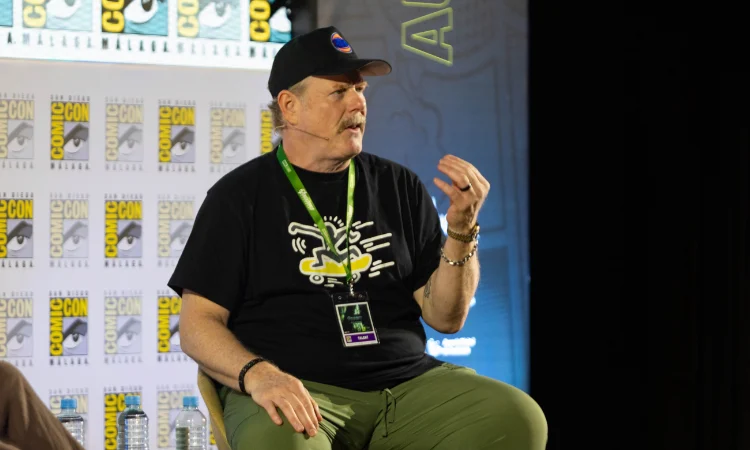
Speaking at the San Diego Comic-Con Málaga, DiMaggio detailed the frantic, pressure-cooker circumstances surrounding his casting. He revealed that horror icon and character actor Brad Dourif was initially selected to voice the Joker. Yet, due to the unique acoustic and performance constraints of voiceover work, Dourif’s transition from physical to vocal acting faltered under the direction of legendary casting and voice director Andrea Romano.
With production looming and the studio desperate for a voice that matched the film’s brutal, adult tone, Romano made a panicked, eleventh-hour phone call to DiMaggio. With zero time to construct an elaborate vocal profile, DiMaggio relied on his instincts, the grim script, and a "prison boss" mentality to craft one of the most chilling iterations of the Joker in animation history.
Chronology: From Casting Trouble to Recording Booth Triumph
The creation of DiMaggio’s Joker is a masterclass in reactionary voice acting, driven by a tight production schedule and sudden casting changes.
The Initial Plan and Brad Dourif’s Departure
In the early phases of production for Batman: Under the Red Hood, the creative team sought a mature, seasoned actor to handle the psychological weight of the script. They cast Brad Dourif, renowned for his chilling work in Child’s Play (as the voice of Chucky) and The Lord of the Rings (as Gríma Wormtongue). On paper, Dourif’s distinct, gravelly delivery and history of playing unhinged characters seemed like an ideal match for Gotham’s most notorious villain.
However, voice acting is a specialized discipline that requires a distinct technical skill set. According to DiMaggio, Dourif’s performance style did not translate effectively to the microphone. While Dourif could easily summon the required energy during theatrical rehearsals, that same menace failed to carry over once the red recording light came on.
The 36-Hour SOS Call
Recognizing that the initial casting was not working, voice director Andrea Romano faced a critical roadblock. Needing an actor who possessed both immediate vocal flexibility and the gravitas to anchor a dark narrative, Romano pivoted to DiMaggio.
DiMaggio received the fateful phone call roughly 36 hours before he was scheduled to step up to the microphone. Arriving at the studio with virtually no preparation, no character design notes, and no preconceived vocal template, DiMaggio was forced to build the character in real-time as he read through the script.
Reading the Room and Finding the Voice
The script itself provided the ultimate roadmap. Written by Judd Winick and based on his acclaimed comic book storyline, Under the Red Hood shattered the traditional boundaries of Saturday-morning cartoons.
Recognizing that the narrative featured explicit violence, heavy swearing, and a visceral opening sequence involving the murder of Jason Todd, DiMaggio realized a campy, theatrical Joker would feel completely out of place. Collaborating closely with Romano, DiMaggio leaned into the material’s grim reality, discovering the character’s voice through the dialogue itself—most notably capturing the menacing cadence with lines like, "Well, kiddo, it’s time to go."
Supporting Data: The Anatomy of a Modern Masterpiece
To understand why DiMaggio’s casting pivot was so pivotal, it helps to examine the broader context of Batman: Under the Red Hood within the landscape of superhero animation.
- Release Date: July 27, 2010 (Direct-to-Video)
- Director: Brandon Vietti
- Writer: Judd Winick (Adapted from his comic arc A Death in the Family and Under the Hood)
- Critical Reception: Widely regarded by critics and fans as one of the top three DC animated movies ever produced, currently holding high audience approval ratings across digital platforms like Rotten Tomatoes and IMDb.
- Cast Highlights: Bruce Greenwood as Batman, Jensen Ackles as Red Hood, Neil Patrick Harris as Nightwing, and John DiMaggio as the Joker.
- Production Constraints: Voice recording sessions for direct-to-video DC animated features typically span compressed timelines, often requiring actors to record their entire roles in single or double-session blocks, leaving little room for protracted experimentation.
DiMaggio’s impromptu casting joins a long lineage of legendary voice acting saves in animation history, mirroring situations where sudden replacements yielded iconic results—such as Michael Ironside taking over Darkseid or Mark Hamill stepping in to voice the Joker for Batman: The Animated Series after Tim Curry departed the role.
Official Responses and Industry Insights
DiMaggio’s candid recollections at San Diego Comic-Con Málaga shed light on the mechanics of professional voice acting, illustrating the stark differences between stage, screen, and booth performances.
Discussing Dourif’s departure, DiMaggio offered deep respect for his peer while clearly defining the technical hurdles of voice acting:
"There are certain actors that have it, but they don’t have it in front of a microphone. They have it on a stage. They have it on a camera, but they don’t know how to get it on a microphone. He would get it in rehearsal, and they would roll, and he couldn’t get it. So Andrea was like, ‘I know who can do this.’ And she called me, which was huge."
Addressing his lack of preparation, DiMaggio emphasized that spontaneity can often birth the most authentic performances:
"I didn’t really plan anything because I didn’t know what they wanted. So it was just like, okay, let’s see… You’re lucky when a character like that comes up and you just fall right into it. You just go, ‘Oh, that’s it.’ And everybody around you goes, ‘Perfect, let’s go.’"
When elaborating on the Joker’s specific mindset, DiMaggio pointed to the character’s terrifying pragmatism within the film’s narrative:
"We went with the ‘guy who runs the prison’ Joker. That kind of mentality of just evil and psychotic. We just rolled with it… This is not a kid’s Batman movie at all. This is adult, there’s blood, there’s cursing… It’s heavy duty. Just a violent, violent Joker, violent. He kills Robin in the first scene."
Regarding the infamous Joker laugh—a staple of any actor’s tenure in the role—DiMaggio noted that it required no artificial engineering:
"It’s just there. I think it’s just right."
Implications for Voice Acting and the Legacy of Under the Red Hood
The revelation of how DiMaggio secured his role as the Joker carries significant implications for how we view the casting process in animated media and highlights the unique talents required of voice actors.
The Myth of the Over-Prepared Actor
In traditional filmmaking, extensive character study, months of vocal training, and deep psychological immersion are often viewed as prerequisites for a stellar performance. DiMaggio’s success with Under the Red Hood challenges this assumption. By relying on raw instinct, years of improvisational skill, and immediate direction from a seasoned professional like Andrea Romano, DiMaggio proved that lightning-fast adaptation can sometimes outshine months of overthinking.
Bridging Live-Action and Voice Acting Disciplines
DiMaggio’s critique of Brad Dourif highlights a persistent industry hurdle: brilliant live-action actors frequently struggle inside the recording booth. Acting behind a microphone strips away physical blocking, facial expressions, eye contact, and costume aids, leaving the performer entirely dependent on vocal modulation and acoustic resonance to convey emotional weight. Dourif’s theatrical brilliance simply required physical tools that were inaccessible within the four walls of a sound booth, proving that vocal acting is a distinct art form requiring specialized mastery.
A Lasting Legacy in the Batman Mythos
Fifteen years later, DiMaggio’s Joker remains a gold standard for adult-oriented comic book adaptations. Eschewing the theatricality of Mark Hamill’s animated classic or the anarchic punk-rock nihilism of Heath Ledger’s live-action portrayal in The Dark Knight, DiMaggio presented a terrifyingly grounded, sociopathic mob boss. He feels less like a cartoon supervillain and more like an institutionalized serial killer who escaped his ward—a chilling realization born out of panic, a 36-hour deadline, and the sheer talent of a veteran voice actor falling effortlessly into the dark.
