
From Studio Shadows to Center Stage: How European Festivals Transformed Film Composers into Rock Stars
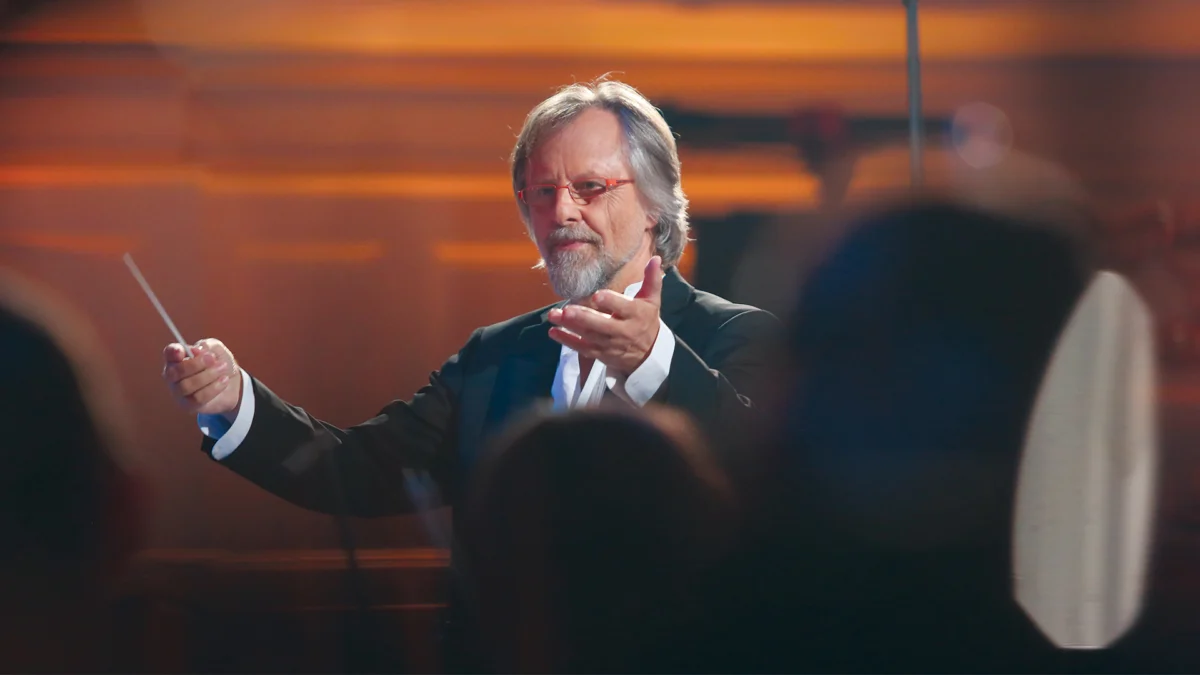
In the traditional hierarchy of the motion picture industry, the composer is often the unsung hero, laboring in solitary confinement behind glowing monitors while A-list directors and movie stars soak up the public adulation. However, a thriving circuit of European film music festivals is systematically dismantling this narrative, elevating the creators of cinema’s emotional backbones to the status of genuine rock stars.
Across the continent, from the historic squares of Spain to the cultural hubs of Poland and Belgium, these festivals have become essential pilgrimage sites. Here, the "invisible" architects of film are greeted with standing ovations, three-hour autograph sessions, and a level of reverence typically reserved for leading men and legendary auteurs.
The Cultural Shift: Composers in the Spotlight
For decades, the film music community functioned in a professional vacuum. Today, the landscape has shifted, driven by a growing global appreciation for the craft of scoring. Mike Todd, senior director of film, TV music, and new media at ASCAP, vividly recalls the scene at the second International Festival of Film Music in Cordoba, Spain.
"Autograph signings went on for three hours," Todd says. "They’re rock stars there." This sentiment is echoed by BMI vice president of film/TV relations, Doreen Ringer Ross, who recounts a surreal moment at a festival where composer Christopher Lennertz was met with a spontaneous standing ovation simply for walking across the room to reach the restroom. These anecdotes underscore a profound transformation: the audience is no longer just watching the movie—they are deeply invested in the person who crafted the sonic atmosphere behind it.
A Chronological Evolution of the Festival Circuit
The phenomenon of the film music festival is not a fleeting trend, but a maturing industry ecosystem. The evolution of these events provides a roadmap for how the medium has gained academic and public prestige.
The Granddaddy: Film Fest Ghent
The movement finds its roots in the Flanders International Film Festival, known as Film Fest Ghent, in Belgium. Since 1985, the festival has championed the "maestro" model, inviting legendary composers to perform their work live. The introduction of the World Soundtrack Awards in 2001 further solidified Ghent’s position as the industry’s gold standard. As the festival approaches its 40th anniversary, it continues to innovate, marking the milestone with 40 one-minute compositions commissioned from 40 world-class composers, including Oscar winners Mychael Danna, Dario Marianelli, Rachel Portman, Gustavo Santaolalla, and Gabriel Yared.
The Proliferation of the Circuit
Following Ghent’s success, other regions began to see the potential for similar cultural impact:
- Cordoba (Spain): Moving from Ubeda to Cordoba after a seven-year run, this festival has become a staple for its intimate, community-driven atmosphere.
- Fimucite (Tenerife, Canary Islands): Now in its seventh year, this festival brings a unique island flair to the international stage.
- Krakow Film Music Festival (Poland): Initially held in May, it moved to September to maximize grant accessibility, quickly becoming a hub for high-concept performances.
- Transatlantyk Festival (Poznan, Poland): Since 2011, this festival has distinguished itself as a "festival of ideas," blending music with environmental activism.
- Festival of Music and Images (Paris): The newest addition to the fold, reflecting the growing appetite for specialized film-music programming in major European capitals.
Supporting the Craft: Data and Industry Impact
For performing-rights organizations like ASCAP and BMI, these festivals are not merely ceremonial; they are strategic necessities. "At ASCAP, we have to be mindful of our foreign composers who license through us in the U.S.," explains Todd. "We want to make sure we’re visible."
This visibility is mirrored by the participation of niche soundtrack labels such as Varese Sarabande, La-La Land Records, and MovieScore Media. While label executives like Robert Townson, VP and producer at Varese Sarabande, admit that direct sales spikes are rarely the primary outcome of festival participation, the "soft power" benefits are immeasurable. "It’s just about spreading the word," Townson notes. "Taking music I feel passionately about and sharing that with the audience. We’re so grateful to have that experience and see in their eyes what the music means to them."
The Professional Utility of the Festival Circuit
Beyond the glamour and fan interaction, the festivals serve as high-level networking hubs that have led to tangible professional outcomes. The pedigree of these connections is substantial:
- Collaborative Synergy: Howard Shore, after showcasing his work at the World Soundtrack Awards in Ghent, famously selected the festival’s house orchestra—the Brussels Philharmonic—to record his score for Martin Scorsese’s The Aviator.
- Cross-Pollination: Elliot Goldenthal returned to Poland to record his ballet Othello at the Alvernia Studios near Krakow following his attendance at the local festival.
- Strategic Promotion: Agent Robert Messinger of First Artists Management highlights how festivals provide a platform for premiers, citing the success of Brokeback Mountain (Santaolalla), The Kite Runner (Iglesias), and The Ice Storm (Danna). Furthermore, Clint Mansell’s debut film music concert in Ghent served as the launchpad for a global series of performances across London, Los Angeles, and New York.
Official Perspectives and Critical Reflections
Despite the enthusiasm, there is a realistic assessment of the "professional utility" of these events. Composer Marco Beltrami, a frequent attendee, offers a nuanced take. "Look, it’s nice to get out of our hovels, out of our studios, out of the dark and meet other people," he says. "It feels good to do that, but, professionally, it’s not like I’m going to get a job."
This balance between artistic community-building and professional pragmatism defines the current festival climate. Festival organizers, meanwhile, are balancing this with the challenges of budget and competition. David Doncel Barthe, director of the Cordoba festival, notes that their limited budget forces them to be "more creative with both our programming and our guests."
Artistic directors are also cognizant of the dangers of over-saturation. "Competition is healthy and can be stimulating, but overcrowding can also be a nuisance," admits Patrick Duynslaegher of Ghent. "The proliferation of film festivals is a reality and proves that there’s an eager audience for film music concerts everywhere in the world."
Implications: The Future of the "Syndicate"
The future of these festivals lies in cooperation rather than competition. There is a burgeoning "cooperation mentality" emerging, championed by figures like Diego Navarro of Fimucite and Robert Piaskowski of Krakow.
Navarro emphasizes that music should not be treated as the exclusive property of a single festival, but as a shared cultural asset. "I seriously consider we have to work and fight together in order to show the general audience how great this art is," he says.
Looking ahead, the idea of a "syndicate" of film music festivals has gained traction. Piaskowski envisions a collaborative body that would handle legal logistics, rights management for footage clips, and the establishment of "fair play" standards. Such an organization would not only elevate the production quality of these events to the highest possible level but also protect the interests of the composers who serve as their lifeblood.
Ultimately, these European festivals have done more than just host concerts; they have validated film music as a legitimate, standalone art form. By bringing composers out of the dark, isolated corners of their home studios and placing them under the bright lights of the concert stage, the festival circuit has ensured that the "invisible" creators of cinema are finally receiving the recognition their work has long deserved.
