
The Audacious Experimentation of 1992: Re-Evaluating the Year’s Defining Sci-Fi Cinema

Introduction: The Cultural Landscape of 1992
Cast your mind back to the pop-cultural ecosystem of 1992. The global box office was dominated by blockbuster juggernauts like Batman Returns and Aladdin, while mainstream audiences flocked to broad comedies like Wayne’s World and Sister Act, or romantic dramas and thrillers such as The Bodyguard and Basic Instinct. If you were walking the halls of a high school, Boys II Men’s "End of the Road" and Sir Mix-a-Lot’s "Baby Got Back" served as inescapable anthems. On television, Star Trek: The Next Generation had firmly hit its creative and commercial stride, sharing airwaves with historical diversions like The Young Indiana Jones Chronicles and perennial sitcom hits like Roseanne, Home Improvement, and Murphy Brown. Politically, Bill Clinton had just ascended to the presidency, Generation X was busy codifying a fresh wave of cultural disaffection, and Kurt Cobain was still shaping the modern rock landscape.
Meanwhile, far away from the polished sheen of multiplex blockbusters, the science fiction genre was performing strange, idiosyncratic experiments in the dark. 1992 was a watershed year of bold cinematic attempts—many of which were critically dismissed, commercially misunderstood, or outright rejected by contemporary audiences. Critics often note that the 1990s lacked the singular, dominant stylistic trends that defined the 1980s. As the recognizable tropes of the previous decade sputtered out, filmmakers found themselves in uncharted waters, forced to innovate without a clear roadmap.
The resulting cinematic landscape was chaotic. The best science fiction films of 1992 frequently courted controversy, invited legal battles, or missed their box-office targets entirely. Sequels made daring, alienating thematic leaps; literary adaptations flagrantly ignored their source material; and low-budget productions stretched every dollar to construct unique speculative worlds. Upon modern reflection, these misunderstood misfires reveal themselves to be ahead of their time. Below is an exhaustive retrospective ranking of the five best, most daring science fiction films released in 1992.
5. The Lawnmower Man: The Digital Frontier and Legal Battles
Main Facts and Production Background
Directed by Brett Leonard, the cyber-thriller The Lawnmower Man arrived in theaters riding the early wave of public fascination with virtual reality and computer-generated imagery. However, the film’s path to the screen was notoriously litigious. Billed as being "based on a short story by Stephen King," the final product bore virtually zero resemblance to King’s 1975 text, which focuses on a pagan satyr posing as a suburban greenskeeper. The glaring disconnect prompted King to launch a high-profile lawsuit to have his name entirely removed from the production credits—a completely justified move given that Leonard’s feature was fundamentally a cautionary tale about human cognitive enhancement through virtual reality.

Chronology and Narrative Arc
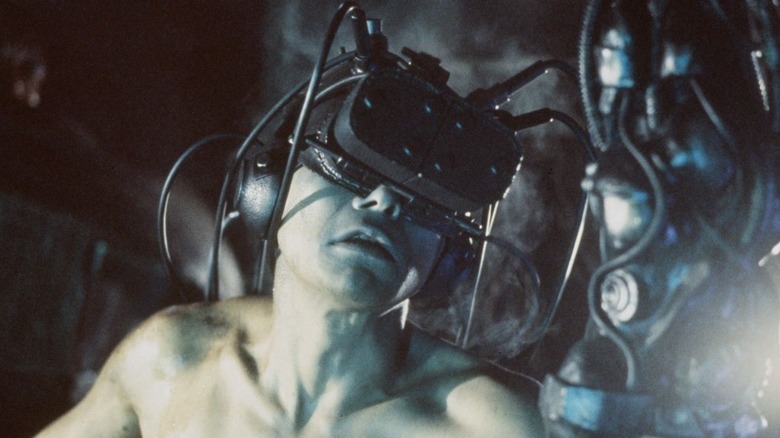
The plot centers on Dr. Lawrence Angelo (Pierce Brosnan), a visionary scientist experimenting with a combination of psychoactive drugs and immersive VR training to condition chimpanzees into aggressive, tactical military combat assets. When the animal trials catastrophically fail—a dark narrative thread expanded upon in the film’s subsequent director’s cut—Angelo remains undeterred by corporate oversight. He shifts his trials to human subjects, secretly testing his technology on Jobe Smith (Jeff Fahey), an intellectually disabled local lawn worker affectionately known as the town’s "lawnmower man."
Supporting Data and Implications
Unfortunately for mankind, the cybernetic intervention works far too well. Jobe’s cognitive functions evolve at an exponential, terrifying rate, unlocking latent telekinetic and telepathic powers. By the film’s climax, Jobe is capable of reading thoughts and digitally deconstructing human beings with his mind.
Visually, the film relies heavily on 1992-era CGI. While these digital sequences appear undeniably primitive by modern standards, they retain a slick, fluid, and genuinely unsettling organic quality that contemporary photorealistic rendering struggles to replicate. The Lawnmower Man stands out because it managed to capture the genuine cultural paranoia surrounding the dawn of the internet age, framing computer technology not as a benign tool, but as an existential threat to humanity.
4. Memoirs of an Invisible Man: Practical Magic and Creative Friction
Main Facts and Behind-the-Scenes Conflict
Director John Carpenter’s relationship with Memoirs of an Invisible Man is legendary within Hollywood lore. Plagued by an intensely difficult working dynamic with star Chevy Chase, Carpenter reportedly came close to permanently retiring from directing after completing the project. Unlike Carpenter’s signature auteur-driven horror and sci-fi masterworks, Memoirs often feels weighed down by studio mandates, bearing closer stylistic resemblance to a lightweight Steven Spielberg or Robert Zemeckis production than a gritty Carpenter feature. Yet, despite its rocky production and subsequent box office failure, the film boasts visual effects that remain remarkably impressive decades later.

Chronology and Narrative Arc
Chevy Chase stars as Nick Halloway, a slick, self-absorbed stock analyst who attends a high-profile shareholder meeting at a state-of-the-art research facility. A sudden, freak laboratory accident vaporizes a portion of the building and renders Nick completely invisible.
What follows is an exploration of the mundane, practical horrors of invisibility. Nick can still converse over telephone lines, but face-to-face interactions become impossible. He struggles to find sleep because his transparent eyelids cannot block out light. Simple physical tasks like eating or using utensils turn into frustrating trials; observers can watch food digest directly inside his translucent stomach until the matter dissolves entirely—a clever, if slightly grotesque, visual gag.
Supporting Data and Implications
While the central narrative involving corporate espionage and government pursuit is arguably the weakest element of the film, Nick’s domestic and psychological struggles anchor the picture. Late in the narrative, as Nick resorts to spying on former acquaintances, the film touches on a poignant theme of profound isolation and the irreplaceability of human connection. Although the film bombed commercially, it served as a crucial stepping stone for Carpenter, who would soon reunite with co-star Sam Neill for In the Mouth of Madness, widely regarded as Carpenter’s finest directorial effort of the 1990s.
3. Alien³: The Bleak Masterpiece of Existential Horror
Main Facts and Official Responses
When cinephiles discuss the Alien franchise, opinions typically polarize into two distinct camps: admirers of Ridley Scott’s atmospheric, existential 1979 original, and champions of James Cameron’s high-octane, action-heavy 1986 sequel, Aliens. Audiences who lean toward Scott’s dread-soaked vision found much to appreciate in David Fincher’s directorial debut, Alien³ (1992), while fans of Cameron’s militaristic approach largely rejected it.

The production of Alien³ is widely chronicled as an absolute industry nightmare. Studio interference, shifting screenplays, and a ballooning budget left virtually everyone involved dissatisfied with the theatrical cut. For years, the film was dismissed as a disjointed studio misfire. It wasn’t until the release of the 2003 "Assembly Cut" on home media that audiences could finally appreciate Fincher’s original structural vision, pieced together from surviving footage.
Chronology and Narrative Arc
Disregarding conventional crowd-pleasing sequel logic, Alien³ opens with the shocking, off-screen deaths of key survivors from the previous film. Warrant Officer Ellen Ripley (Sigourney Weaver) crash-lands on Fiorina "Fury" 161, a bleak, desolate prison planet inhabited by a violent population of male inmates who have forged a rough, monastic religious order.
Ill-equipped to handle external threats, the prisoners find themselves defenseless when a Xenomorph emerges in their midst. Ripley is forced to train the inmates in survival tactics while grappling with the horrific realization that a chestburster is actively incubating inside her own body.
Implications and Legacy
Alien³ stands as a triumph of unapologetic bleakness. Fincher completely subverts the action-hero tropes established by Cameron, communicating the terrifying message that resolute action and tactical readiness mean nothing when the universe is inherently hostile. It is a grueling, tragic, and fiercely independent chapter in franchise history that deserves its modern critical reassessment.

2. Tetsuo II: Body Hammer: The Industrial Symphony of Rage
Main Facts and Evolution from a Cult Classic
Shinya Tsukamoto’s 1989 black-and-white cult oddity, Tetsuo: The Iron Man, remains one of the most intense, visceral pieces of cyberpunk cinema ever produced. Exploring the psychological toll of Japan’s rapid modernization and the insidious creeping of technology into human consciousness, the original film chronicled a corporate salaryman (Tomorowo Taguchi) who spontaneously sprouts metallic circuits from his flesh, drawing the ire of a psychotic metal fetishist played by Tsukamoto himself.
Chronology and Narrative Arc
Tetsuo II: Body Hammer (1992) takes the thematic infrastructure of the original film and amplifies it to industrial-strength proportions, examining how modern societal pressures and unchecked rage can physically transform human beings into instruments of war.
Taguchi and Tsukamoto return, though playing evolved iterations of their archetypes. Taguchi’s salaryman lives a seemingly normal life until a gang of cybernetic thugs kidnaps his young son. The searing grief and uncontrollable anger triggered by the abduction break his psychological barriers, causing gun barrels to erupt directly from his body. In a tragic twist during the ensuing conflict, he accidentally fires upon and kills his own child.
Supporting Data and Implications
The film explodes into a psychedelic, feverish nightmare set within greasy, subterranean factory basements where muscular men train amidst sparks and machinery. The protagonist must learn to suppress his rage to keep further weaponry from manifesting.

While Tetsuo: The Iron Man was shot in glittering, high-contrast monochrome, Body Hammer utilizes a suffocating palette of warm reds, cool blues, and wrathful yellows, cementing Tsukamoto’s reputation as a master of industrial aesthetics. Tsukamoto’s enduring career—highlighted by recent festival entries like Mr. Nelson, Did You Kill People?—proves his cinematic vision remains as uncompromising as ever.
1. Fortress: The Pinnacle of Speculative B-Movie Action
Main Facts and Festival Debut
Though Stuart Gordon’s sci-fi action thriller Fortress did not secure a wide domestic theatrical release until 1993, it debuted on the international festival circuit in 1992, earning its rightful place at the top of this retrospective.
Director Stuart Gordon was a legendary icon of genre cinema, consistently pushing the boundaries of speculative fiction. Horror fans revere his work on Re-Animator, From Beyond, and Dolls, while drive-in sci-fi enthusiasts celebrate his contributions like Robot Jox. Yet, Fortress remains arguably his most tightly constructed, universally accessible genre picture.
Chronology and Narrative Arc
Set in the speculative dystopia of 2017, the world faces extreme overpopulation. To combat resource depletion, a strict one-child policy is enforced globally. When former combat officer John Brennick (Christopher Lambert) and his wife Karen (Loryn Locklin) mourn the loss of their first child and attempt to conceive a second, they are swiftly arrested and condemned to an ultra-maximum-security penitentiary.
The facility, managed by the ruthless Men-Tel Corporation, is a marvel of dystopian cruelty. Inmates are fitted with surgically implanted internal intestinal explosives that detonate upon rule infractions, and the compound is monitored relentlessly by autonomous robotic guards and synthetic sentries. Overseeing the complex remotely is Director Poe (Kurtwood Smith), a cold, calculating sadist with an unwanted romantic fixation on Karen.
Supporting Data and Implications
Driven to desperation, Brennick orchestrates an elaborate breakout, partnering with a memorable ensemble of fellow inmates played by Jeffrey Combs, Clifton Collins Jr., and Vernon Wells.
Fortress represents B-movie action filmmaking at its absolute zenith. Operating on a constrained budget, Gordon relies on razor-sharp world-building, clever tactical problem-solving, and memorable practical mechanics to elevate the material. The rules established within the prison are airtight, and the prisoners’ methods of outwitting them remain endlessly satisfying. Decades later, Fortress stands out as a rollicking, brilliantly executed sci-fi triumph that perfectly encapsulates the daring, unpredictable spirit of 1992 cinema.
