
The Digital Horizon: The Evolution of CGI and the Future of Cinematic Immersion
The history of cinema is a chronicle of illusion. From the primitive optical tricks of Georges Méliès to the sophisticated, pixel-perfect landscapes of modern blockbusters, filmmakers have always sought to bend reality to the service of a story. Central to this evolution is Computer-Generated Imagery (CGI)—a tool that has fundamentally altered the DNA of modern film production. As we stand at a crossroads where virtual production and artificial intelligence intersect with traditional artistry, it is time to examine the trajectory of CGI, its impact on the craft of storytelling, and the precarious balance between digital convenience and creative integrity.
The Fundamentals: Defining the Digital Craft
To understand the current state of film, one must first dismantle the misconception that "CGI" and "VFX" are interchangeable terms. While often used synonymously in casual conversation, their roles are distinct. Visual Effects (VFX) is an umbrella term encompassing any imagery created, altered, or enhanced for a film outside of the context of a live-action shot. This includes compositing, digital matte paintings, the removal of safety equipment (such as stunt wires), and environmental enhancements like artificial snow or fog.
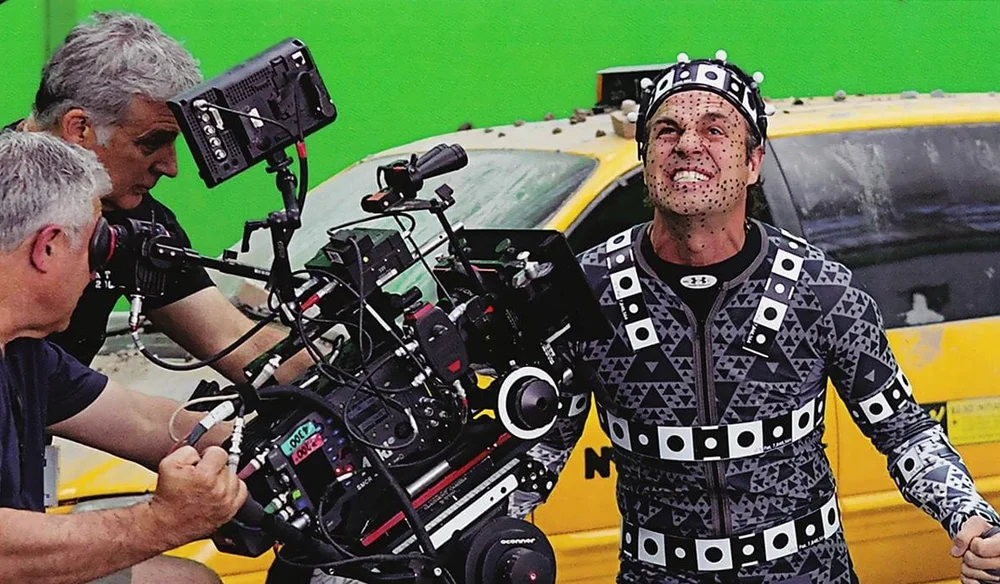
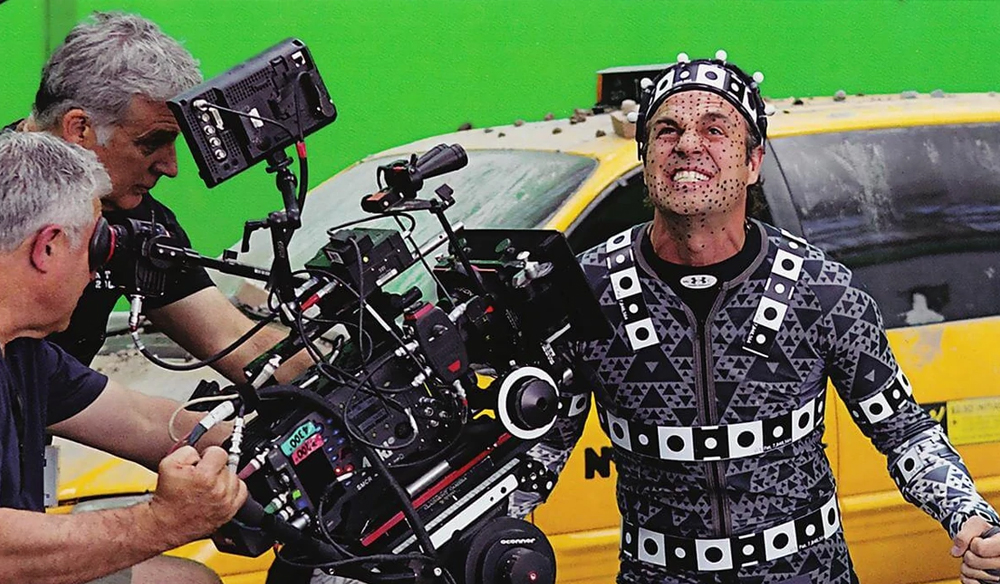
CGI, by contrast, is a specific subset of VFX. It refers exclusively to the creation of imagery from scratch using computer software. When Mark Ruffalo steps into a motion-capture suit to portray the Hulk, he is providing the performance data that will be mapped onto a 3D model—a quintessential CGI process. When that same scene is composited against a digital New York skyline on a green screen, that is the work of VFX.
In the modern era, these lines are blurring further through the advent of virtual production. Technologies like volumetric LED stages allow filmmakers to project real-time, photorealistic environments behind actors, providing accurate lighting and depth perception that traditional green screens often lacked.

A Chronology of Innovation
CGI did not arrive with a sudden bang; it was a gradual accumulation of technical breakthroughs that began decades before the digital age dominated the multiplex.
The Pioneers: 1970s and 80s
The first cinematic instance of CGI occurred in Michael Crichton’s 1973 sci-fi thriller Westworld. In a sequence lasting roughly ten seconds, creators John Whitney Jr. and Gary Demos used NASA-developed technology to digitize film frames, deconstructing them into numerical data that could be manipulated to simulate a robot’s point-of-view.
Shortly thereafter, 1977’s Star Wars: A New Hope utilized a 3D tactical map of the Death Star assault—a sequence developed by the University of Illinois at Chicago’s Electronic Visualization Laboratory. While crude by today’s standards, these moments proved that computers could do more than just calculate data; they could create narrative-driven visuals.
The Transformation: The 90s and 2000s
The 1990s marked the "Golden Age" of digital integration. Terminator 2: Judgment Day (1991) introduced the world to the T-1000, a character that could shift its physical properties, pushing Industrial Light & Magic (ILM) to develop pioneering morphing software. Two years later, Jurassic Park (1993) bridged the gap between the physical and the digital, blending life-sized animatronics with groundbreaking CGI dinosaurs.
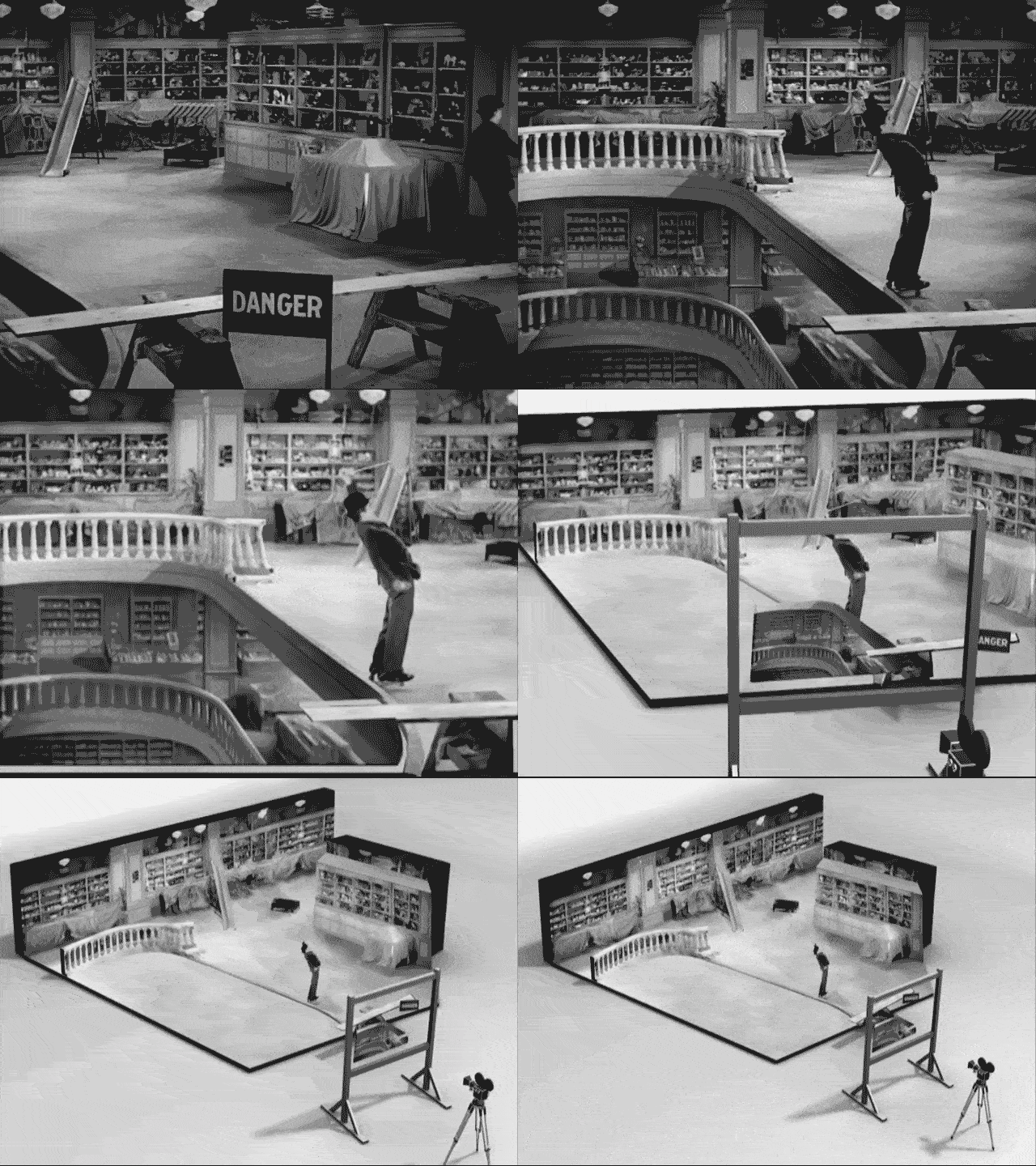
By the time the Wachowskis released The Matrix in 1999, the "Bullet Time" effect—enabled by a 360-degree camera rig and digital interpolation—had redefined the visual language of action cinema. This momentum culminated in James Cameron’s Avatar (2009), which used advanced facial-mapping technology to capture the nuance of human emotion, proving that CGI could carry the weight of a performance-driven drama.
Supporting Data: The Shifting Economics of Spectacle
The integration of CGI into film budgets is no longer a luxury; it is a structural necessity. Modern tentpole films now routinely feature over 2,500 VFX shots. However, this prevalence has led to a "blockbuster paradox." While audiences demand higher levels of visual spectacle, the reliance on CGI has often served as a band-aid for flawed production schedules.
Statistics from the industry suggest that films with shorter pre-production phases often see a massive increase in post-production costs, as studios attempt to fix narrative issues through digital intervention. This phenomenon—"fixing it in post"—has become a source of contention for VFX houses, which are often left with unrealistic deadlines to deliver complex sequences. The industry is currently facing a reckoning: when the cost of digital effects consumes a significant portion of a film’s $200 million budget, the quality of the final product becomes a hostage to the timeline.
Official Responses and Industry Criticism
The creative community is deeply divided on the current usage of CGI. A recurring theme in contemporary cinema is the "practical effects marketing" trend. Top Gun: Maverick (2022) was lauded for its commitment to "real" flight footage, with star Tom Cruise emphasizing the lack of CGI in the jet sequences. Yet, behind the scenes, the film utilized over 2,500 VFX shots to polish and enhance the practical photography.
This reveals a crucial truth: audiences do not dislike CGI; they dislike noticeable CGI. When digital effects are used to support practical elements—as seen in George Miller’s Mad Max: Fury Road or Alex Garland’s Ex Machina—they enhance immersion. When they are used to replace the fundamental visual logic of a scene, the audience disconnects.
Leading VFX artists have frequently voiced concerns regarding "crunch culture," where the pressure to deliver massive quantities of shots in truncated timeframes leads to aesthetic degradation. The backlash against recent Marvel projects, such as Thor: Love and Thunder, highlighted that even the highest-budget productions can suffer from "visual fatigue" when artists are not given the time to refine their work.
The Future Landscape: Implication and Integration
The future of CGI is leaning toward democratization and real-time rendering. Software like Blender and Unreal Engine has removed the "barrier to entry" for independent filmmakers. A solo creator in 2024 can now achieve visual results that would have required a multi-million dollar budget in 1999.
Virtual Production
The move toward LED volume stages, pioneered by productions like The Mandalorian and The Batman, represents a shift away from the "fix it in post" mentality. By capturing the final lighting and background in-camera, directors are able to make creative decisions on the day of the shoot. This approach forces a higher level of preparation, which paradoxically leads to better visual results.

The Role of AI and Automation
As artificial intelligence begins to integrate with CGI workflows—from AI-assisted rotoscoping to generative backgrounds—the efficiency of the pipeline will increase exponentially. However, this raises significant questions regarding the role of the artist. The future of cinema will not be defined by the tools themselves, but by how they are applied.
Conclusion: The Path Forward
The evolution of CGI is a reflection of human ambition. From the numerical deconstruction of an image in 1973 to the photorealistic aquatic worlds of Avatar: The Way of Water (2022), the industry has consistently moved toward greater control over the frame.
The primary lesson of the last fifty years is that technology is a servant to the narrative, never a substitute for it. The most successful films of the future will not be those with the most pixels, but those that treat digital tools as an extension of the cinematographer’s lens rather than a crutch for poor storytelling. As we continue to refine the marriage between the practical and the digital, the possibilities for cinema remain, quite literally, limited only by our imagination. The journey of CGI is far from over; in many ways, it is just beginning to find its soul.
