
In Conversation: The Second Life of Freddie Nole — A Journey of Redemption and Resilience
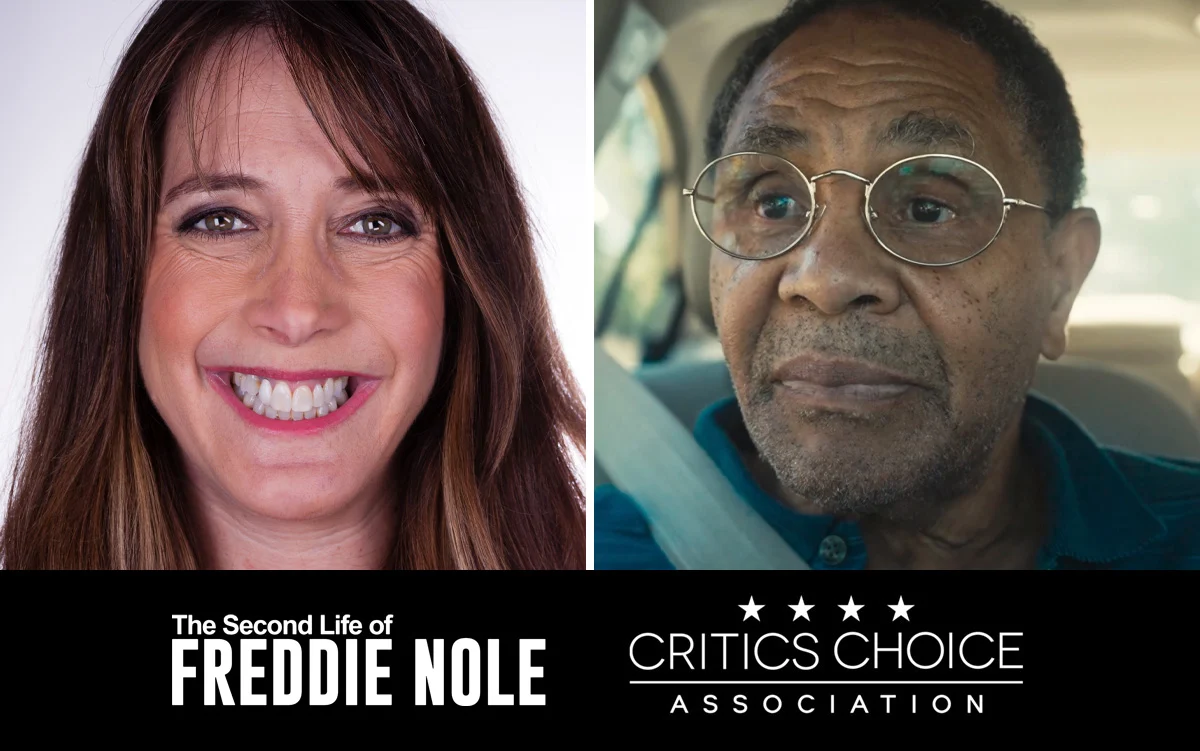
In the landscape of documentary filmmaking, few stories possess the visceral power to bridge the gap between systemic tragedy and individual triumph. The Second Life of Freddie Nole, a compelling new short documentary directed by Dana Nachman, achieves exactly this. Recently, Critics Choice Association member Carla Renata sat down with both Nachman and the film’s subject, Freddie Nole, to discuss a project that has already garnered significant critical acclaim, including four Audience Awards and the prestigious Social Impact Award at the Indy Shorts International Film Festival.
At its heart, the film is a meditation on the concept of "freedom." It follows Freddie Nole, a man who, having endured half a century behind bars, now dedicates his life to ensuring that those walking out of prison gates are met with something more than just air and pavement: he meets them with a hand, a ride, and a path toward true societal integration.
The Main Facts: A Mission Born from Injustice
The documentary operates as a vérité road trip. We watch as Nole maneuvers his vehicle toward the prison gates, waiting for men who are often lost, disoriented, and fearful of the world they are re-entering. But the narrative scope of the film extends far beyond the interior of the car. It delves into Nole’s own history—a staggering miscarriage of justice that saw him lose 50 years of his life to a prison sentence, only to emerge with a resolve that defies bitterness.
Nole’s mission is simple yet profound: he provides transportation and mentorship to the formerly incarcerated. By bridging the gap between incarceration and civilian life, he aims to combat the high recidivism rates that plague the American justice system. His presence is a living testament to the fact that while the state can strip a man of his time, it cannot necessarily strip him of his humanity or his agency to effect change.
A Chronology of a Life Interrupted
To understand the emotional weight of The Second Life of Freddie Nole, one must understand the timeline of Nole’s existence. For five decades, the world outside the prison walls evolved—technology, politics, and culture shifted—while Nole remained in a state of suspended animation.
The Lost Decades
Nole’s incarceration was the result of a profound systemic error. In an era where legal representation and forensic science were far less sophisticated than today, Nole found himself trapped in a cycle of litigation and hopelessness. For 50 years, his world was defined by concrete, routine, and the pervasive absence of autonomy.
The Moment of Release
The transition from prisoner to free citizen is often treated as a "happy ending" in mainstream media, but the reality is frequently chaotic. Upon his release, Nole faced the daunting task of re-learning a society that had moved on without him. Instead of retreating into private life, Nole identified a critical failure in the reintegration process: the lack of a support system at the very moment of release.
The "Second Life"
The title of the film refers not just to his life after prison, but to the life he has built by helping others. Nole’s work acts as a form of secondary rehabilitation. By guiding others through their first hours of freedom, he processes his own history, turning the trauma of his incarceration into a diagnostic tool for helping others navigate their own paths to dignity.
Supporting Data: The Cycle of Incarceration
The documentary underscores a harsh reality: the American carceral system is a revolving door. According to data from the Bureau of Justice Statistics and various criminal justice reform organizations, the "first 72 hours" after release are the most critical in determining whether an individual will successfully reintegrate or return to prison.
- Recidivism Rates: Approximately two-thirds of released prisoners are rearrested within three years of release.
- The "Support Gap": Many formerly incarcerated individuals suffer from "post-incarceration syndrome," a condition characterized by institutionalized behavior that makes functioning in a free society nearly impossible without guidance.
- Social Impact: The Social Impact Award bestowed upon The Second Life of Freddie Nole recognizes the film’s role in highlighting how grassroots, individual-led initiatives often outperform bureaucratic programs in lowering these recidivism rates. Nole’s work demonstrates that human connection—a simple ride home, a conversation, a sense of being expected—is a quantifiable deterrent to criminal behavior.
Official Responses and Perspectives
During their conversation with Carla Renata, both Dana Nachman and Freddie Nole articulated the necessity of this story.
Director Dana Nachman’s Vision
Nachman, known for her empathetic approach to documentary storytelling, emphasized the vérité nature of the film. "We didn’t want to over-produce this story," Nachman noted. "Freddie’s actions are so authentic, so quiet, and so powerful that the camera just needs to be a witness." For Nachman, the challenge was capturing the internal struggle of a man who spent 50 years in silence now finding his voice as a community leader.
Freddie Nole’s Philosophy
Nole’s perspective is grounded in an unflinching acceptance of his past. During the interview, he spoke about the "staggering mistake" that cost him his youth. "I don’t look at the 50 years as a waste," Nole explained. "I look at it as a preparation for the work I’m doing now. If I hadn’t been through the fire, I wouldn’t know how to pull someone else out of it."
His approach is devoid of grandiosity. He views his work not as an act of heroism, but as a practical necessity. When a man walks out of prison with nothing but a plastic bag of belongings, Nole is there to ensure he doesn’t have to walk that first mile alone.
Implications: The Necessity of Reform
The film serves as a catalyst for a broader conversation about the American justice system. It asks difficult questions: What do we owe those we have wrongly imprisoned? And what do we owe those who have served their time?
Beyond the Screen
The Second Life of Freddie Nole is not merely a piece of cinematic art; it is an advocacy tool. The film’s success at festivals has brought national attention to the specific, granular needs of the formerly incarcerated. It challenges the public to look past the label of "convict" and see the human being attempting to navigate a system designed to keep them on the margins.
Policy and Community
The implications of Nole’s work are being felt by organizations that focus on prisoner reentry. By documenting his process, the film highlights a blueprint for community-based support. If a single individual can provide such significant stability, the question for policymakers becomes: Why aren’t these systems institutionalized?
The documentary suggests that the most effective form of rehabilitation is not found in surveillance, but in human connection. Nole’s "Second Life" is one of active citizenship, proving that the best way to move forward is to reach back and help others along the way.
Conclusion: A Testament to the Human Spirit
As The Second Life of Freddie Nole continues its festival run, it leaves audiences with a profound sense of both tragedy and hope. It is a film that asks us to reconsider the value of a human life and the meaning of justice.
Through the lens of Dana Nachman and the quiet, persistent grace of Freddie Nole, we are reminded that no matter how much time is lost, the capacity for renewal is endless. Nole’s journey from a victim of a broken system to a beacon of hope for others is a masterclass in resilience. As he continues to wait at the prison gates, he is doing more than just giving rides; he is proving that while you can be sentenced to a life in prison, you can choose to make your life something else entirely.
The film is a must-watch for anyone interested in the intersection of justice, documentary filmmaking, and the indomitable power of the human spirit. It is, ultimately, a story about the grace required to forgive the world for the time it stole, and the courage required to use the remaining time to save others.
