
The Absurdist Propaganda Epic: An Analysis of ‘Once Upon a Time in the Middle East’
Since Zhang Yimou’s 2002 wuxia masterpiece Hero, China’s pursuit of the Academy Award for Best International Feature has been a story of profound frustration. Year after year, the country has bypassed nuanced, auteur-driven narratives in favor of state-backed, high-budget spectacles designed to project national strength rather than artistic vulnerability. This year’s submission, Once Upon a Time in the Middle East, continues that trend with a bombastic, disjointed, and deeply controversial fervor that effectively ensures the dry spell will continue.
Director Wen Muyue’s latest project is a cinematic paradox: a film that is fundamentally propagandistic and shockingly tasteless, yet possessed of a strange, B-movie magnetism that renders it impossible to look away from. As a commercial blockbuster, it serves as a testament to the sheer scale of China’s modern production capabilities—an extravagant display of technical wizardry that manages to capture the eye even while it insults the intelligence.
The Narrative Arc: A Chef in the Crosshairs of Geopolitics
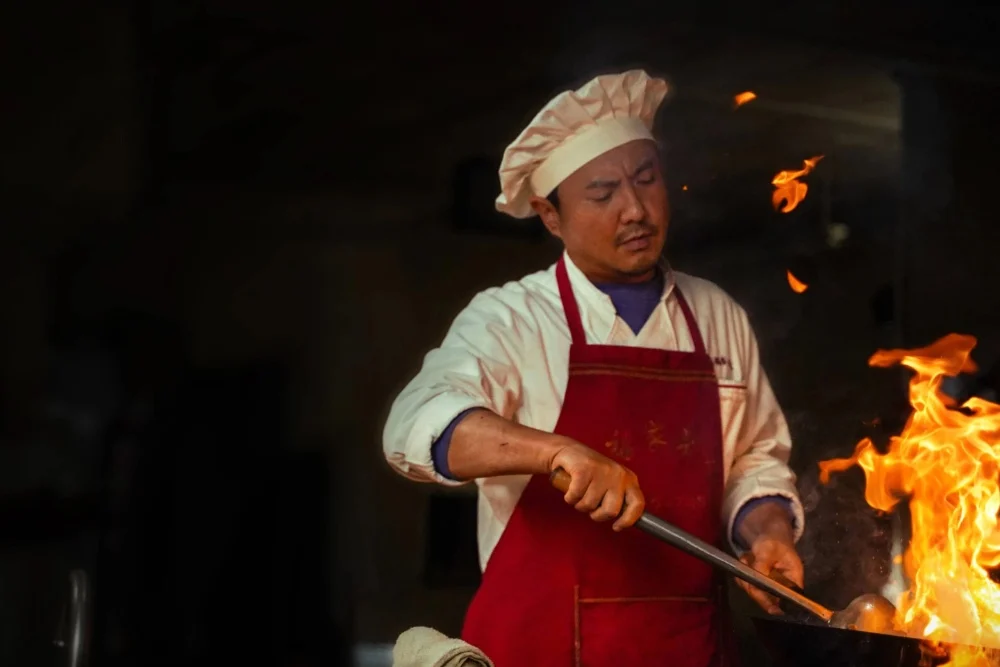
The film’s plot revolves around Xu Fu (played by Shen Teng), a debt-ridden chef who finds himself in the fictional Gulf city of Bahata. The setup is deceptively simple: Xu Fu leaves his family in China for a two-year stint at a local restaurant, hoping to earn enough to secure a better future for his daughter and mother.
However, the film’s pacing is defined by a series of "geopolitical misfortunes" that trap Xu Fu in a cycle of chaos. Through convenient flash-forwards, we see an older, scarred version of Xu Fu, confirming his eventual return to his homeland, though the journey is marked by years of war, occupation, and near-death experiences. The film operates on a core thesis that is as bizarre as it is central: the idea that Chinese cuisine is a universal, healing force capable of bridging even the most volatile cultural divides.
As the story progresses, the restaurant becomes a sanctuary. Xu Fu’s culinary prowess, documented in high-definition, mouthwatering close-ups of bubbling stews and roasted meats, serves as a soft-power metaphor. He is aided by his manager, Ma Junsheng (Jiang Qiming), who acts as the primary translator for the restaurant’s owner, Zaid (Sherif Sabby). Together, they form an unlikely trio, eventually taking on an orphaned local boy, Seif (Omar Sharif), whom Xu Fu attempts to mentor in the art of cooking.
Chronology of a Disjointed Spectacle
The film’s narrative structure is as volatile as the conflict it depicts. It begins as a lighthearted, almost domestic dramedy. We are treated to the culinary triumphs of the kitchen, with the film emphasizing the cultural exchange between the Chinese staff and the local Bahata community. However, this is merely the calm before the storm.
- The Establishment: The first act focuses on the integration of the Chinese chefs into Bahata, highlighting their role as providers and nurturing figures.
- The Escalation: The introduction of U.S. forces, depicted as aggressive and predatory, signals the shift into war-drama territory. The city is bombed, and the restaurant is transformed into a site of resistance and survival.
- The Turning Point: Zaid’s family is killed in a bombardment, an event depicted with cloying, melodramatic slow-motion shots. This tragedy pushes Zaid toward radicalization, creating a rift between him and the peace-loving Xu Fu.
- The Captivity: The central characters are abducted by the U.S. Army and forced to run the kitchen on a military base, leading to a series of tense, often absurd encounters with soldiers.
- The Climax: The final act descends into a dark, visceral depiction of a terrorist stronghold. The film pivots from cozy, brotherly bonding to scenes of child soldiers and executions, creating a whiplash effect that is as uncomfortable as it is persistent.
Technical Wizardry vs. Narrative Decay
From a technical standpoint, Once Upon a Time in the Middle East is a triumph of modern Chinese cinema. The scale of the production is undeniable. When the filmmakers choose to level an entire city, the pyrotechnics and CGI are indistinguishable from the most expensive Hollywood outputs. The sheer intensity of the set pieces—from the crumbling urban infernos to the orchestrated chaos of an ambushed military base—demonstrates that no budget was spared in the effort to create a visual spectacle.
However, the film suffers from a profound lack of narrative cohesion. It attempts to be a "both-sides" critique of the Iraq War, but it ultimately fails by reducing every party involved to broad, offensive caricatures. The American soldiers are depicted as one-dimensional villains, while the local resistance fighters are painted with the same broad, stereotypical brush. Even the culinary world is not safe; the film takes an oddly specific, aggressive stance against "Americanized" Chinese food, treating the existence of General Tso’s chicken as a moral failing comparable to the military occupation itself.
Supporting Data: The Propaganda Machine
The film’s messaging is overtly state-aligned, positioning China as a "pacifistic patriarch" that stands apart from the violence of the West. It is a work of national myth-making that attempts to rewrite the trauma of the Middle East through the lens of Chinese benevolence.
While the film attempts to appeal to humanism, the execution is hampered by its own contradictions. The "slickness" of the carnage—the way the film films explosions and executions with a stylistic beauty that borders on fetishization—undercuts any genuine attempt at a humanitarian message. When the camera lingers on dead children in the ash of a destroyed home, the scene feels staged and manipulative rather than raw or authentic. This is a common hallmark of propaganda: the use of real-world suffering as a prop for a fabricated moral superiority.
Official Responses and Industry Reception
The response from the Chinese domestic market has been predictable, with the film enjoying a successful summer box office run. Audiences, often shielded from alternative perspectives on the Iraq conflict, have embraced the film as a testament to national pride. However, international critics have been largely scathing.
The consensus among global observers is that Once Upon a Time in the Middle East represents a missed opportunity. Critics argue that by prioritizing state-sanctioned narratives over the messy, complex reality of the region, the film forfeits its right to be taken seriously as a work of art. The "Jekyll and Hyde" nature of the viewing experience—where one part of the viewer is horrified by the propaganda and another part is hooked by the high-octane action—has left many in the industry wondering if the film is a masterclass in unintentional comedy or a cynical, calculated move to appease domestic censors.
Implications for Future International Nominations
What does this mean for China’s future at the Academy Awards? If Once Upon a Time in the Middle East is any indicator, the country’s cinematic trajectory remains firmly focused on internal validation rather than global dialogue.
The Academy has shown an increasing preference for films that offer unique, often critical perspectives on the human condition—films that challenge the status quo rather than reinforcing it. By doubling down on big-budget, state-backed epics, China continues to alienate itself from the very international institutions it seeks to impress.
Ultimately, Once Upon a Time in the Middle East is a fascinating case study in the limitations of state-controlled media. It is a film that demands to be seen for its technical prowess, yet it is simultaneously impossible to recommend as a piece of meaningful cinema. It is a loud, chaotic, and delusional production that stands as a stark reminder that even the most impressive pyrotechnics cannot replace the soul of a narrative. For those interested in the evolution of modern propaganda, it is a essential, if deeply uncomfortable, watch. For those looking for a story with emotional weight or historical honesty, it is better to look elsewhere.
