
Sunshine on Leith: A Theatrical Jukebox Musical Caught Between Charm and Cliché
Introduction: The Sound of Scotland on Screen
In the landscape of modern cinema, the "jukebox musical"—a film constructed around the pre-existing discography of a beloved artist—has become a distinct, if polarizing, genre. With Sunshine on Leith, directed by Dexter Fletcher and based on the stage production by Stephen Greenhorn, the film attempts to capture the soulful, rhythmic essence of The Proclaimers. Set against the backdrop of a picturesque Edinburgh, the film is a high-energy, unabashedly sentimental journey that aims to turn the folk-pop catalog of Charlie and Craig Reid into a cinematic love letter to the Scottish capital.
However, the result is a production that sits precariously between a heartfelt celebration of working-class resilience and a formulaic exercise in populist sentiment. While some audiences will find the film’s earnestness irresistible, others may find its "heart-on-sleeve" approach—replete with the kind of polished charm one might expect from a state-sponsored tourist campaign—to be stiflingly saccharine.
Chronology of a Musical Narrative
The story of Sunshine on Leith follows the trajectory of two lifelong friends, Davy (George MacKay) and Ally (Kevin Guthrie), as they navigate the difficult transition from military life to civilian reality. The film opens with the pair returning to Edinburgh after a harrowing tour of duty in Afghanistan. Their return is haunted by the trauma of a road-mine explosion that left their comrades dead or maimed, a somber starting point that the film quickly attempts to shed in favor of more upbeat, domestic concerns.
Upon their return, the duo faces the harsh, mundane realities of the modern job market, where telemarketing becomes their primary vocational pursuit. The romantic subplot kicks in early: Ally attempts to rekindle his relationship with Davy’s sister, Liz (Freya Mavor). However, their dreams for a conventional, settled life in Scotland are at odds with Liz’s restless ambition to "see the world."
Simultaneously, the narrative expands to include the parents of the siblings, played by Peter Mullan and Jane Horrocks. As they prepare to celebrate their 25th wedding anniversary, their world is upended by the revelation of the father’s long-hidden secret: an adult daughter from a previous affair. This discovery serves as the primary catalyst for the film’s mid-act emotional conflict, where all three central romantic pairings find themselves in crisis. In typical "crowd-pleaser" fashion, a sudden, convenient medical emergency acts as the narrative glue, forcing all characters to reconcile their differences and find their way back to one another just in time for the finale.
Supporting Data and Production Analysis
The film relies heavily on the sonic power of The Proclaimers’ songbook. The folk-inflected pop tunes are catchy, though undeniably bland in their arrangement, serving as a functional, if uninspired, backdrop to the drama.
The Musical Execution
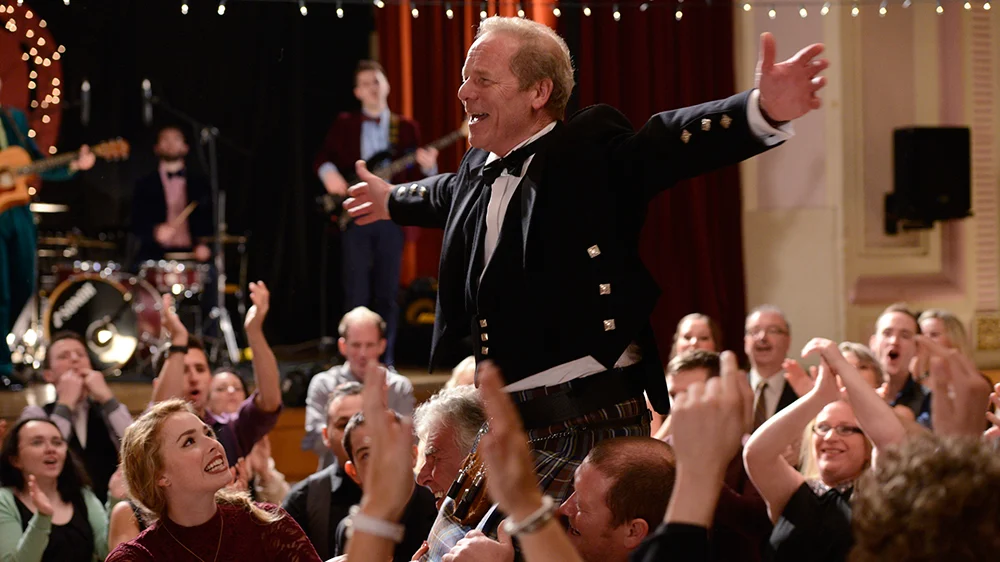
The vocal performances, particularly from the younger cast members, are capably delivered. The film’s centerpiece is, inevitably, the performance of the band’s global anthem, "I’m Gonna Be (500 Miles)." Featured twice, the song serves as the climax of the film’s most ambitious production number. Yet, even in these high-stakes moments, the choreography by Rosie Kay remains strangely restrained. The movements and gestures feel less like professional film choreography and more akin to a high-school pageant, prioritizing an "unpretentious" vibe that often reads as underdeveloped rather than intimate.
Aesthetic and Visual Language
Under the direction of Dexter Fletcher, the film fails to establish a strong visual identity. Despite being set in a city as architecturally rich as Edinburgh, the cinematography feels surprisingly flat. The widescreen high-definition lensing often comes across as "teisvisual"—lacking the cinematic depth one would expect from a feature-length musical. The vistas of the city feel like postcards rather than a lived-in world, and this lack of visual texture mirrors the script’s reliance on predictable, banal dialogue.
Cast and Character Dynamics
The ensemble cast is a mix of heavyweights and rising stars. Peter Mullan is the standout, bringing a necessary sense of gravity to a script that otherwise tends toward the flimsy. His performance provides the emotional anchor that prevents the film from floating away into total whimsy. Conversely, Jane Horrocks leans heavily into the "cutesy" elements of her character, which, depending on the viewer’s tolerance for sentimental tropes, will either charm or irritate. The younger quartet—MacKay, Guthrie, Mavor, and Thomas—are pleasant, but their characters are drawn with such broad strokes that they struggle to transcend their archetypes.
Official Responses and Industry Outlook
Since the film’s release in the United Kingdom on October 4, industry analysts have been closely monitoring its box office performance. While the film has garnered support from those who appreciate its nostalgic and reassuring tone, the commercial outlook outside of the U.K. remains uncertain.
Distributors have noted that Sunshine on Leith is a distinctly British, and specifically Scottish, product. Its success relies heavily on a cultural familiarity with the songs of The Proclaimers and an affinity for the "laughter-and-tears" structure of traditional British stage-to-screen adaptations. Critics have labeled the film as "populist," noting that it operates on the assumption that audiences want a film where "things will work out all right" and where "love is true even when it’s hard." While this provides a comforting experience for some, it limits the film’s potential to capture a wider, more diverse international audience.
Implications: The Future of the Jukebox Musical
The reception of Sunshine on Leith raises significant questions about the future of the jukebox musical as a cinematic genre. The film demonstrates that relying on a well-loved songbook is a double-edged sword. While it guarantees a level of instant engagement for fans of the music, it often necessitates a narrative structure that is subservient to the songs.
The "Prepackaged" Problem
The film’s greatest flaw is its sense of "pre-packaging." Every emotional beat—from the post-war adjustment to the mid-life marital crisis—feels like a box that has been checked to satisfy the requirements of a feel-good movie. By prioritizing a "reassuring familiarity," the production avoids taking risks. In an era where audiences are increasingly exposed to complex, character-driven storytelling, Sunshine on Leith may feel like a relic of a simpler, more sentimental era.
The Role of Location
Edinburgh serves as a character in its own right, but the film treats the city with a heavy hand. The decision to frame the city through the lens of a tourist board guideline—showcasing the "sights" while failing to capture the gritty, working-class reality of Leith itself—underscores the film’s broader failure to engage with the authenticity it attempts to portray.
Conclusion: A Polarizing Confection
Ultimately, Sunshine on Leith is a film that knows exactly what it wants to be. It is a confection—sweet, light, and easily consumed. For those looking for a lighthearted, musical escape that celebrates the enduring power of a catchy chorus, it delivers. However, for those seeking a film that challenges its audience, explores the complexities of human relationships with nuance, or breaks new ground in the musical genre, Sunshine on Leith will likely fall short.
It is a production that stands as a testament to the limitations of the "formulaic" approach. By settling for "decent" and "pleasant," the film misses an opportunity to transform the raw emotion of The Proclaimers’ music into something truly transcendent. Instead, it remains a charming, if undeniably superficial, tribute—a postcard from Edinburgh that captures the beauty of the scenery but lacks the depth of the people living within it. As it makes its way across global screens, its legacy will likely be defined by the very thing that makes it both loved and resisted: its unwavering, and often uncritical, commitment to being a "crowd-pleaser."
