
The Celluloid Crusade: James Gray’s "Paper Tiger" Set for Prestigious 35mm NYFF Premiere
In an era defined by the cold precision of digital pixels and the rapid-fire convenience of streaming algorithms, the New York Film Festival (NYFF) is making a bold, tactile statement. This week, the festival will play host to the North American premiere of Paper Tiger, the latest sprawling family crime saga from auteur James Gray. In a move that bridges the gap between old-world craftsmanship and modern prestige, distributor Neon has announced that the film will be presented exclusively in 35mm celluloid for its opening night festivities, offering audiences a rare, tangible communion with the art of cinema.
The Physicality of Narrative: A 35mm Showcase
The decision to project Paper Tiger on film is far from a mere aesthetic preference; it is a declaration of principles. Neon confirmed that the Friday, September 25, opening night screenings will utilize the 35mm format across all showings at the festival’s most iconic venues. The schedule for these exclusive presentations is as follows:
- 6:00 p.m. at Alice Tully Hall
- 6:30 p.m. at Walter Reade Theatre
- 9:00 p.m. at Alice Tully Hall
- 9:30 p.m. at Walter Reade Theatre
For cinephiles, this is a rare opportunity to witness the texture, grain, and warmth that only physical film stock can provide. It is a format that demands attention, requiring projectionists to handle the film with the care of an archivist, ensuring that the visual fidelity Gray envisioned reaches the screen exactly as intended.
James Gray on the "Magic of the Silver Screen"
The director himself has been a vocal advocate for the resurgence of analog filmmaking, viewing the transition from photochemical to digital not as an evolution, but as a loss of sensory depth. In a statement provided exclusively to IndieWire, Gray articulated his profound attachment to the medium.
"There are many ways to watch a film today, and many can be beautiful," Gray noted. "But a 35mm print, projected right, has that thing we call ‘the magic of the silver screen.’ There is just nothing else like it. It is a dream come to life, and I couldn’t be happier that my own work will be shown this way at NYFF."
Gray went on to emphasize the collaborative nature of this effort, crediting his behind-the-scenes team for their dedication to the film’s visual integrity. "My director of photography, Joaquin Baca-Asay, my production designer, Happy Massee, and the rest of my wonderful crew deserve to have their work seen in this silky, indelible format. It reminds us that cinema is still unparalleled."

The "Vinyl" Philosophy of Cinema
Gray’s commitment to celluloid is rooted in a philosophy he recently discussed in an extensive interview regarding the future of the medium. Comparing the current state of film production to the history of audio formats, Gray draws a compelling parallel to the resurgence of vinyl records.
"We went all digital in the ’80s and early ’90s, and all of a sudden people heard a vinyl record and went, ‘Wait a minute, that sounds better,’ because it’s a continuous signal," Gray explained. "The needle goes into the record, and the signal is continuous, and digital, of course, breaks it up into zeros and ones. That imperfection, the warmth, is what reminds us of who we are."
This perspective informs the visual language of Paper Tiger, which seeks to capture the grit of its setting—the docks of New York City—with a sensory weight that digital sensors often smooth away. By choosing to shoot and project on film, Gray is essentially providing a "continuous signal" of human emotion, unfiltered by the binary approximations of modern capture technology.
Plot Dynamics: The Anatomy of a Crime Saga
Paper Tiger fits squarely into the thematic wheelhouse that has defined James Gray’s career—a preoccupation with the immigrant experience, the crushing weight of family expectations, and the inevitable tragedy of the American dream.
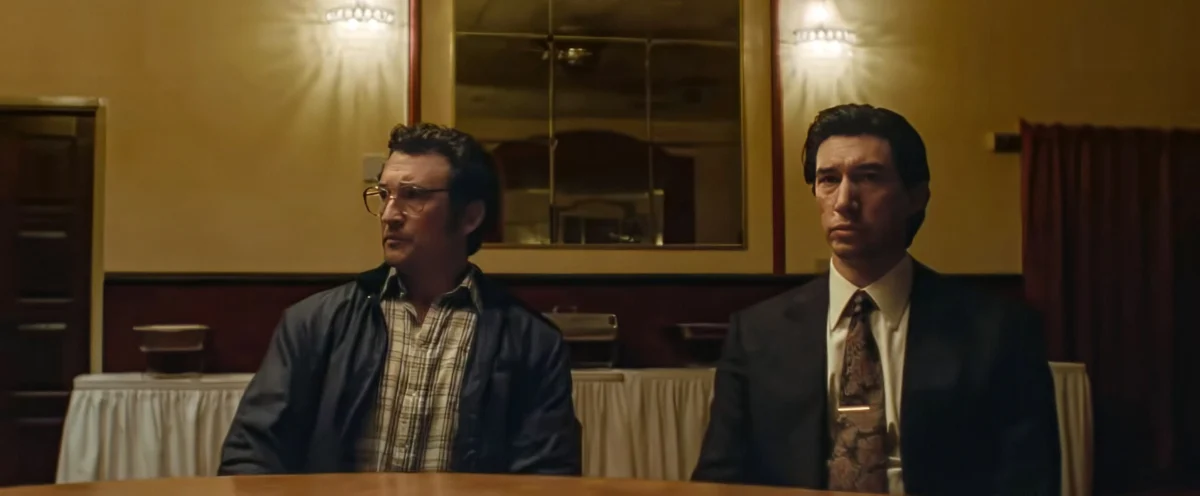
The film follows Gary Pearl (played by Adam Driver), a former police officer whose life is defined by a rigid adherence to the rules—rules he eventually breaks. In a moment of desperation, Gary recruits his brother, Irwin (Miles Teller), for a business deal that seems like a surefire path to stability. Predictably, the venture proves to be a mirage. The deal involves local Russian mobsters with a stranglehold on the city’s shipping docks, turning the brothers’ attempt at financial salvation into a life-or-death struggle.
Parallel to this descent, the narrative explores the internal fracturing of the family unit. Scarlett Johansson’s character, Hester, carries a secret that acts as a catalyst for the family’s collapse. As the pressure mounts, the bonds between the characters fray, illustrating the classic Gray motif: the life-altering, often devastating consequences that follow a single, impulsive decision made in the name of security or success.

Implications for the Industry
The decision by Neon to launch Paper Tiger in 35mm at such a high-profile festival as NYFF sends a ripple through the industry. It challenges the assumption that digital projection is the inevitable end-point of film history. While digital exhibition has democratized access, it has also led to a degree of visual homogenization. By prioritizing a specialized, high-effort format for a wide audience, Neon and Gray are betting that audiences are hungry for "event cinema"—experiences that cannot be replicated at home on a television screen.
This strategy aligns with the broader conversation regarding the sustainability of film culture. As AI and automated production tools begin to permeate the industry, the "human" element—the physical, the imperfect, and the labored-over—takes on increased value. The 35mm print becomes not just a distribution medium, but a badge of authenticity.
Beyond the Premiere: A Global Conversation
The conversation surrounding Paper Tiger will extend well beyond the opening night lights of New York. The film is set to receive a wide theatrical release starting Friday, November 13, inviting the general public to engage with the work.
In the interim, the discourse will be bolstered by an upcoming, in-depth look at the film’s production. IndieWire’s "Screen Talk" podcast co-hosts, Anne Thompson and Ryan Lattanzio, are scheduled to lead a live Q&A with James Gray at the Virginia Film Festival on October 22. The event will see Gray honored with the festival’s prestigious directing award, and the subsequent recording will be distributed across all major podcast platforms. This series of events ensures that Paper Tiger remains at the forefront of the cultural conversation as it makes its way into theaters nationwide.
As the industry watches, Paper Tiger stands as a test case for the modern blockbuster’s potential to retain an artisan soul. Whether through its complex, character-driven script or its refusal to abandon the legacy of celluloid, the film represents a bridge between the storied past of New York filmmaking and a future that, at least for some, remains stubbornly, beautifully analog.
For those attending the New York Film Festival this September, the experience of seeing Paper Tiger on 35mm will serve as a reminder of what the big screen is truly for: a shared, singular moment of light, shadow, and the undeniable warmth of a "continuous signal."
