
Clash of Ideologies: Cristian Mungiu’s ‘Fjord’ Examines the Collisions of Modern State Power and Traditional Faith

Main Facts
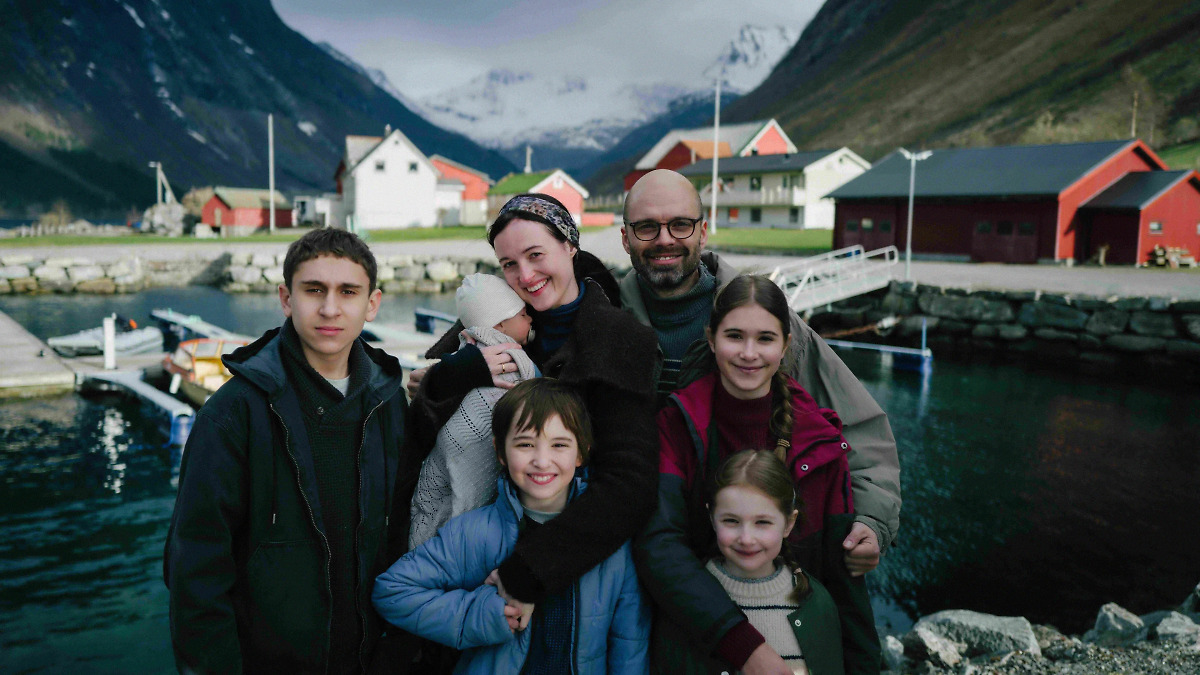
Renowned Romanian auteur Cristian Mungiu returns with his latest feature, Fjord, a gripping psychological and legal drama that premiered to critical acclaim at the Cannes Film Festival. Set against the breathtaking yet chilling backdrop of the Norwegian coast, the film stars Sebastian Stan as Mihai Gheorghiu, a Romanian aeronautical engineer, and Renate Reinsve as Lisbet Gheorghiu, a Norwegian nurse. The couple has relocated their large, seven-person family from Bucharest to a picturesque seaside village in Norway, seeking a peaceful life.
However, their deeply held, conservative evangelical Christian beliefs quickly set them on a collision course with the hyper-progressive social structures of their new home. The core inciting incident of the narrative occurs when Norwegian Child Protective Services (CPS) abruptly intervenes, seizing the couple’s five children over allegations of physical discipline.
The film, slated for a theatrical release on October 9 by distributor NEON, dives headfirst into complex territory: the friction between state-mandated child welfare laws, traditional religious upbringing, immigrant cultural assimilation, and the limits of state overreach. Featuring stunning cinematography by Tudor Vladimir Panduru and a tightly wound script, Fjord positions itself as one of the most provocative and fiercely debated cinematic releases of the year.
Chronology
To understand the trajectory of the Gheorghiu family’s harrowing ordeal, the events of Fjord unfold through a distinct sequence of cultural adaptation, conflict, and legal battle:
- Relocation to Norway: Seeking a quiet environment for their family of seven, Mihai and Lisbet move from Bucharest to a small Norwegian coastal village framed by towering, powder-blue glacial mountains.
- Cultural Friction: The family maintains an intensely insular lifestyle centered on scripture reading and worship, shielding their eldest teenagers—Elia and Emmanuel—from modern technology and popular culture. Minor cultural clashes arise at school, where Elia plays a Christian hymn on an electric piano, prompting a polite yet firm reminder from a neighbor about local secular norms regarding proselytization.
- The Intervention: Following a teacher’s suspicion that the children have been subjected to corporal punishment, CPS officers arrive unannounced at the family home. Admitting to occasional, legacy-style spanking—a practice common in their conservative background but illegal in Norway—the parents watch in shock as their five children are taken into state custody.
- The Legal Nightmare: The Gheorghius face an impending civil trial, continuously postponed by CPS in anticipation of a criminal trial that could legally cement the permanent removal of their children under strict local legislation.
- The Unlikely Alliance: Desperate for representation, the family enlists Mia (played by Lisa Carlehed), a liberal, atheist neighbor whose rebellious daughter has befriended Elia and Emmanuel. Sympathetic to their plight and critical of the state’s clinical rigidity, Mia agrees to help frame the case around religious persecution and state overreach.
- The Climax: The narrative builds toward a high-stakes courtroom showdown overlooking the fjord, leaving the ultimate fate of the Gheorghiu family hanging in a tense, emotionally charged balance.
Supporting Data and Production Details
- Release Information: Fjord opens in theaters on October 9, distributed by NEON following its major festival run.
- Runtime: The film spans nearly two and a half hours, praised by critics for maintaining a breakneck, highly absorbing narrative pace.
- Key Cast Members:
- Sebastian Stan as Mihai Gheorghiu
- Renate Reinsve as Lisbet Gheorghiu
- Lisa Carlehed as Mia
- Vanessa Ceban as Elia
- Jonathan Ciprian Breazu as Emmanuel
- Henrikke Lund Olsen as Noora
- Behind the Camera:
- Director & Writer: Cristian Mungiu (known for Graduation and R.M.N.)
- Cinematography: Tudor Vladimir Panduru
- Colorist: Andu Radu
- Visual Motifs: The film heavily utilizes natural symbolism, notably cascading avalanches in the background of the western Norwegian port town, serving as a metaphor for the cold, unyielding, and institutionalized structures of modern Scandinavian society.
Official Responses and Thematic Perspectives
While Fjord is a work of fiction, it reflects real-world tensions regarding immigrant integration, religious liberty, and child welfare laws in Western Europe. Cristian Mungiu has structured the film to avoid offering simplistic moral absolutes, forcing viewers to grapple with opposing institutional and cultural viewpoints.
The Perspective of the State
Within the narrative, the actions of Norwegian Child Protective Services and the legal system are presented through a lens of unyielding administrative rationalism. The state operates on a fundamental, universally accepted principle: children should not be hit. Representatives are depicted speaking with clinical precision, prioritizing risk mitigation above all else. From this viewpoint, cultural relativism cannot excuse actions defined by local law as physical abuse, and the state has an absolute duty to intervene to protect minors, regardless of parental intent or religious conviction.
The Perspective of the Immigrant Family
Conversely, the Gheorghius experience the system not as a protective shield, but as an oppressive mechanism of cultural erasure. Having migrated from a conservative post-communist society where their traditional faith was respected, they find themselves penalized for norms that, while outdated globally, were practiced without malicious intent. As Mihai notes with pointed irony regarding the lack of historical totalitarianism in Norway, the state’s rigid liberalism has swung so far left that it mirrors the authoritarianism they thought they had left behind. Through the legal arguments championed by Mia, the family asserts that the swift removal of children for minor disciplinary infractions constitutes state-sponsored religious persecution and a disproportionate destruction of the family unit.
Implications
Fjord transcends its specific narrative framework to offer profound implications for contemporary socio-legal discourse:
- The Limits of Liberalism: The film questions where the boundary lies between protecting human rights (such as a child’s right to bodily autonomy) and respecting cultural or religious pluralism. When a progressive state enforces its values universally, it risks marginalizing minority groups whose traditional frameworks do not align with modern legal definitions.
- Institutional Empathy vs. Bureaucratic Coldness: Mungiu’s work critiques the modern reliance on clinical, data-driven institutional frameworks that often strip away human nuance. The film illustrates how systems designed to protect can sometimes inflict profound psychological trauma by ignoring the emotional bonds of biological families.
- The Evolution of Mungiu’s Filmography: Following his explorations of societal decay in Graduation and R.M.N., Mungiu continues to cement his reputation as one of Europe’s most vital cinematic voices. By setting a Romanian immigrant story against the icy backdrop of Scandinavia, he expands his lens to examine the friction points of a globalized, multi-cultural Europe.
As Fjord heads toward its October release, it is poised to spark fierce debates among audiences and critics alike, challenging viewers to reevaluate their stances on parental rights, state power, and the true cost of cultural assimilation.
