
The Silent End of an Era: Why Ridley Scott’s ‘The Dog Stars’ Stumbled at the Box Office
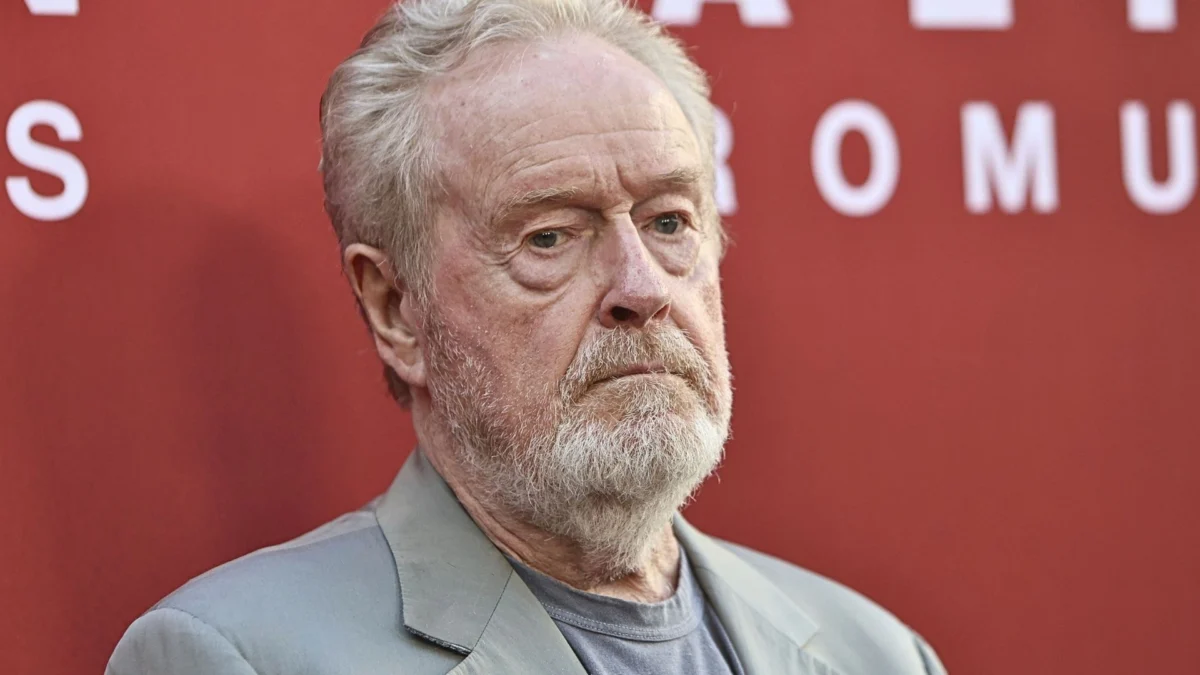
At 88 years old, Ridley Scott remains a singular force in Hollywood, a director whose work ethic and prolific output put filmmakers half his age to shame. Yet, the recent conclusion of the theatrical run for his latest film, The Dog Stars, serves as a sobering reality check for the legendary director. While Scott’s name has proven to be an ironclad brand when attached to high-octane sequels like Gladiator II or established intellectual properties, his recent attempts at standalone, original prestige cinema have faced an increasingly hostile theatrical landscape. With a worldwide gross of just $39 million against a substantial production budget, The Dog Stars stands as one of the most significant financial missteps of 2026.
A Chronology of a Theatrical Collapse
The trajectory of The Dog Stars was fraught with challenges from the outset. Initially slated for a March release, the film was pushed to the "dead zone" of late August—a period historically characterized by lower audience turnout and a lack of blockbuster momentum.
When the film finally premiered on August 28, 2026, it debuted in 3,330 domestic theaters. However, the opening weekend box office yield was a meager $7.7 million. Data from Box Office Mojo confirms that this was one of the weakest wide-release debuts for a Ridley Scott film in the 21st century. The decline that followed was not merely a slow taper; it was a near-vertical drop.
By the Labor Day weekend, theater owners had already begun to lose confidence. The screen count was slashed from over 3,000 locations to just 1,030 in a matter of days. Within another week, the film was relegated to 110 screens, and by the end of its six-week run, it was playing on roughly 100 screens, with per-theater averages falling into the double digits. The final tally stands at approximately $15 million domestically and $24 million internationally, totaling $39 million—a figure that represents a staggering shortfall for a production with a budget estimated between $70 million and $110 million.
Supporting Data: The Math of a Flop
To understand the scale of the failure, one must look at the fiscal realities of modern studio distribution. Even if one accepts the lower end of the production budget estimate ($70 million), the film would have needed to earn at least double that amount in global ticket sales just to approach a break-even point once marketing and exhibition fees are factored in.
The marketing spend for a film of this scale—starring heavy hitters like Jacob Elordi, Josh Brolin, Margaret Qualley, and Guy Pearce—would have been significant. When comparing these costs against the total revenue of $39 million, it becomes clear that the film was a significant liability for 20th Century Studios.
The film’s inability to capture the zeitgeist was exacerbated by the competition. While The Dog Stars was struggling to find its footing, the market was dominated by the juggernaut Spider-Man: Brand New Day, which was still capturing massive audiences in its fifth week, and the unexpected breakout success of Coyote vs. Acme. In a crowded marketplace, The Dog Stars lacked the "event" factor required to pull audiences away from more recognizable franchises or lighter, more accessible fare.
Critical Reception and Artistic Dissonance
Adapted from Peter Heller’s acclaimed 2012 novel, The Dog Stars promised a grounded, contemplative take on the post-apocalyptic genre. The narrative, which centers on Hig (Elordi), a pilot navigating a virus-ravaged Colorado, was intended to be a character study rather than a traditional survivalist action film.
However, the execution failed to resonate with both critics and the general public. On Rotten Tomatoes, the film holds a lukewarm 41% approval rating. The consensus among critics was that while the cinematography was characteristically "handsome" in the style expected of a Ridley Scott production, the film itself felt "sleepy" and lacking in narrative urgency.
Robert Daniels, writing for RogerEbert.com, provided one of the most biting critiques of the project: "It probably takes more effort to make a boring post-apocalyptic survivalist action film than to make a good one. If that’s the case, then Ridley Scott must’ve been working overtime on The Dog Stars." This sentiment echoes a wider criticism of late-career Scott: that his technical precision has occasionally eclipsed the emotional core of his storytelling. Audiences, perhaps fatigued by the sheer saturation of the post-apocalyptic genre, were looking for the intensity of films like 28 Years Later, but instead received a slow-burn, meditative drama that failed to find an audience hook.
Official Responses and Studio Strategy
While there have been no formal statements from Ridley Scott regarding the financial performance of The Dog Stars, industry insiders suggest that the studio was blindsided by the lack of traction. The decision to move the release date from March to August was a strategic gamble that failed to pay off, leaving the film to fend for itself in a market that had already moved on to the fall prestige season.
The failure of the film has also sparked a debate regarding the viability of "mid-budget" original projects. In an era where audiences are increasingly selective about what they pay to see in a theater, studios are becoming less willing to fund projects that do not have the potential for massive, multi-quadrant appeal. The Dog Stars sits in an awkward position: too expensive to be a niche indie darling, but too quiet and contemplative to be a four-quadrant blockbuster.

Implications for the Future of Original Cinema
The legacy of Ridley Scott is secure, regardless of the box office performance of any single film. Over five decades, he has delivered some of the most influential works in cinema history, from Alien and Blade Runner to Thelma & Louise and Gladiator. His "hit rate" has earned him a level of creative freedom that almost no other living director enjoys. It is highly unlikely that The Dog Stars will impact his ability to secure funding for future projects, as he continues to balance commercial successes with experimental endeavors.
However, the implications for the wider industry are significant. The failure of The Dog Stars is a cautionary tale about the disconnect between prestige pedigree and audience appetite. It highlights a growing trend: audiences are no longer showing up for the "name on the marquee" unless it is attached to a concept that promises specific entertainment value.
As the film transitions to streaming platforms, it is expected that The Dog Stars may find a more appreciative audience. The unhurried pace and atmospheric storytelling, which were viewed as negatives in a high-pressure theatrical environment, may be perfectly suited for the home-viewing experience. Streaming services often provide a "second life" for films that were overlooked during their theatrical windows, allowing them to be rediscovered on their own terms.
Final Reflections
The story of The Dog Stars is one of missed connections. It was a film made by one of the greatest visual stylists in history, featuring a talented cast, and based on a well-regarded piece of literature. Yet, it struggled to bridge the gap between artistic ambition and the commercial realities of the 2026 film market.
Ultimately, the failure of the film is not an indictment of Ridley Scott’s talent, but rather a reflection of a rapidly changing cinematic landscape. As the industry moves further away from the era where a director’s name alone could guarantee a box office hit, the challenge for filmmakers becomes not just how to make a great film, but how to ensure that film finds its place in an increasingly crowded and distracted world. The Dog Stars may be a footnote in Scott’s long and storied career, but it serves as a powerful reminder of how precarious the economics of original storytelling have become.
For now, Scott looks forward to his next projects, continuing to operate with the same relentless pace that has defined his career. While The Dog Stars may have left the theaters quietly, the conversations it has sparked regarding the future of the theatrical experience are anything but silent.
