
Beyond the Alien Encounter: Deconstructing the Psychological Horror of ‘The Crawling’
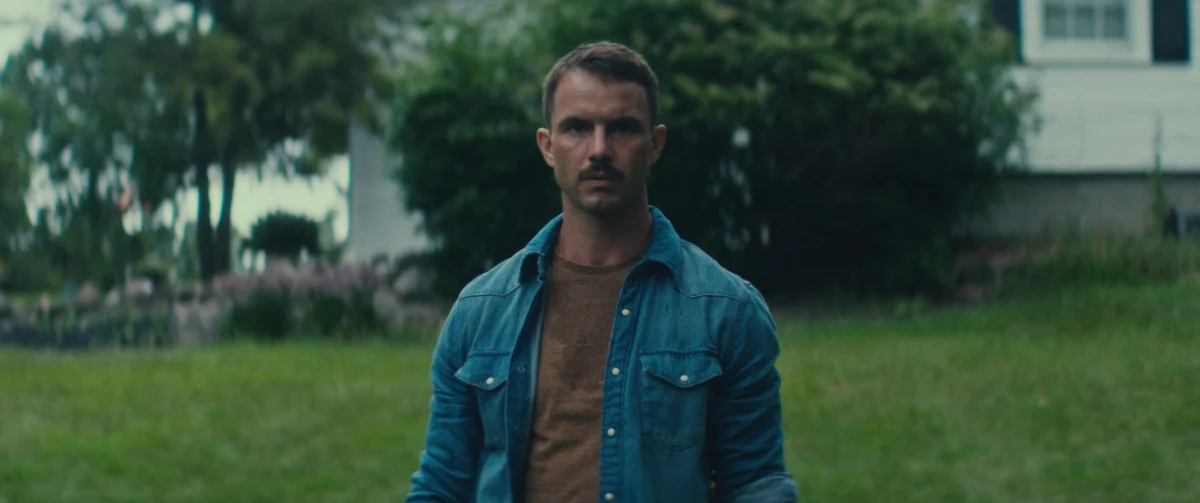
When writer-director Christian Everhard first conceived the premise for his latest feature film, The Crawling, it began not in a writer’s room, but as a visceral, late-night thought experiment. While vacationing in a remote, isolated cabin, the quiet of the wilderness triggered a cascade of "what-if" scenarios common to horror enthusiasts: an intruder breaking in, a wild animal breaching the perimeter, or something far more inexplicable.
What followed was a moment of genuine, unexplained terror—a flash of light in the dead of night that served as the catalyst for a project that would eventually challenge the boundaries of the home-invasion subgenre. Premiering to critical interest at the FilmQuest festival in Provo, Utah, on October 23, The Crawling has emerged as more than just a creature feature; it is a claustrophobic examination of fragile masculinity, marital decay, and the terrifying erosion of shared reality.
Main Facts: A Portrait of Marital Fractures
At its core, The Crawling follows Mike (Will Brittain of Kong: Skull Island) and Emma (Katherine Hughes of Tell Me Lies), a married couple attempting to reconcile their relationship during a secluded getaway. The trip is intended as a sanctuary, but it quickly transforms into a waking nightmare when Mike witnesses an extraterrestrial presence that Emma cannot—or will not—acknowledge.
The film operates on two distinct levels. Externally, it is a high-stakes encounter with the unknown, featuring practical creature effects from the legendary Onyx Forge duo, Steve Wang and Cleve Gunderman. Internally, it is a surgical dissection of a failing marriage. As the extraterrestrial threat intensifies, so does the psychological warfare between the spouses, leading to a series of twists that challenge the audience’s perception of who is the victim and who is the perpetrator.
Chronology: From Concept to Cinema
The development of The Crawling reflects the deliberate, character-first approach Everhard took toward the genre.
- The Inception: During a vacation, Everhard experienced the unexplained light phenomenon that would become the film’s inciting incident.
- The Scripting Phase: Everhard focused on creating a protagonist who initially repels the audience. He chose to make Mike an "alpha" police officer currently on suspension for assaulting a suspect—a man whose identity is inextricably linked to power, control, and traditional, often toxic, masculinity.
- Production: The film was shot with an emphasis on atmospheric isolation, utilizing the remote setting to heighten the sense of entrapment.
- World Premiere: The Crawling debuted at the FilmQuest festival in Provo, Utah, on October 23, where it garnered attention for its blend of body horror and emotional resonance.
- Distribution Status: The film is currently being represented for sales by producer Nick Donadio, with anticipation building for a wider theatrical release.
Supporting Data: The Anatomy of a Character-Driven Thriller
To understand why The Crawling works, one must look at the intentionality behind the character arcs. Everhard’s primary objective was to push the audience toward a difficult journey: starting with a character they actively dislike and ending with a sense of profound empathy.

The "Alpha" Fallacy
Mike is not a sympathetic hero. He is a man who defines his worth through physical dominance and professional authority. When he finds himself unable to control his environment—both the domestic situation with his wife and the external threat of the "crawling" entity—he begins to unravel.
"I thought about the guy who defines himself by his manliness and masculinity," Everhard noted during our post-screening interview. "What if I started the film with this guy that the audience probably won’t like? He’s presenting as an asshole. I was really interested in trying to see if I could take the audience from not liking this guy to starting to understand him."
The Therapeutic Conflict
The tension is further amplified by Emma’s profession as a therapist. Throughout the film, the audience is forced to ask: Is Mike losing his mind, or is Emma gaslighting him to maintain a sense of order? The dynamic shifts from a survival story to a battle of perception. Emma’s dismissal of Mike’s experience acts as a mirror for the couple’s deeper issues, particularly the pressure surrounding their struggle to conceive a child. The inability to "perform" in a traditional masculine sense becomes a source of deep shame for Mike, making him vulnerable in ways he is ill-equipped to process.
Official Responses: The Vision of the Filmmaker
In his conversation with Variety, Everhard expressed that his fascination lay in the deconstruction of gender and identity. The "alien" elements of the film are not merely meant to provide jump scares, but to serve as a catalyst for revealing the truth about the humans at the center of the story.
"Once I figured out what was going to happen to this guy, I started to think, ‘Who would be the one that this would shatter the most?’" Everhard explained. He suggests that the horror of the film is not just the creatures in the dark, but the realization that even when you believe you are with "the one," the foundation of that relationship can crumble under the pressure of secrets, unmet expectations, and the inability to communicate one’s failures.
The performances by Brittain and Hughes are central to this success. Brittain’s portrayal of a man stripped of his ego and authority is raw and unflinching, while Hughes navigates a character who evolves from a perceived "put-upon wife" into someone with hidden depths and darker motivations.

Implications: The Future of "Prestige" Horror
The Crawling arrives at a time when the horror genre is experiencing a renaissance of "elevated" or psychological storytelling. Much like the discourse surrounding Obsession and its commentary on modern dating, consent, and control, The Crawling positions itself to spark significant conversation regarding the nature of modern marriage.
A New Benchmark for Creature Effects
While the film is character-driven, it does not skimp on the genre staples. The collaboration with Steve Wang and Cleve Gunderman of Onyx Forge ensures that the "alien mayhem" is grounded in practical, tactile terror. In an era dominated by CGI, the use of physical, "gnarly" body horror provides a visceral impact that digital effects often struggle to replicate.
Impact on the Genre
If The Crawling finds the audience it deserves, it will likely be cited as a prime example of how genre films can function as mirrors for societal anxieties. By taking a character who is fundamentally flawed—a man who has abused his power—and forcing him to confront the limits of that power, Everhard is doing something inherently risky. The audience is invited to move past their initial judgment to find the humanity in the wreckage.
The film leaves the viewer with lingering questions, not just about the extraterrestrial origin of the events, but about the secrets we keep from our partners and the masks we wear to survive. As the credits roll, the audience is left to reconcile the horror of the encounter with the tragedy of the relationship, a combination that ensures The Crawling will be a subject of analysis for horror aficionados long after they leave the theater.
For those eager for a film that demands both a strong stomach for body horror and a keen eye for character nuance, The Crawling stands as a bold, terrifying entry in contemporary cinema. As it moves toward wider distribution, it remains a must-watch, not just for the spectacle of its extraterrestrial threat, but for the haunting, all-too-human drama that unfolds in its shadow.
