
Leviticus: Adrian Chiarella’s Debut Feature Redefines Queer Horror for a Callous Age
Main Facts
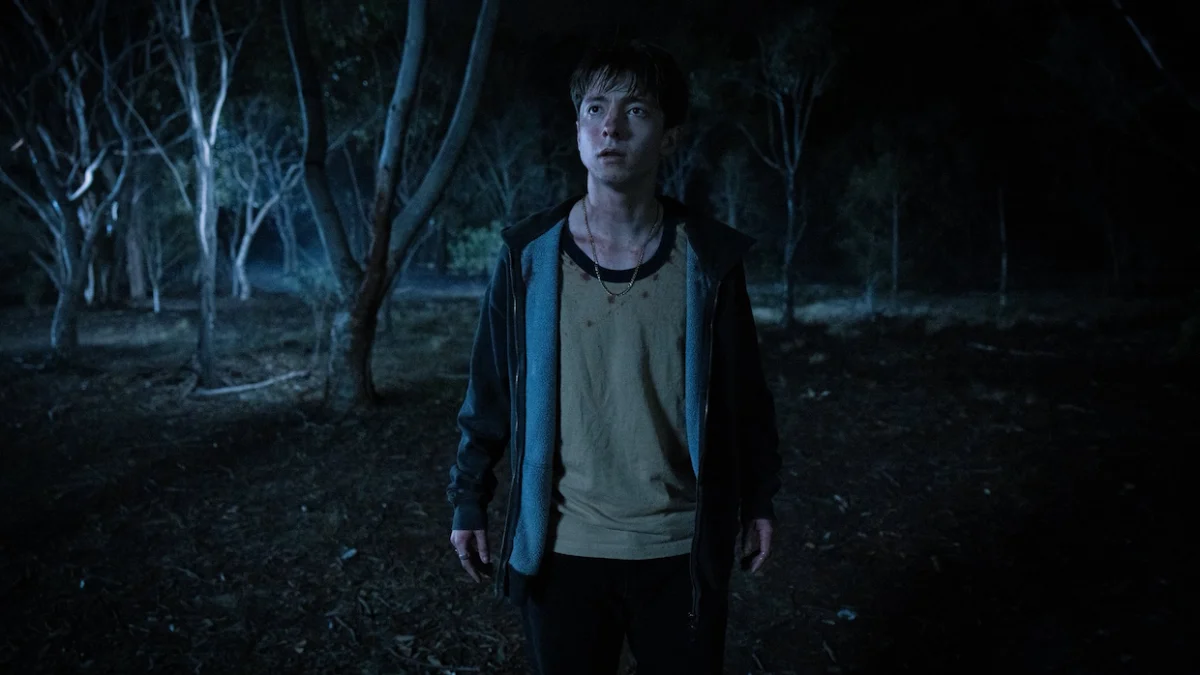
In his arresting feature-length directorial debut, Leviticus (2026), Australian filmmaker Adrian Chiarella delivers a visceral and conceptually sharp horror parable that weaponizes genre tropes to examine the resurgence of systemic homophobia. Set within the spiritually and spatially claustrophobic confines of an industrial town in the Australian boondocks, the film follows Naim (portrayed by Joe Bird), a shy new arrival who finds himself drawn into a charged, clandestine romance with his brashly charismatic classmate Ryan (Stacey Clausen).
However, their budding relationship unfolds under the shadow of a malevolent supernatural force: a shape-shifting entity spawned by a localized church hex disguised as conversion therapy. This monstrous entity preys on queer youth by manifesting as the person they desire most, operating on the pious, predatory dictum that "your desires will kill you."
The film stars an ensemble cast featuring Joe Bird, Stacey Clausen, Jeremy Blewitt as the preacher’s closeted son Hunter, and Mia Wasikowska as Naim’s morally complex mother. Blending classic genre mechanics—reminiscent of 1980s body and psychological horror—with modern socio-political anxieties, Leviticus uses the cinematic language of terror to interrogate how private lust is systematically twisted into public fear.
Chronology: The Anatomy of a Transgression and Its Aftermath
The narrative trajectory of Leviticus maps a descent into paranoia, driven by a sequence of events that highlights the inescapable nature of systemic bigotry.
The Cold Open and the Genesis of the Curse
The film opens with an archetypal horror sequence: a lesbian lifeguard is seduced in a poolside shower by an invisible lover—an incarnation of the church’s hex—which ultimately results in her brutal murder. This sets the mythological baseline for the narrative, establishing that isolation and unbridled queer desire are treated as capital offenses by the town’s religious establishment.
The Spark in the Ruins
The narrative shifts focus to Naim, navigating the desolate landscape of an Australian industrial-pastoral town. He crosses paths with Ryan. In an abandoned building, Ryan pins Naim to the floor in a display of aggressive bravado that culminates in a sudden, defining kiss. Mid-lip-lock, Naim catches his own reflection in a broken mirror and recoils—a moment that crystallizes the internalize self-loathing fostered by their environment.
The Jealous Betrayal
The fragile peace of their dynamic is fractured when Hunter, the deeply closeted son of the town’s fire-and-brimstone preacher, infiltrates their dynamic through a violent, erratic tryst with Ryan. Consumed by jealousy and operating under the naive assumption that a minor confession would yield a manageable punishment rather than institutionalized violence, Naim exposes the dynamic to the authorities of the town. This act of self-preservation-turned-betrayal triggers the central curse, aligning with Chiarella’s foundational horror rule: a transgression occurs, and the monstrous reckoning follows.
The Descent into Isolation
Stalked by an entity that exploits solitude and mimics trusted loved ones, Naim and Ryan are forced into desperate isolation. Their attempts to seek counsel—such as tracking down the surviving partner of the opening scene’s victim, now a paranoid recluse living in a local hospital—reveal that safety is an illusion. Betrayed by false allies, including Hunter’s duplicitous sister and Naim’s own mother, the boys realize that the psychological terror of the community is just as lethal as the supernatural monster hunting them.
Supporting Data and Production Context
Leviticus emerges at a distinct cultural crossroad, building on a rich history of queer subtext within horror cinema while forging a wholly original path.
- Cinematic Lineage: Director Adrian Chiarella has openly cited foundational genre works as his primary inspirations. These include Wes Craven’s A Nightmare on Elm Street Part 2: Freddy’s Revenge (1985)—widely celebrated by film scholars as a definitive allegory for the closet—and John Carpenter’s The Thing (1982), which examines the erosion of trust between the self and the "other."
- Setting and Aesthetics: The film’s production design deliberately juxtaposes harsh industrial architecture with sprawling, barren pastoral landscapes. This visual dichotomy serves Chiarella’s goal of constructing a "modern biblical parable," examining the tension between innate human nature and man-made religious edicts.
- Cinematography and Perception: The film’s visual grammar heavily emphasizes surveillance and ocular deception. Action is frequently framed through windows, mirrors, and security cameras. Characters unburdened by the curse cannot perceive the monster, mirroring the willful ignorance of a society that dismisses queer identity as a phase or external manipulation. Naim’s own vision repeatedly betrays him, as he struggles to distinguish between Ryan and the demonic double mimicking him.
Official Responses and Creative Intentions
Speaking on the motivations behind Leviticus, Adrian Chiarella has addressed the alarming cultural regression regarding LGBTQ+ safety and visibility over the past decade.
"I started thinking about what would be personal for me," Chiarella explains, "and horror movies were something that I turned to as a young queer teenager. I don’t think I was alone in that. The genre has been important to the community for a very, very long time."
Reflecting on his childhood viewing habits, Chiarella notes the irony of censorship:
"I was always told not to watch those films, which only made me want to watch them more."
The director also elaborated on the thematic blurring of protection and oppression within the narrative, particularly through the interactions between Naim and his mother, played by Mia Wasikowska. When the mother tells her terrified son, "We need fear," the line between maternal care and coercive control dissolves.
"I wanted to create a world where you weren’t sure you could trust even the real people around you anymore," Chiarella notes, emphasizing that the film’s terror stems as much from interpersonal betrayal as it does from supernatural intervention.
Implications for Modern Cinema and Queer Representation
The release of Leviticus carries profound implications for how contemporary cinema addresses queer trauma and resilience. In recent years, a significant portion of mainstream queer media has trended toward celebratory narratives, frequently sidestepping stories of crisis, systemic prejudice, and institutionalized violence under the assumption that such battles belong strictly to past decades. Leviticus rejects this complacency.
By returning to the aggressive, visceral mechanics of genre filmmaking, Chiarella confronts the persistence of queer anxiety head-on. However, the film avoids sinking into the unremittingly bleak fatalism that characterized older queer tragedies. Instead, it offers an ambiguously hopeful conclusion that speaks volumes about modern psychological endurance.
Discussing the film’s haunting final notes, Chiarella points to classic horror convention:
"We took that idea of how, in the final frame of a lot of horror movies, the monster comes crawling back, and you realize it may not actually be dead. I thought about what that would mean in this film—that whatever trauma these boys have been through may not go away for a very long time. It may never go away."
Ultimately, Leviticus transcends traditional monster-movie trappings. By fusing genre thrills with acute socio-political commentary, Chiarella delivers a cinematic experience that uses the visceral language of horror to unearth truths that are as intimate as they are terrifying.
