
Sylvester Stallone Defends Casting Daughter Scarlet in ‘Tulsa King,’ Embracing Hollywood Nepotism Head-On
Introduction
In the upper echelons of Hollywood, few debates provoke as much passionate discourse as the concept of nepotism. Often derisively referred to as the era of the "nepo baby," the entertainment industry has faced intense scrutiny regarding how legacy connections shape casting decisions. Few stars, however, respond to these criticisms with the unfiltered candor of action legend Sylvester Stallone.
Addressing recent murmurings surrounding the casting of his 24-year-old daughter, Scarlet Rose Stallone, in the hit Paramount+ crime drama Tulsa King, Stallone did not attempt to distance himself from the accusations. Instead, he leaned into them. Rather than apologizing for leveraging his considerable industry clout to secure his daughter a prominent role on the Taylor Sheridan-helmed series, the Rocky and Rambo icon argued that providing a career advantage for one’s children is a fundamental parental obligation.
As Tulsa King continues its strong run on Paramount+—with its recent fourth season airing and an early Season 5 renewal already locked in—the conversation surrounding Scarlet Stallone’s role as Spencer, an ex-barista and stable hand turned criminal enterprise insider, has ignited a wider dialogue about family, legacy, and what it truly means to be a supportive parent in the public eye.
Main Facts
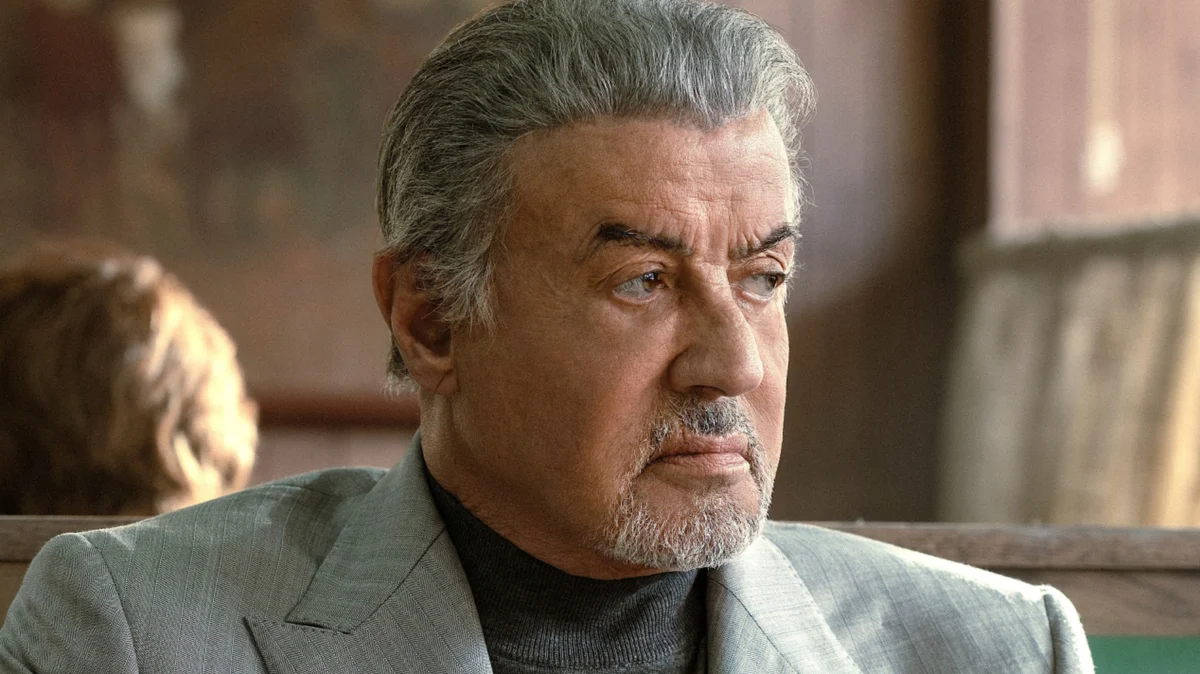
The core of the controversy centers on Scarlet Rose Stallone’s recurring role in Tulsa King, a mob drama starring Sylvester Stallone as Dwight "The General" Manfredi, a New York mafia capo trying to reestablish his criminal empire in Tulsa, Oklahoma. Across the series, Scarlet plays Spencer, a young woman with a modest background who eventually gets pulled into Manfredi’s orbit.
While the show features a sprawling, critically praised ensemble cast, Scarlet’s inclusion has frequently been singled out by cultural commentators who view it as a textbook example of industry nepotism. In a landscape where critics and audiences alike increasingly scrutinize the pathways through which young actors break into the business, having a legendary Hollywood father cast you in his prestige television show is prime territory for debate.
Yet, Stallone’s perspective is remarkably unbothered by external optics. In a candid interview with USA Today, the veteran actor dismantled the stigma surrounding professional favoritism within families.
"First they go, ‘Nepotism is terrible,’" Stallone remarked. "I said, ‘Oh please, you’re not a good parent if you haven’t performed a little nepotism. Then obviously you don’t care about your kids, because they come first.’"
He doubled down on the sentiment, pointing out that utilizing one’s hard-earned success to benefit one’s offspring is a natural human instinct, regardless of the industry. "’Of course it’s nepotism, you idiot,’ Stallone added. ‘That’s why we’re parents. We want the best for our children. So obviously we let them have every advantage.’"
Chronology: A Family Legacy on Screen
Working with his children is far from a new endeavor for Sylvester Stallone. His family’s cinematic footprint spans decades, weaving a rich historical tapestry of father-child collaborations across multiple generations of filmmaking.
Early Beginnings and the Rocky Franchise
Scarlet Rose Stallone’s journey into acting actually began long before the cameras started rolling on Tulsa King. Her professional acting debut came in the 2014 crime film Reach Me, which starred her father. Even then, the experience offered a humorous reality check for the aspiring actor.
"I literally just had to say one tiny line, and they had to cut that in half!" Scarlet recalled in a past interview with Harper’s Bazaar. "It was pretty humiliating."
However, she is far from the only Stallone sibling to share the screen with their famous father. The tradition stretches back to the late 1970s. As a newborn infant, Sylvester’s second-born son, Seargeoh, made an uncredited appearance as Rocky Balboa’s newborn baby in the 1979 classic Rocky II.
Over a decade later, Sylvester’s eldest son, Sage Stallone—who tragically passed away in 2012—took on the memorable role of Rocky Balboa Jr. in 1990’s Rocky V. The father-son duo collaborated professionally once more six years later in the 1996 disaster thriller Daylight.
While Stallone’s daughters Sistine and Sophia have pursued various paths in entertainment, modeling, and media—with Sistine securing several small acting credits in film and television—Scarlet is the first to carve out a substantial, recurring television role alongside her father.
The Evolution of Tulsa King
With Tulsa King currently airing its fourth season, Scarlet’s character, Spencer, has evolved significantly from her early days as a barista and stable hand. Her integration into Dwight Manfredi’s inner circle has given the young actress a chance to showcase her dramatic chops on a major streaming platform.
Furthermore, her performance has evidently earned the confidence of the show’s creative team. Following a recent announcement that Tulsa King has officially been renewed for Season 5 by Paramount+, it was also revealed that Scarlet has been officially promoted to a series regular. This guarantees that the father-daughter on-screen dynamic will continue to be a fixture of the show for the foreseeable future.
Supporting Data and Production Context
To understand the weight of the Tulsa King casting, one must examine the sheer scale and cultural footprint of the series itself. Created by Taylor Sheridan—the powerhouse writer behind Yellowstone, Mayor of Kingstown, and 1923—Tulsa King is one of the crown jewels of Paramount+’s scripted programming slate.
The series represents a major milestone in Sylvester Stallone’s legendary career, marking his first-ever starring role in a scripted television series. Given the massive budgets, high-stakes storytelling, and rigorous production schedules associated with Sheridan’s television universes, casting decisions are heavily scrutinized by network executives, showrunners, and fans alike.
When Tulsa King premiered, it shattered records for Paramount+, proving that Stallone’s enduring star power could successfully transition from the silver screen to episodic television. In this high-pressure environment, adding a relative to the call sheet could easily become a point of friction if the performance does not meet industry standards. However, industry insiders have noted that Scarlet’s tenure on the show has been steady, allowing her to transition from a guest star to a foundational member of the ensemble.
Official Responses and Industry Perspectives
Sylvester Stallone’s defense of his parental choices arrives amid a broader, industry-wide reckoning regarding "nepo babies." Over the past several years, cultural discourse has increasingly trained its sights on actors, models, and musicians who benefit from familial connections in Hollywood. While some legacy stars choose to downplay their advantages or distance themselves from their famous parents, Stallone’s approach is refreshingly blunt: he refuses to apologize for wanting to elevate his children.
During an appearance on CBS Sunday Morning at 92NY, Stallone reflected on how his relationship with Scarlet has evolved on set now that she is 24 years old. Rather than doling out patronizing paternal advice, Stallone admitted that the dynamic has shifted.
"She gives me advice actually. She’s very like, daddy’s girl," Stallone shared. "So now I don’t suggest anything… She’s really grown up. All my daughters have grown up in this world, so they knew more than I do."
This mutual respect on set highlights a transition from a father pulling strings to an established professional working alongside a capable colleague. While critics may continue to debate the ethical framework of Hollywood casting, the actors themselves appear focused on the day-to-day realities of production.
Implications for Hollywood and the Future of Legacy Casting
The ongoing debate surrounding Scarlet Stallone’s role in Tulsa King raises larger questions about how the entertainment industry evaluates talent and opportunity.
1. The Shifting Definition of Meritocracy
Hollywood has long prided itself on being a meritocracy—a dream factory where raw talent and perseverance can elevate anyone from obscurity to stardom, much like Sylvester Stallone’s own legendary rise from a struggling actor writing the script for Rocky in a cramped New York apartment. When legacy actors enter the fold, it challenges the romanticized ideal of the industry. Stallone’s argument, however, highlights a parallel truth: parenting in the public eye involves leveraging whatever resources, connections, and advantages one has amassed to secure a better future for one’s offspring.
2. The Responsibility of the Legacy Performer
For actors like Scarlet Stallone, having a famous parent opens doors that remain firmly locked for thousands of hopefuls, but it also places a magnifying glass over every performance. To survive and thrive in a series as prominent as Tulsa King, legacy actors must ultimately deliver work that justifies their presence on screen. Her promotion to series regular for Season 5 suggests that she has passed the internal threshold required by the show’s creators to sustain a long-term role.
3. The Normalization of Openness
Perhaps the most notable aspect of Sylvester Stallone’s commentary is his refusal to engage in corporate PR gymnastics. By openly owning up to nepotism with a mixture of humor and fierce protective pride ("That’s why we’re parents"), Stallone bypasses the traditional defensive playbook. In doing so, he shifts the conversation away from corporate double-talk and toward a raw, unapologetic defense of family loyalty.
Conclusion
As Tulsa King marches toward its fifth season on Paramount+, the show remains a powerhouse for the streaming network, anchored by Sylvester Stallone’s commanding lead performance and an increasingly confident supporting cast. While the debate over Hollywood nepotism will undoubtedly rage on across social media and entertainment columns, Sylvester Stallone has drawn a definitive line in the sand.
For the iconic action star, the choice is simple: protecting and promoting his children isn’t a conflict of interest—it is the ultimate job description of a parent. Whether audiences view that stance through a lens of skepticism or understanding, one thing is certain: the Stallone family dynasty will continue to leave its indelible mark on the screen for years to come.
