
The High-Stakes Battlefield: Unpacking the Legal Carnage in HBO’s War
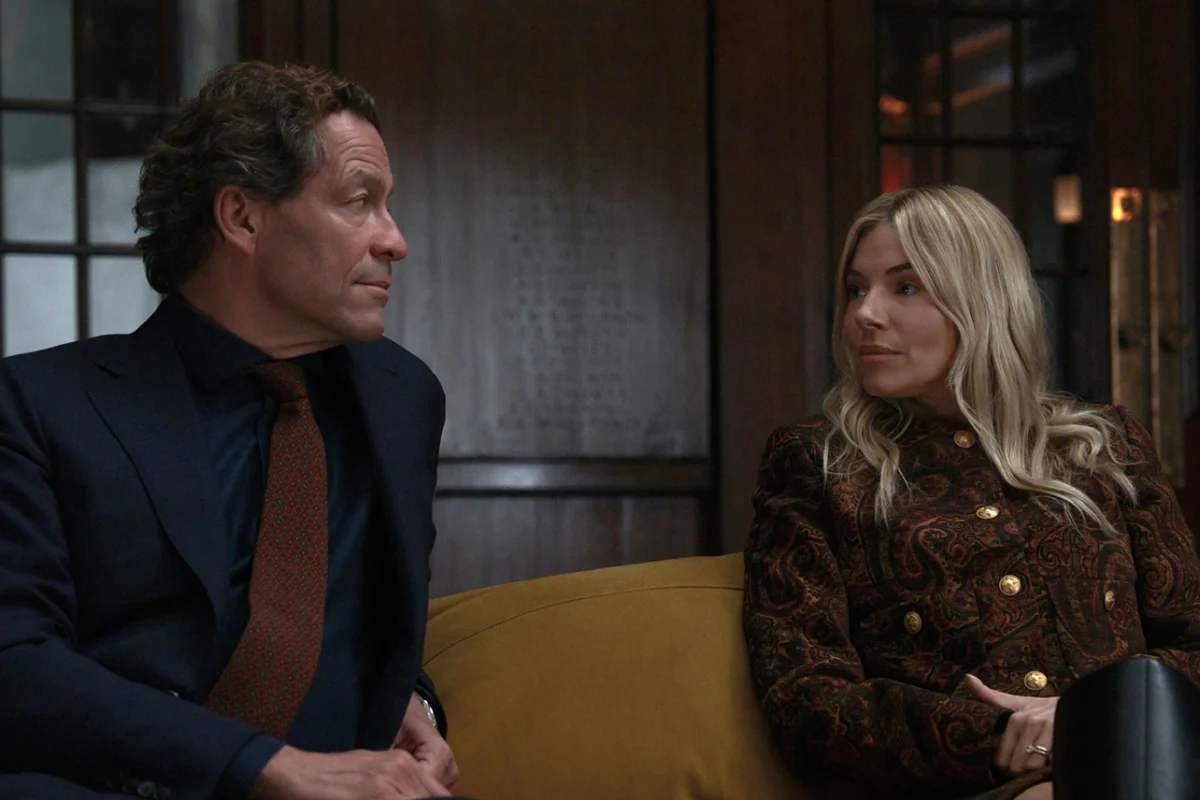
In the cutthroat arena of elite matrimonial law, the concept of an "amicable divorce" is not merely an oxymoron—it is a punchline. HBO’s gripping drama War continues to peel back the polished veneer of high-net-worth litigation, revealing a world where the law is not a moral compass, but a blunt instrument to be wielded in the service of total destruction. In its second episode, "No More Nasty Surprises," the series cements its reputation as a cold-eyed study of power, greed, and the systemic erosion of ethics in the pursuit of a "win."
The Legal Facade: Mediation as Weaponry
For the uninitiated viewer, Episode 2 serves as a cynical primer on the legal mechanics of divorce. Beatrice Ubosi, a senior partner at the ruthless firm Cathcarts, offers a textbook explanation of mediation and arbitration. However, the scene quickly pivots from pedagogical to predatory. As Ubosi outlines the stages of the process, she dismisses them as bureaucratic formalities—mere vehicles for opposition research.
In the Cathcarts "war room," the atmosphere is thick with the scent of expensive cologne and moral bankruptcy. When junior associate Suzie Levitniik (Kartanya Maynard) asks with genuine, perhaps naive, curiosity if an "amiable outcome" is even possible, the senior partners respond with derisive laughter. In the stratosphere where Cathcarts operates, civility is an unaffordable luxury. Their clients pay for scorched-earth tactics, not equitable resolutions. This is not about the dissolution of a marriage; it is about the acquisition of a scalp.
Chronology of a Collapse: The Henderson-Duval Split
The central conflict—the divorce of Morgan Henderson (Dominic West) and Carla Duval—acts as the focal point for this systematic dismantling of decorum.
- The Initial Offensive: Following the aggressive serving of papers in the series premiere, the legal teams have moved into the tactical phase.
- The Interrogation of Indiscretions: St. John Smallwood, representing the Henderson side, attempts to box in Morgan regarding his history of infidelity. Dominic West delivers a masterclass in performative denial. When pressed on whether further "extramarital bombs" are set to detonate, his repeated, increasingly frantic "No" serves as a microcosm of the entire legal process: a frantic attempt to control a narrative that has already spiraled beyond the truth.
- The Betrayal from Within: The most shocking development in this timeline is the emergence of Johnny Warren. A junior associate at Taylor & Byrne—the firm representing Carla—Johnny has effectively defected. Driven by a mix of class resentment and the corrupting allure of Cathcarts’ influence, he has become a mole. Shuttling confidential information to his handler, David Schill, Johnny is not merely practicing law; he is engaging in industrial-grade corporate sabotage.
The Human Cost: Mumsy and the Commodity of Secrets
While the partners engage in grand-scale warfare, the periphery of the case is populated by those looking to turn misery into capital. Enter Melinda "Mumsy" Monroe (Camille Coduri), a character who injects a jarring, leopard-print reality into the sterile boardrooms of London’s elite.
Mumsy’s intervention—demanding a $20,000 payout in exchange for her daughter Flora’s silence—is a desperate attempt to extract a "tax" from the wealthy. It is a moment of raw, unvarnished opportunistic behavior. However, even this small-scale grift is swallowed by the machinery of the war. Johnny Warren’s interception of this demand, and his subsequent spin of the situation to his superiors, illustrates the series’ central thesis: everyone is a pawn, and every piece of information is a commodity to be traded.
Professional Ethics: A Relic of the Past?
The implications of War’s narrative are chilling. The show posits a legal system where the "truth" is an entirely flexible concept. For the lawyers at Cathcarts, the law is not a set of rules to be followed, but a series of obstacles to be bypassed or exploited.
When Carla Duval sits across from her husband during mediation, she claims to be "playing a role." She states, "I’m an actress; I know my lines." Yet, the performance is chillingly hollow. Her cold touch as she holds Morgan’s hand is a reminder that in this environment, intimacy is just another tactical maneuver. The question arises: if the clients are performing and the lawyers are sabotaging, does the law exist at all in these proceedings?
The series suggests that we have entered an era of "post-truth lawyering," where the only metric of success is the total depletion of the opposing party’s assets and emotional stamina.
Supporting Data: The Anatomy of a War Room
To understand the scope of the "War" depicted, one must look at the structural disparity between the firms involved:
- Taylor & Byrne: Characterized by a sense of professional pride and a belief in their own strategic brilliance. They are operating under the assumption that they are playing a game of chess, while their opponents have already lit the board on fire.
- Cathcarts: A firm that prioritizes the "win" above all else. They operate with a level of gleeful nihilism, knowing that they possess internal intelligence (thanks to Johnny Warren) that renders their opponents’ strategies obsolete.
- The Financials: The series emphasizes that these are cases where the price point is secondary to the outcome. The sheer volume of assets at stake—and the legal fees involved—creates a feedback loop that discourages settlement. The longer the war continues, the more the firms earn, and the less likely the clients are to reach a peace accord.
Implications for the Future of the Series
As the season progresses, the "messiness" of the proceedings is clearly the point. War is effectively chronicling the transition from traditional, albeit adversarial, legal representation to something closer to organized criminal behavior.
Beatrice Ubosi’s final note of the episode—that they will win, and the opposition has "no idea"—is a haunting promise of the carnage to come. The series is not merely a drama about a divorce; it is a thriller about the erosion of the social contract. By the time the final settlement is signed, it is unlikely that anyone involved will emerge with their integrity intact.
Conclusion: The Total War of Attrition
"No More Nasty Surprises" is a misnomer for the episode, as the entire narrative is built on the foundation of the next big surprise. Whether it is Johnny’s continued betrayal, the shifting allegiances of the family members, or the cold, calculated manipulation of the legal process, War is masterfully executing a descent into the dark heart of power.
As we watch the characters—both the wealthy principals and the ambitious attorneys—maneuver through this landscape, we are forced to confront an uncomfortable reality: in a world where the law is for sale, the highest bidder is never truly held to account. The divorce of Morgan Henderson and Carla Duval is merely the opening salvo in a much larger, and much more dangerous, conflict. The battlefield is set, the lines are drawn, and for the viewers, the spectacle of this moral collapse is as compelling as it is terrifying.
