
Unmasking the Origins of Terror: A Comprehensive Investigation into Peacock’s Crystal Lake and the Reimagined Lore of Jason Voorhees
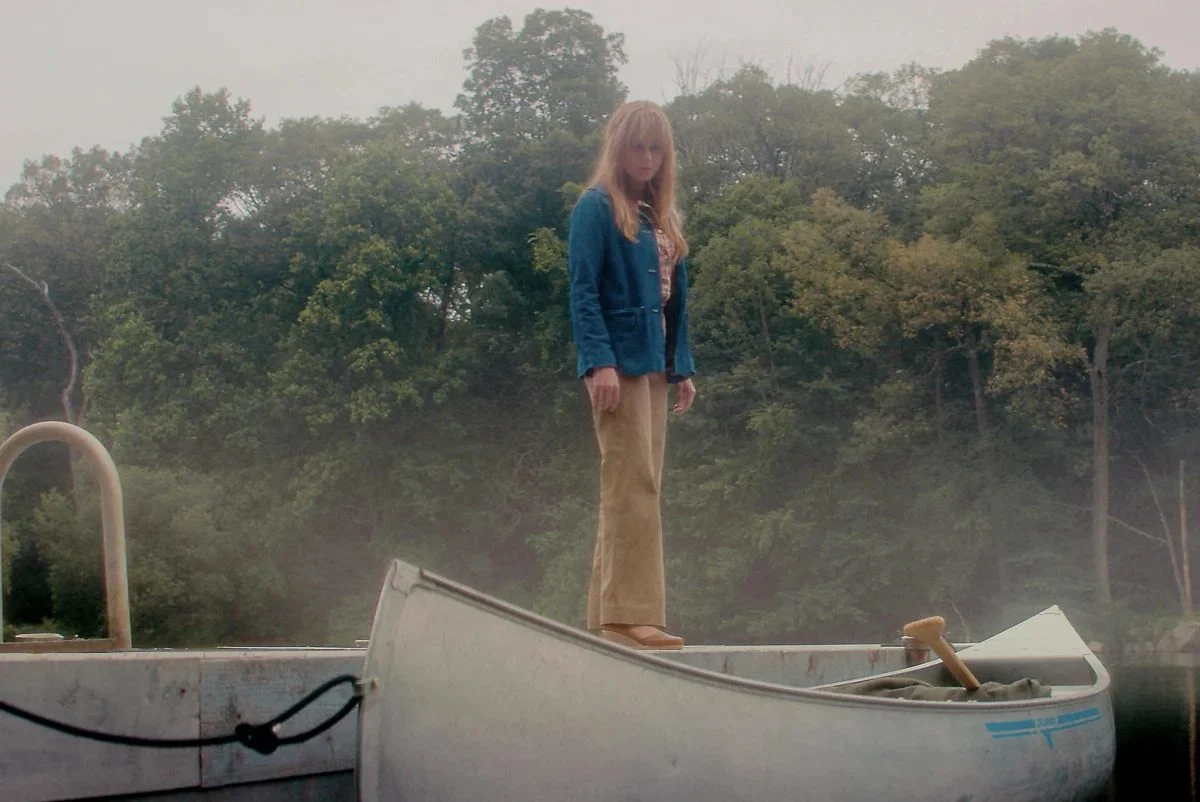
Few cinematic figures command the immediate cultural recognition of Jason Voorhees. For over four decades, the iconic hockey mask and blood-stained machete have served as universal shorthand for cinematic terror, cementing a legacy that spans a dozen feature films, countless merchandise lines, comic books, and video games. Yet, for all his dominance in pop culture, the bedrock of the Friday the 13th franchise has always rested on the shoulders of the original catalyst: Pamela Voorhees.
Until now, the exact genesis of the Voorhees family tree remained largely shrouded in myth, reduced to a mother’s fractured psyche and a tragic drowning at a summer camp. Peacock’s prequel series, Crystal Lake, blows the lid off this cinematic mythology. By rewinding the clock to explore the haunting, twisted, and profoundly heartbreaking origins of both Pamela and her son, the series redefines everything fans thought they knew about horror’s most infamous dynasty.
Main Facts: Deconstructing the Myth of Camp Crystal Lake
The overarching narrative of Crystal Lake challenges foundational elements of the Friday the 13th canon, most notably the family surname itself. From the series premiere, viewers are confronted with a startling revelation: Jason and Pamela’s actual last name is not Voorhees.
When confronted by individuals posing as law enforcement officers, Pamela insists that "Voorhees" is simply a family moniker—leaving ambiguity as to whether it is a maternal maiden name or a complete fabrication. Operating under the alias Pamela Wittering, she finds herself hunted by dangerous, shadowy forces connected to a seemingly innocuous household product corporation known as Bellflower.
Rather than a simple tale of grief and camp-counselor negligence, Crystal Lake reframes the Voorhees tragedy as a dark science-fiction conspiracy involving Cold War paranoia, human experimentation, and state-sponsored biogenetics. The series meticulously tracks a timeline stretching from 1959 to the early 1970s, exposing a web of corporate corruption that turns the creation of a supernatural slasher icon into a chilling government-sanctioned experiment.
Chronology: From Cabaret Stages to the Woods of Camp Crystal Lake
To understand how a young mother from New York City transformed into a ruthless avenger, and how her infant son became an unkillable force of nature, one must trace the meticulously detailed timeline presented across the series.
1959: The New York Incident and the Move to Houston
The origin story properly ignites in 1959 New York City. Pamela, then performing under her maiden name Pamela Scott, is tasting early success as a nightclub and cabaret singer. However, her promising trajectory is violently interrupted on stage when she experiences acute abdominal pain and hemorrhaging. Rushed to the hospital, she is accompanied by Elias—a high-ranking operative for Bellflower who had previously threatened characters at a local boardwalk.

Confronted with a grim prognosis of a miscarriage, Pamela is subjected to intense pressure. While a attending physician recommends standard medical intervention, Elias intervenes, promising that Bellflower possesses an avant-garde, state-of-the-art medical facility capable of saving the pregnancy. Reluctantly agreeing in exchange for a marriage proposal, Pamela becomes Pamela Wittering and relocates to Houston, Texas.
The Houston Experiment and the Birth of Jason
In Houston, Pamela is housed in a secluded suburban neighborhood alongside other expectant mothers enrolled in the same experimental protocol. Disconcerted by unusual dietary regimens and the erratic behavior of her peers, Pamela grows deeply suspicious. Her worst fears are realized when a neighboring mother, traumatized by the experimental treatments, gives birth to a stillborn child and subsequently dies by suicide.
The psychological shock induces early labor. Pamela gives birth on Friday the 13th to a baby boy—Jason—who survives the birth but presents with congenital physical deformities and anomalous medical readings. Despite the trauma, Pamela’s maternal instincts immediately take hold, bonding her fiercely to her child.
Corporate Coercion and the "Immortality" Discovery
Shortly after returning home, Elias is promoted, forcing him to leave Pamela isolated with the newborn. Infant Jason’s persistent, inconsolable crying pushes Pamela to the brink of exhaustion. Discovering that running bathwater successfully calms him, she inadvertently falls asleep, leaving the baby submerged.
Upon returning from a supposed "work trip," Elias discovers the seemingly lifeless infant. To the utter shock of both parents, the submerged child spontaneously resumes breathing—marking the empirical genesis of Jason’s anomalous, unkillable nature.
This miraculous survival triggers a dark pivot in the family’s dynamic. Pamela is prescribed heavy psychiatric medications—a tactic that gradually strips away her autonomy—while Bellflower nurses and Elias subject young Jason to increasingly invasive, radiation-heavy "treatments."
The Breaking Point and the Truth About Bellflower
By Jason’s fourth birthday, the physical toll of the experiments becomes undeniable. During a birthday celebration, Jason is exposed inside the family bomb shelter to off-the-charts radiation levels, resulting in severe hair loss and cranial hemorrhaging. When Pamela confronts Elias, he hides behind the era’s patriarchal power structures, emphasizing his stable corporate career against her institutionalized psychiatric status.

The ultimate conspiracy is unveiled during a corporate gala, where Elias delivers a chilling address. Against the backdrop of escalating Cold War tensions and the looming threat of nuclear annihilation with the Soviet Union, Elias explains that Bellflower sought to reverse-engineer nature’s ultimate survivor: the cockroach.
The corporation’s objective: to artificially replicate the cellular processes that allow cockroaches to withstand atomic blasts. Their primary test subject—Project J—is none other than Jason. Through calculated physical and radiological trauma, Jason’s cellular structure adapts, accelerating growth and granting him cellular immortality, making him impervious to traditional mortality.
Supporting Data: The Apparatus of Control and Horror
The world-building of Crystal Lake leans heavily into the oppressive social and political climate of mid-20th-century America:
- The Rights Disparity: The series highlights the systemic vulnerability of women in the late 1950s and 1960s, where corporate husbands could weaponize psychiatric diagnoses and institutional power to strip mothers of custody and bodily autonomy.
- The Bellflower Corporation: Operating as a seemingly benign consumer goods manufacturer, Bellflower functioned as a deep-state biological warfare proxy, utilizing pregnant women and fetuses as disposable data points in preemptive nuclear survival research.
- Cellular Regeneration Metrics: In-universe telemetry data revealed during Elias’s corporate presentation indicates that Jason’s cellular structure rapidly heals and mutates under stress, explaining his supernatural strength, resistance to drowning, and sustained regenerative abilities seen in later decades.
Official Responses and Creative Vision
The pivot toward exploring the psychological and sci-fi roots of the Friday the 13th franchise has generated widespread discussion across the entertainment industry. Creators and network executives have emphasized that expanding the narrative was essential to breathing new life into a nearly half-century-old property.
"We didn’t want to simply retell the story of teenagers in the woods," noted a production insider close to the project. "To make audiences care about Jason and Pamela today, we had to peel back the hockey mask and examine the systemic, institutional nightmares that birthed them. The real monster wasn’t just a boy who wouldn’t drown; it was the machinery that created him."
Critical reception has praised the series for subverting slasher tropes, blending body horror with high-stakes conspiracy drama, and delivering a deeply nuanced, albeit terrifying, portrayal of maternal protection warped by institutional trauma.
Implications for the Franchise and Future Seasons
As Crystal Lake reaches its explosive first-season finale, the landscape of the franchise has shifted irrevocably.

The finale delivers a cathartic, albeit brutal, reckoning. Following an intense shootout with Bellflower operatives, Pamela is cornered before a masked figure intervenes. Brought to the familiar woods and cabins of Crystal Lake, Pamela finally reunites with an older, larger, and entirely silent Jason. When Elias attempts to reason with his son, the super-powered Jason responds by crushing his father’s skull with casual brutality.
Though Jason briefly turns his aggression toward Pamela, a flicker of recognition—grounded in his mother’s unconditional, albeit warped, devotion—stays his hand. Standing amidst the wilderness, a delirious Pamela declares that the woods now belong exclusively to them.
What Lies Ahead?
The narrative threads left dangling in the finale practically demand a second season:
- The Fate of Bellflower: With Elias eliminated, the corporate entity behind the atomic-cockroach experiments remains active, posing an ongoing threat to the mother-son duo.
- The Crystal Lake Era: How Pamela successfully manages to harbor an anomalous, rapidly mutating superhuman child undetected in the remote woods of New Jersey for years leading up to the events of the 1980 original film remains a masterclass in survival yet to be fully detailed.
- Unresolved Local Dynamics: The fates of local law enforcement, including Chief Brooks and his investigative reporter sister Grace, remain unresolved, setting the stage for future clashes between local authorities and the nascent serial killer.
By intertwining Cold War paranoia, corporate malfeasance, and a twisted maternal bond, Crystal Lake has successfully transformed a simple slasher antagonist into a complex tragedy of science and survival. If subsequent seasons maintain this narrative ambition, the legacy of the Voorhees family will continue to haunt horror television for years to come.
