Demolishing the Past: An In-Depth Look at Deconstructeam’s Provocative New Title, Virtue and a Sledgehammer
By Staff Gaming Correspondent Published: October 2026
Main Facts
Your hometown is scheduled for demolition, and no paperwork is required. Published by Devolver Digital and co-developed by the celebrated Spanish indie studio Deconstructeam alongside Selkie Harbour, Virtue and a Sledgehammer challenges players to pick up a heavy mallet and literally deconstruct the past.
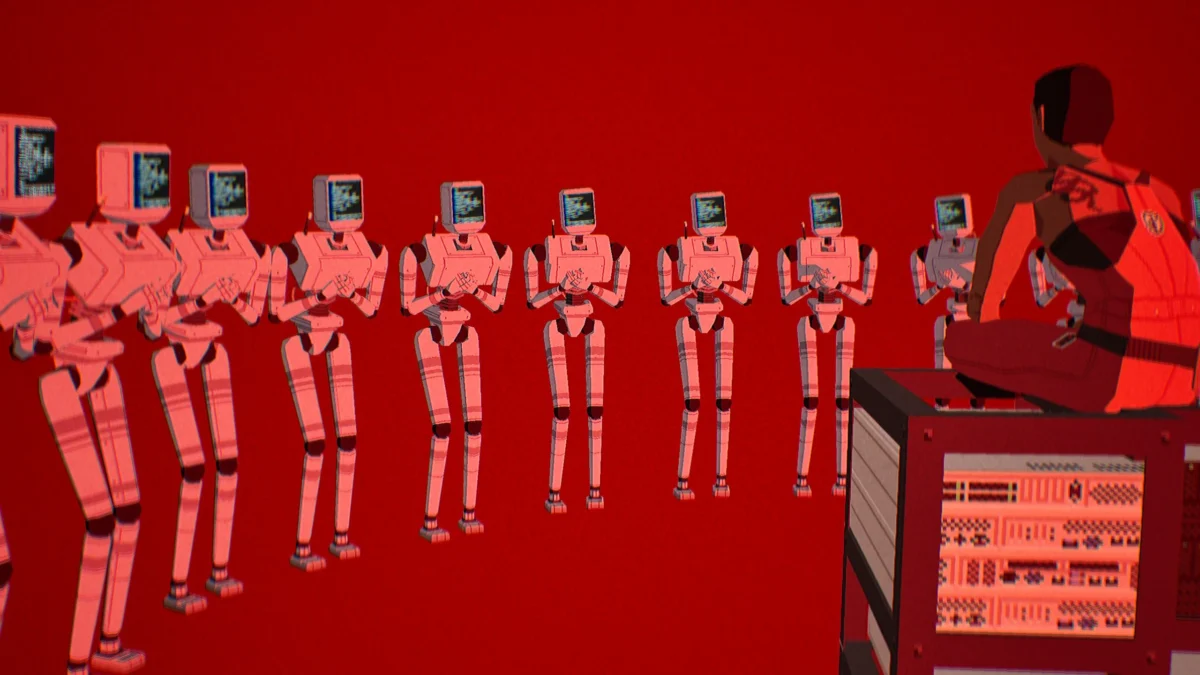
As the protagonist, Pratelle, players traverse a deteriorating rural Spanish landscape, leveling buildings, monuments, and lingering artificial intelligence constructs. Blending a minimalist "walking simulator" framework with a singular, hypnotic gameplay verb—smashing objects—the game functions as an explosively emotional exploration of family trauma, codependency, the pitfalls of human empathy, and the societal anxieties surrounding generative artificial intelligence.
Set for a PC release on October 27, 2026, Virtue and a Sledgehammer marks a significant mechanical departure for Deconstructeam. Known widely for narrative-heavy "reading games" such as The Red Strings Club, The Cosmic Wheel Sisterhood, and the poignant vignettes found within the Essays on Empathy collection, this upcoming release introduces active gameplay mechanics to the studio’s portfolio for the very first time.
Chronology: The Journey to Virtue and a Sledgehammer
Deconstructeam has spent years carving out a distinct reputation in the independent gaming sector as masters of interactive storytelling, choice-driven dialogue, and deep philosophical inquiry. Historically, their titles required players to absorb vast amounts of text, engaging with moral dilemmas through text boxes, tarot-like card creation, or bartending minigames.
The conceptual roots of Virtue and a Sledgehammer began to take shape as the core trio—consisting of Jordi de Paco, artist Marina González, and composer/level designer Paula Ruiz (known professionally as fingerspit)—reflected on the shifting technological and cultural landscapes of the 2020s. Observing how rapidly everyday people began forming emotional dependencies on conversational artificial intelligence, the developers felt an escalating sense of dystopian displacement.
Rather than leaning into their comfort zone of text-heavy epics, the team made a conscious creative pivot. They wanted to test a brand-new audience by combining a universally satisfying, visceral video game mechanic—smashing things—with a narrative that fundamentally subverts the player’s expectations. Previews of the game have revealed roughly 75% of the total experience, bringing players to a pivotal narrative crossroads before cutting off ahead of its official late-October launch.
Supporting Data & Game Mechanics
At its core, Virtue and a Sledgehammer is deceptively simple. Players control Pratelle, whose hands never leave the handle of her massive sledgehammer. The tool features a short wind-up for rapid, successive strikes or a thunderous overhead slam reminiscent of a carnival high-striker test-of-strength machine, which pulverizes anything within its immediate impact radius.
The game’s structural elements break down as follows:
Platform / System: PC (Steam)
Release Date: October 27, 2026
Developers: Deconstructeam, Selkie Harbour
Publisher: Devolver Digital
Player Count: Single-player
Gameplay Loop: Minimalist exploration paired with physical destruction; interacting with environmental glitches unlocks non-linear, fragmented flashbacks of Pratelle’s childhood and family dynamics.
Audio & Visuals: A low-poly 3D aesthetic paired with an evocative, atmospheric soundtrack by fingerspit, cycling between tranquil melodies and breathless crescendos.
Mechanically, there is very little traditional challenge. If Pratelle is somehow overwhelmed by hostile digital entities, a quick-continue mechanic instantly revives the player and clears nearby enemies in a single stroke. The focus is deliberately pulled away from survival mechanics and directed squarely toward the emotional weight of destruction.
Official Responses and Creative Intentions
In interviews with industry press, the creative minds behind Deconstructeam opened up about the personal anxieties and philosophical pillars that informed the game’s creation.
Jordi de Paco did not mince words when discussing the cultural friction surrounding modern AI technology:
"At this point, AI is a great source of distress for me. I see family and friends fall victim to it—I consider them victims, in how they become dependent, in how they develop feelings and empathy for their AI companions. They talk, they give nicknames to ChatGPT. And I hate it."
Marina González echoed this sentiment, describing a sense of living inside an unfolding science-fiction novel:
"I couldn’t process how quickly all of this changed, and sometimes I feel like I’m in this sci-fi dystopic future, what I used to read when I was a teenager… When I talk to regular people who use AI for a lot of things in their life, I feel like I’m the crazy one."
This deep-seated unease is mirrored directly within the game’s setting. Pratelle’s deceased neighbors have been replaced by robotic stand-ins—digital phantoms uploading their consciousnesses to the cloud while mechanically feigning lost humanity. These entities wander their former neighborhoods, sometimes offering philosophical musings or begging for their "lives," inviting an immediate, empathetic response from the player.
However, Deconstructeam actively subverts that instinct. As Jordi explains regarding the game’s design philosophy:
"We wanted the violence to feel complicated in this game, and we very deliberately had a sledgehammer be your only way to interact with the world. We were adamant that the main character doesn’t speak in the game at all. Only in the past, only in flashbacks."
Furthermore, the game features a remarkably sparse script—a stark contrast to Deconstructeam’s previous works. Paula Ruiz (fingerspit) initially expressed concern over the minimalist writing:
"Sometimes I was like, dude, the game is not enough, you need to write more! Because the scenes are the magic of the game, it’s what keeps people playing."
Ultimately, however, the team realized that brevity serves the narrative’s themes of memory. Marina González noted:
"I think it helps with how the game [functions] in exploring that place, the brevity of the scenes. How you walk along a street in your hometown and suddenly remember a short conversation. When I’m remembering stuff from my childhood, that is only a moment, I don’t remember the whole scene that happened around that moment."
Implications: The "Trojan Horse" of Indie Narrative Games
Virtue and a Sledgehammer represents a fascinating crossroads for Deconstructeam and the broader independent games market. By adopting a universally appealing action loop—demolishing a town with a sledgehammer—the developers have constructed what they openly refer to as a "Trojan Horse."
When players purchase games like The Cosmic Wheel Sisterhood, they do so knowing they are entering an intellectual, reading-heavy space. However, Virtue and a Sledgehammer risks attracting an entirely different demographic: players drawn in by trailers showcasing robot combat, physical destruction, and raw action. Once those players take the bait, they are confronted with profound, uncomfortable emotional interrogations.
As Jordi de Paco summarizes:
"When you make ‘reading games’ like The Red Strings Club and The Cosmic Wheel Sisterhood, people mostly get into them knowing it will have some sort of intellectual [side]. But then, I see people who will get into this because the trailers are cool, and you smash stuff, and you fight robots. And, suddenly, you are asked: what would you do to stop a family member from doing something horrible? I’m really looking forward to seeing how that unfolds."
By forcing players to grapple with the uncanny, manipulative nature of simulated humanity—and contrasting it against the messy, fragmented reality of human familial trauma—Deconstructeam is poised to deliver one of the most divisive, thought-provoking, and emotionally resonant experiences of the year when Virtue and a Sledgehammer launches on PC this October.