
Beyond the Blockbuster: 5 Sci-Fi Films That Defy Their Micro-Budgets to Look Like Multi-Million Dollar Epics

Main Facts
Science fiction has long captured the cinematic imagination, serving as a limitless sandbox for filmmakers to explore humanity, alien life, and the bounds of the universe. Yet, the genre is inextricably linked with financial excess. From James Cameron’s multi-hundred-million-dollar tentpoles like the upcoming Avatar: Fire and Ash to sprawling space operas that require entire server farms of computer-generated imagery, high-budget sci-fi is often viewed as the gold standard of visual spectacle.
However, necessity is frequently the mother of invention. While horror films routinely prove that scares can be generated on a shoestring budget—often relying on practical effects, limited locations, and suspense—science fiction demands a higher level of world-building and visual credibility. Audiences expect futuristic cities, plausible alien ecosystems, or functional speculative tech to feel tangible. When low-budget science fiction falls short, it often exposes the artificial seams of its production.

Yet, a select lineage of visionary directors has consistently beaten the odds. Utilizing guerrilla filmmaking tactics, ingenious practical effects, deeply rooted character-driven narratives, and sharp technical mastery, these filmmakers have crafted genre-defining features that look vastly more expensive than they actually are. Ranging from micro-budget indie experiments costing less than a high-end luxury car to sub-$10 million blockbusters that rival studio output, these five films stand as testaments to the power of creative resourcefulness.
Chronology and Production Milestones
To understand how modern independent filmmakers achieve high-end aesthetics on bargain-basement budgets, it is helpful to trace the evolution of these productions chronologically over the past decade and a half:

- 2010: Gareth Edwards releases Monsters, shot on an estimated $500,000 budget using a guerrilla filmmaking style across Central America. Edwards serves as his own primary visual effects artist, laying the groundwork for a cinematic shift in how independent alien-invasion stories can look.
- 2015:
- Turbo Kid premieres, helmed by the directing trio François Simard, Anouk Whissell, and Yoann-Karl Whissell. Funded with roughly $60,000, the post-apocalyptic retro-futuristic throwback delivers a fully realized alternate 1997 wasteland complete with complex costuming and elaborate practical gore.
- The Vast of Night director Andrew Patterson spends years quietly developing and securing independent financing for his 1950s atomic-age alien mystery, ultimately realizing a masterclass in atmospheric tension for under $1 million.
- 2020:
- Steven Kostanski unleashes Psycho Goreman (also known as PG: Psycho Goreman). Produced on a sub-$1 million budget, the film relies heavily on practical creature suits, animatronics, and tactile set design, providing a sharp rebuke to over-reliance on digital rendering.
- Andrew Patterson’s The Vast of Night debuts to widespread critical acclaim, proving that a high-concept, dialogue-heavy science fiction piece can command the screen without relying on sprawling CGI vistas.
- 2025:
- Director Luke Sparke pushes the limits of independent financing with Primitive War. Based on Ethan Pettus’ novel and produced for well under $10 million, the Vietnam War-meets-dinosaurs epic rejects conventional Hollywood gatekeeping to deliver blockbuster-scale action sequences.
Supporting Data and Production Breakdowns
The fiscal disparity between these independent triumphs and traditional Hollywood blockbusters highlights just how far creative vision and technical ingenuity can stretch a dollar.
| Film Title | Release Year | Estimated Budget | Defining Visual/Technical Approach |
|---|---|---|---|
| Monsters | 2010 | ~$500,000 | Guerrilla shooting in real-world locations; director-led VFX pipeline. |
| Turbo Kid | 2015 | ~$60,000 | Practical post-apocalyptic set design, custom retro-futuristic costumes, DIY gore. |
| Psycho Goreman | 2020 | < $1 million | Practical creature design, animatronics, heavy reliance on physical latex and goop. |
| The Vast of Night | 2020 | < $1 million | Long tracking shots, intense focus on audio design, atmospheric 1950s period styling. |
| Primitive War | 2025 | < $10 million | Large-scale jungle set pieces, high-volume dinosaur action sequences produced outside the studio system. |
Case Studies in Resourcefulness
- Gareth Edwards’ Monsters bypassed traditional studio constraints by embedding a tiny crew within real-world environments. By capturing authentic landscapes in Mexico and Central America, Edwards provided his digital creatures with genuine atmospheric lighting and geography that millions in soundstages often struggle to replicate.
- Luke Sparke’s Primitive War faced outright rejection from traditional Hollywood studio gatekeepers. Undeterred, Sparke marshaled independent funding to mount a feature that delivers over two hours of aggressive, dinosaur-centric tactical warfare—a feat typically reserved for $150+ million studio franchises like Jurassic World.
- Steven Kostanski’s Psycho Goreman achieves its aesthetic triumphs by rejecting the digital safety net. By investing every available dollar into physical rubber, intricate prosthetics, and tangible makeup effects, Kostanski crafted an alien overlord that looks remarkably solid, evoking the golden age of 1980s creature features.
- The directing trio behind Turbo Kid managed to construct a vibrant, blood-soaked, BMX-riding wasteland on a micro-budget of just $60,000. Through meticulous art direction, dynamic framing, and a sharp understanding of nostalgic world-building, the film out-produces television episodes that cost ten times as much.
- Andrew Patterson’s The Vast of Night demonstrates that economic efficiency does not require sacrificing scope. By leaning heavily on mesmerizing long takes, rapid-fire dialogue, and innovative sound design, Patterson substitutes expensive computer-generated spectacles with an overwhelming sense of creeping dread and intellectual curiosity.
Official Responses and Creative Insights
The creators behind these low-budget masterclasses have consistently spoken out about the creative freedoms afforded by working outside the traditional studio apparatus.
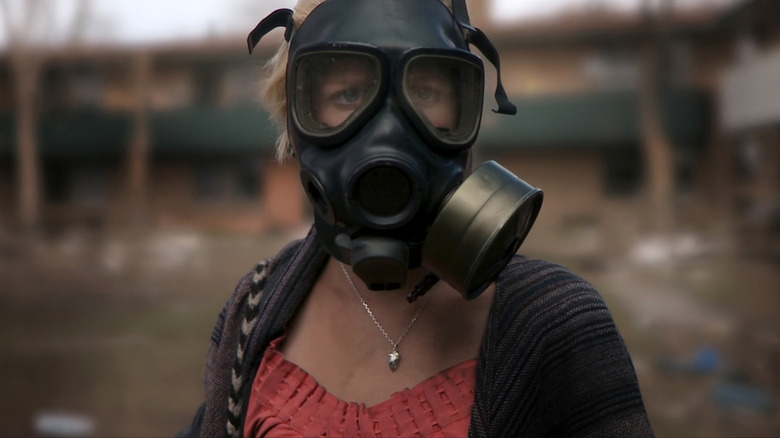
When discussing the unconventional production of Monsters, Gareth Edwards noted that the lack of oversight allowed for narrative flexibility and aesthetic risk-taking that would likely have been homogenized in a studio boardroom. Similarly, Luke Sparke highlighted the liberation of bypassing Hollywood gatekeepers during the production of Primitive War, stating that self-financing and independent execution allowed him to retain total creative control over the pacing, tone, and scale of the dinosaur violence without corporate compromise.
Industry analysts have frequently pointed to these films as proof of a shifting paradigm in modern cinema. While visual effects software and digital cinematography tools have democratized high-end aesthetics, these directors prove that technology is only as valuable as the artistic vision guiding it. Directors like Steven Kostanski and the creators of Turbo Kid have emphasized that tactile, hands-on filmmaking—prioritizing physical sets and practical creature designs—creates an immediate psychological connection with the audience that pure CGI often struggles to match.

Implications for the Future of Sci-Fi Cinema
The enduring success of micro-and-low-budget science fiction carries profound implications for the film industry at large. As major studios continue to grapple with ballooning production budgets—where tentpole films routinely require hundreds of millions of dollars just to break even at the global box office—the financial risk of cinematic risk-taking has never been higher.
In this climate, low-budget sci-fi acts as a vital incubator for raw talent and innovative storytelling. When films like The Vast of Night or Psycho Goreman achieve critical and commercial success on a fraction of a mainstream budget, they signal to financiers that audiences are deeply hungry for originality over empty spectacle.
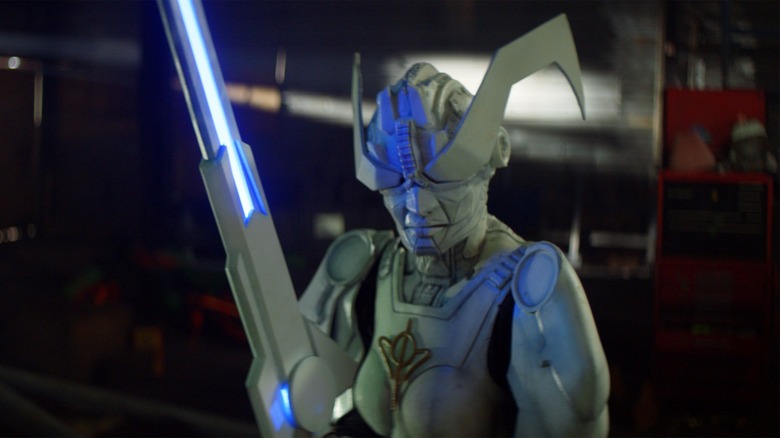
Furthermore, these films democratize the landscape of science fiction production. They prove that a compelling alien mystery, a post-apocalyptic wasteland, or an epic prehistoric war do not exclusively belong to the domain of mega-corporations. By combining disciplined resource management, technical cleverness, and unyielding creative passion, independent filmmakers are continuously rewriting the rules of what is financially possible on screen—ensuring that the future of science fiction remains as boundless, imaginative, and economically disruptive as ever.
