
Beyond the Redshirt: Recontextualizing the Explosive Legacy of ‘Star Trek: Strange New Worlds’
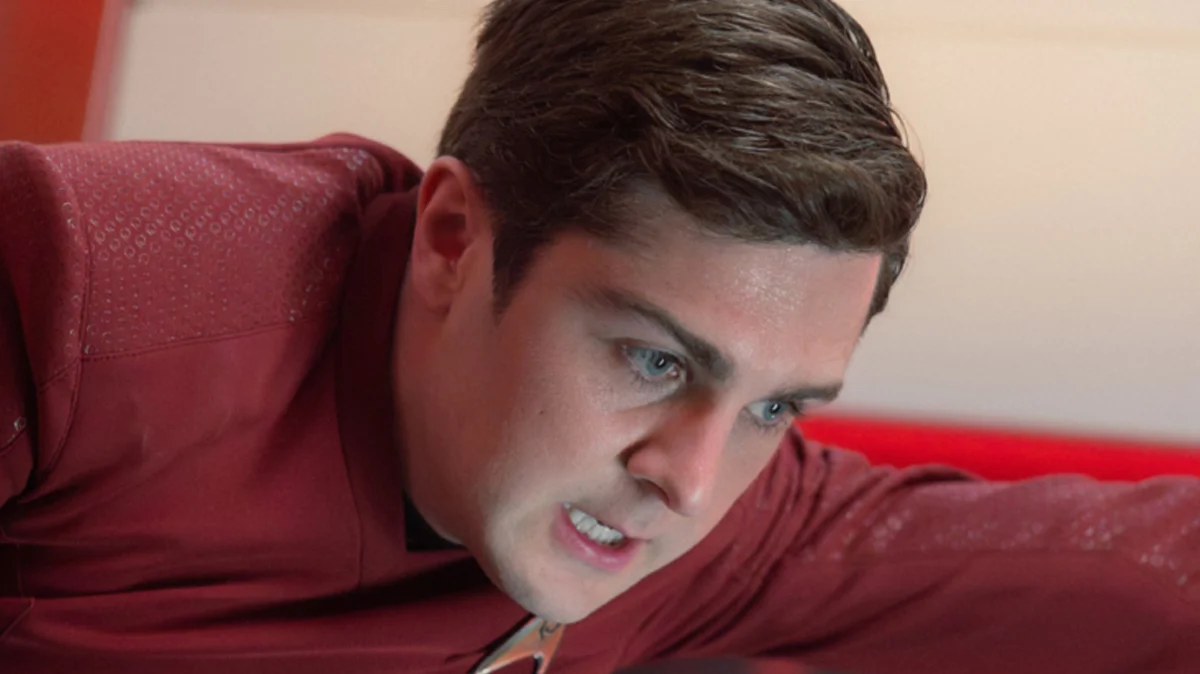
This article contains major spoilers for the Season 4 finale of "Star Trek: Strange New Worlds," titled "Tomorrow’s Enterprise."
The Season 4 finale of Paramount+’s Star Trek: Strange New Worlds has left the fandom reeling, not just for its ambitious narrative risks but for its daring meta-commentary on the franchise’s longest-running tropes. Titled "Tomorrow’s Enterprise," the episode serves as a thematic bookend to a season that has often pushed the boundaries of what a modern Star Trek series can achieve. By weaving a complex tale of time travel, cosmic phenomena, and the fragility of life within the Federation, the finale has managed to turn one of the most tired cliches in science fiction—the "exploding bridge console"—into a profound moment of narrative reflection.
The Premise: A Collision of Timelines
The episode centers on the Enterprise as it investigates a "white hole," a theoretical cosmic anomaly often cited in physics as the mathematical reverse of a black hole. In the heightened reality of Star Trek, this science is treated as an operative truth. The narrative hook is compelling: the Enterprise of the present is observing a black hole, while its future counterpart—one year ahead—is observing the white hole.
This temporal proximity causes the two ships to intermingle. The future timeline provides a fascinating, albeit fleeting, glimpse into Captain James T. Kirk’s (Paul Wesley) early tenure as commander of the Enterprise. It is a tantalizing "what if" for fans who have long clamored for a Star Trek: Year One spin-off—a project that, for the moment, remains purely theoretical.
The crisis begins when future-Uhura (Celia Rose Gooding) and a future version of Scotty (Martin Quinn) investigate the white hole. They are caught in a blinding discharge of energy, triggering a temporal rift. When Uhura regains consciousness, she discovers she has been displaced in time. More chillingly, she learns that in this current reality, Scotty has been dead for an entire year.
Chronology of a Death Foretold
The narrative structure of "Tomorrow’s Enterprise" is a masterclass in tension. To rectify the fractured timeline, the two versions of Uhura—one in the present, one in the future—must coordinate through the bridge between the black and white holes.
The death of Scotty is revealed only in the episode’s final act. As the narrative converges, the audience witnesses the moment of his demise: Scotty is seated at a routine bridge station when, without warning, the console before him erupts in a violent shower of sparks and pyrotechnics, killing him instantly.
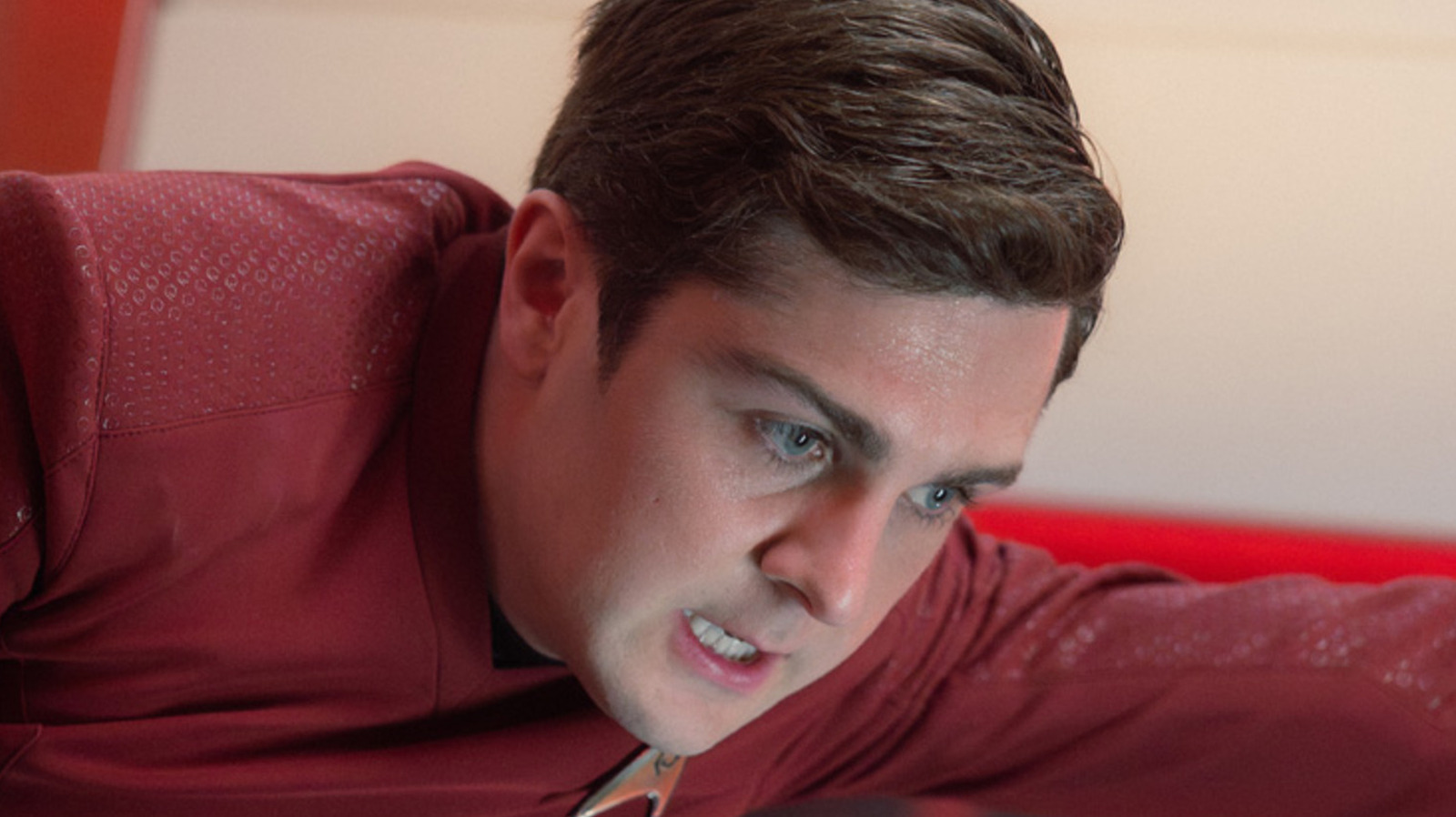
For the casual viewer, it is a shocking moment of sudden loss. For the veteran Trekkie, however, it hits with a distinct sense of irony. The "exploding console" is perhaps the most frequent, and arguably the most absurd, "Redshirt" death in the franchise’s nearly 60-year history. Scotty, a character who wears the red uniform of a Starfleet officer, falls victim to the very hazard that has claimed countless unnamed ensigns since the days of the 1966 Original Series.
The Science of the "Redshirt" Trope
To understand why the death of Scotty in the finale carries such weight, one must examine the history of the term "Redshirt." In the Original Series, security officers wore red tunics and were frequently deployed on landing parties, only to be killed off to demonstrate the danger of an alien threat. The trope became so pervasive that it was eventually codified by the pop-culture lexicon TV Tropes.
Closely related is the phenomenon of "Explosive Instrumentation." In the logic of Star Trek ship design, bridge consoles are remarkably volatile. Whether it is a photon torpedo impact, a spatial anomaly, or a simple sensor overload, these consoles reliably explode, showering bridge crew with sparks, debris, and, occasionally, lethally directed plasma.
Why Do Starfleet Consoles Explode?
From a production standpoint, the answer is simple: it is an efficient, low-budget way to convey that a starship is under duress. When the ship "shakes" and the background characters are thrown about, the audience knows the stakes are high. However, from an in-universe perspective, it raises an uncomfortable question: Why does the most advanced organization in the galaxy build its tactical command interfaces out of highly combustible, spark-prone materials?
This finale leans into that irony. By having a character as beloved as Scotty succumb to an exploding console, the writers are not just killing a character; they are acknowledging the systemic absurdity of the Star Trek universe itself.
Implications: The Legacy of "Yesterday’s Enterprise"
The episode title, "Tomorrow’s Enterprise," is a direct homage to the classic Star Trek: The Next Generation episode "Yesterday’s Enterprise." The significance of this link cannot be overstated. In that seminal episode, the Enterprise-D finds itself in a war-torn alternate future. During a climactic battle with Klingon forces, Commander Will Riker (Jonathan Frakes) meets his end when a bridge console explodes directly in his face.
Riker’s death in The Next Generation was meant to illustrate the bleak, desperate nature of that timeline—a future so fractured that even the most heroic figures were mere cannon fodder. By mirroring this specific death with Scotty in Strange New Worlds, the showrunners have created a "nesting doll" of references. They are linking the modern iteration of the franchise back to the golden era of the 90s, using the same "cheap" death trope to elicit a much deeper, more earned sense of sorrow.
The Role of Higher Beings
Of course, the episode concludes with a resolution that feels like classic Star Trek maximalism. The Uhuras manage to negotiate with advanced, non-corporeal entities living within the white/black hole. These beings, acting as cosmic mediators, intervene to reset the timeline, effectively resurrecting Scotty.
Some critics may label this a deus ex machina, a convenient plot device designed to undo the consequences of the episode’s stakes. Yet, as noted in previous franchise history—specifically the Deep Space Nine storylines involving Captain Benjamin Sisko and the Prophets—Star Trek has always been comfortable with the idea that humanity is but a plaything to beings of higher dimensions. The intervention is not a narrative cheat; it is a continuation of the franchise’s long-standing preoccupation with entities that exist beyond the constraints of time and causality.
Final Thoughts: A Future Rebuilt
The "death" of Scotty in the Strange New Worlds Season 4 finale is a poignant reminder that Star Trek is at its best when it looks at itself in the mirror. By taking a trope that is often mocked—the exploding console—and using it to build a bridge between the show’s past and present, the writers have proven that they are not just fans of the lore, but active participants in its evolution.
While the fans may still wait for that elusive Year One spin-off, "Tomorrow’s Enterprise" provides a satisfying, high-concept consolation. It serves as a reminder that even in a galaxy of wormholes, time travel, and exploding bridge consoles, the heart of Star Trek remains the people on the bridge—even when the consoles around them are, quite literally, trying to kill them.
Star Trek: Strange New Worlds is currently streaming on Paramount+.
