
A Monstrous Holiday: Robert Eggers Unveils Middle English Werewolf Epic Werwulf for Winter Release
Main Facts
This winter, the festive season is taking a dark, feral turn. Acclaimed auteur filmmaker Robert Eggers, renowned for his uncompromising atmospheric horror and historical authenticity, is set to sink his teeth into the holiday box office with Werwulf. Billed as a radical, visceral spin on the traditional werewolf legend, the film promises to deliver a haunting cinematic experience that departs sharply from conventional holiday fare.
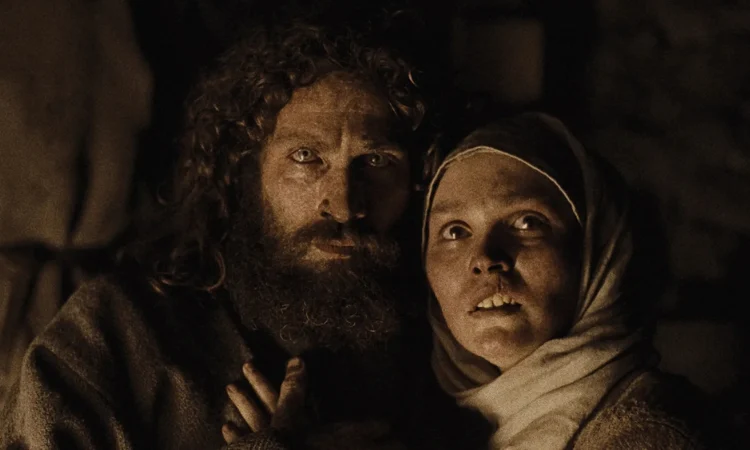
Scheduled to arrive in UK cinemas on New Year’s Day, Werwulf transports audiences back to the mist-drenched landscapes of 13th-century England. In this harrowing historical setting, a mysterious and savage beast begins stalking a secluded, fog-shrouded countryside. What starts as whispered village superstitions and folklore quickly spirals into a terrifying reality, trapping the local populace in a nightmare of devotion, damnation, and the beast within.
True to Eggers’ reputation for meticulous historical and linguistic world-building, Werwulf introduces a daring stylistic choice: the entire feature film’s dialogue is written and performed strictly in Middle English. This historical iteration of the English language was spoken from the Norman Conquest of 1066 until the late 15th century, presenting a steep immersion challenge for contemporary audiences that elevates the movie’s authenticity to unprecedented heights.
The project boasts a heavyweight cast featuring several frequent collaborators with the director. The ensemble includes Aaron Taylor-Johnson, Willem Dafoe, Lily-Rose Depp, and Ralph Ineson—many of whom are fresh off working with Eggers on his critically acclaimed 2024 vampire epic, Nosferatu.
Behind the camera, the production muscle is equally formidable. Working Title heads Tim Bevan and Eric Fellner are producing alongside Robert Eggers, Garrett Bird, and co-writer Sjón. Meanwhile, Chris Columbus—the filmmaker behind cinematic milestones like Harry Potter and a producer on Eggers’ Nosferatu—serves as an executive producer.
Universal Pictures and Focus Features describe the project as Eggers’ "most visceral and haunting experience yet," positioning the feature as a dark, atmospheric counter-programming option for cinemagoers looking for thrills rather than holiday cheer as the year turns.
Chronology of Production and Expansion
The path to Werwulf marks the latest chapter in Robert Eggers’ meteoric rise as one of modern cinema’s premier horror visionaries. The timeline of his career provides essential context for how this ambitious 13th-century werewolf tale came to fruition.
The Foundation of Folk Horror (2015–2019)
Eggers burst onto the international filmmaking scene with his 2015 directorial debut, The Witch. Set in 1730s New England and utilizing early modern English dialects, the film established his trademark aesthetic: slow-burn psychological dread, deeply researched historical accuracy, and stark visual compositions. He followed this up in 2019 with The Lighthouse, a claustrophobic, black-and-white descent into madness starring Willem Dafoe and Robert Pattinson, further cementing his reputation for crafting punishingly atmospheric period pieces.
The Epic Expansion (2022–2024)
In 2022, Eggers tackled high-budget studio filmmaking with The Northman, a brutal, blood-soaked Viking revenge saga rooted in Scandinavian folklore. Though it faced commercial hurdles at the box office, it proved Eggers could command massive set pieces without sacrificing his distinct artistic vision.
Following The Northman, Eggers turned his gaze toward the Gothic, wrapping production on Nosferatu, which hit theaters in late 2024. A lush, terrifying reimagining of the classic vampire mythos, Nosferatu proved to be a massive critical and commercial success. Its triumph gave Eggers the creative capital and studio backing needed to immediately pivot into his next creature feature: Werwulf.
From Vampires to Lycanthropes (2024–Present)
Immediately following the success of Nosferatu, pre-production and filming on Werwulf ramped up quietly under the guidance of Universal Pictures and Focus Features. Collaborating once again with Icelandic writer and artist Sjón—with whom Eggers co-wrote The Northman—the script was crafted to strip away modern cinematic conventions of the werewolf mythos, returning the creature to its medieval, folkloric roots.
With principal photography completed and post-production finalized, Werwulf has secured its prime New Year’s Day release window in the UK, signaling high studio confidence in Eggers’ ability to draw adult audiences away from traditional family holiday programming.
Supporting Data and Creative Personnel
The ambition of Werwulf relies heavily on the pedigree of its creative team, blending auteur-driven horror with seasoned industry veterans.
Key Cast Members and Collaborations
- Aaron Taylor-Johnson: Reuniting with Eggers after their collaboration on Nosferatu, Taylor-Johnson brings intense physical presence and dramatic range to the medieval setting.
- Willem Dafoe: A staple of Eggers’ filmography (The Lighthouse, The Northman, Nosferatu), Dafoe brings unmatched theatrical gravitas to period-piece horror.
- Lily-Rose Depp: Continuing her creative partnership with Eggers following her standout role in Nosferatu.
- Ralph Ineson: Having played the patriarch in The Witch and featuring prominently in Eggers’ subsequent works, Ineson’s gravelly voice and imposing stature make him uniquely suited for Middle English period dialogue.
Production and Executive Leadership
- Working Title Films: Industry heavyweights Tim Bevan and Eric Fellner lend their considerable production infrastructure to ensure the period details, creature effects, and historical recreation meet the highest cinematic standards.
- Sjón: The acclaimed Icelandic novelist, poet, and lyricist co-writes the screenplay alongside Eggers, ensuring the narrative remains deeply rooted in authentic European folklore and archaic linguistic cadence.
- Chris Columbus: Serving as executive producer, Columbus bridges the gap between major studio blockbusters and auteur-driven genre cinema, having previously collaborated with the team on Nosferatu.
Future Projects on the Horizon
Werwulf is merely a stepping stone in an extraordinarily busy slate for Robert Eggers. Industry reports indicate that the director is already preparing for his next major undertakings:
- A bold new cinematic adaptation of William Shakespeare’s tragic romance, Romeo and Juliet.
- The long-discussed continuation/sequel to Jim Henson’s 1986 dark fantasy cult classic, Labyrinth.
Official Responses and Studio Statements
Both the creative forces behind Werwulf and its distributing studios have emphasized the uncompromising nature of the project. Universal Pictures and Focus Features have leaned heavily into the film’s gritty, theological, and psychological underpinnings in their promotional materials.
In official loglines distributed to the press, the studios have framed the film not as a standard popcorn monster movie, but as a deeply philosophical exploration of medieval guilt and existential dread:
"Witness Robert Eggers’ most visceral and haunting experience yet. Universal Pictures and Focus Features present WERWULF, a harrowing tale of devotion, damnation and the devil within."
While traditional Hollywood horror films frequently opt for modern pacing and accessible dialogue to maximize mainstream appeal, Werwulf flies in the face of conventional wisdom. By insisting on a script entirely penned and performed in Middle English, Eggers and his collaborators are demanding that audiences surrender completely to the time period.
Historians and linguists have noted that Middle English is largely unintelligible to modern English speakers without the aid of subtitles, meaning the film will rely heavily on physical performance, sound design, musical score, and visual storytelling—strengths that have defined Eggers’ career thus far.
Implications for the Horror Genre and Modern Cinema
The arrival of Werwulf carries significant implications for the state of modern horror, studio-backed auteur cinema, and the commercial viability of high-concept period pieces.
Elevating Folk Horror into the Mainstream
Over the past decade, "elevated horror" or prestige horror has transitioned from a niche indie subgenre into a reliable box-office powerhouse, driven by studios like A24, Neon, and Focus Features. With Nosferatu proving that Gothic horror can command substantial theatrical audiences, Werwulf tests whether audiences are equally hungry for medieval werewolf lore stripped of modern Hollywood gloss. By avoiding CGI-heavy action blockbusters in favor of grounded, atmospheric dread, Eggers is redefining how creature features can be told.
The Linguistic Risk
The decision to utilize Middle English is arguably the most radical gamble of Eggers’ career to date. While historical accuracy has always been his calling card—ranging from the early modern English of The Witch to the Old Norse-influenced cadence of The Northman—Middle English represents a far greater barrier for the average viewer. If Werwulf succeeds commercially, it could pave the way for more linguistically authentic historical dramas, proving that modern audiences do not require contemporary vernacular to connect with primal human fears of the unknown, the beastly, and the divine.
Redefining Holiday Counter-Programming
Traditionally, the Christmas and New Year box office windows are dominated by family-friendly animation, superhero spectacles, and feel-good holiday dramas. By planting Werwulf firmly in UK cinemas on New Year’s Day, Universal Pictures is doubling down on a growing appetite for dark counter-programming. Just as horror films have successfully claimed Halloween, studios are increasingly recognizing that a significant demographic of moviegoers seeks out terror, darkness, and catharsis to ring in the new year.
As the fog rolls over the 13th-century English countryside and the howls echo through the trees, Robert Eggers stands poised to deliver a cinematic experience that will haunt the collective imagination long after the holiday decorations are packed away.
