
Empowering Global Nonfiction: Sundance Institute Announces Over $1 Million in 2026 Documentary Fund Grants
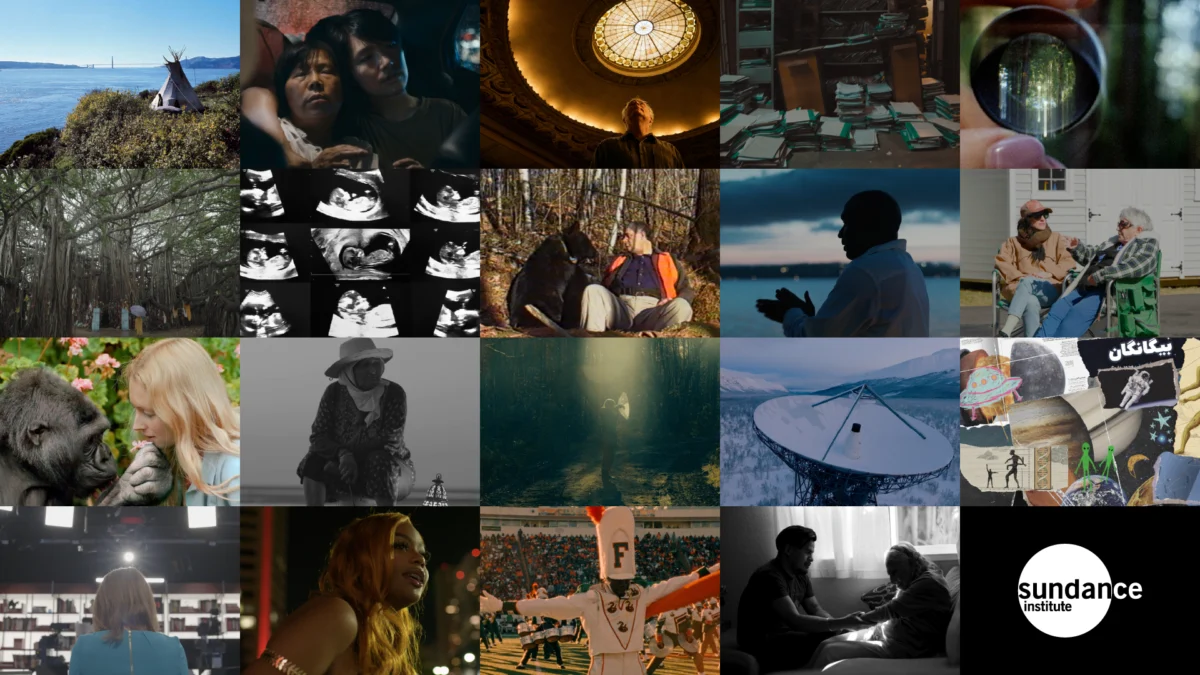
LOS ANGELES, CA — The Sundance Institute has officially announced the recipients of its highly anticipated 2026 Documentary Fund grants, distributing over $1 million in unrestricted funding to 19 boundary-pushing nonfiction projects from across the globe. As the nonprofit organization prepares to celebrate the monumental 25th anniversary of its Documentary Film Program (DFP) next year, this year’s cohort underscores the Institute’s enduring commitment to eliminating barriers to entry, amplifying marginalized voices, and fostering cross-cultural collaboration in independent media.
Selected from a highly competitive pool—nearly 65% of which originated outside the United States—the 19 funded projects represent creative teams rooted in 14 countries: Canada, Denmark, France, India, Iran, Mexico, the Netherlands, Norway, Qatar, Romania, Tunisia, the United Kingdom, the United States, and South Korea. The grants span three pivotal stages of filmmaking: four are dedicated to projects in development, 12 in production, and three in post-production.
This vital funding is made possible through the generous backing of key philanthropic organizations and corporate partners, including founding partner Open Society Foundations, alongside the John Templeton Foundation, Sandbox Films, the John D. and Catherine T. MacArthur Foundation, Free People, The Asian American Foundation (TAAF), The Charles Engelhard Foundation, Nion McEvoy & Leslie Berriman, Nancy Blachman, and Roger and Carin Ehrenberg.
Chronology of a Global Movement: 25 Years of the Documentary Film Program
To understand the significance of the 2026 cohort, one must look back at the trajectory of the Sundance Institute’s Documentary Film Program, which has spent nearly a quarter of a century transforming the landscape of independent nonfiction cinema.
- 2002: Founded as a direct response to the growing need for global resources in independent nonfiction storytelling, the Documentary Film Program (DFP) is established with founding support from the Open Society Foundations.
- The Intervening Years: Over the next 24 years, the DFP evolves into a comprehensive, multi-tiered global resource. It builds out three core pillars: the Documentary Fund (providing unrestricted, non-recoupable grants), rigorous lab and artist support initiatives (such as the Documentary Producers Lab and the Documentary Edit and Story Lab), and strategic international partnerships to safeguard freedom of expression and foster audience development.
- September 29, 2026: The Institute announces its latest class of Documentary Fund grantees, distributing over $1 million to 19 standout features. This announcement serves as the launchpad for a year-long celebration leading into the DFP’s 25th-anniversary milestone in 2027.
- Looking Ahead (2027 and Beyond): The DFP prepares to celebrate a quarter-century of championing films that have shifted cultural paradigms, aiming to further secure pathways for nonfiction storytellers navigating rapid technological shifts and global sociopolitical challenges.
Supporting Data & Thematic Insights
The 2026 Documentary Fund grants reflect broader trends in international filmmaking, marked by high geographic diversity and deeply resonant thematic explorations.
Key Statistical Highlights
- Total Funding Disbursed: Over $1,000,000 in unrestricted grants.
- Total Projects Selected: 19 feature-length documentaries.
- Production Stages: 4 in Development, 12 in Production, and 3 in Post-Production.
- Global Footprint: 65% of proposals originated outside the U.S., with projects tracing their roots to 14 distinct countries.
- First-Time Directors: 37% of the selected grantees are making their feature directorial debuts.
Thematic Throughlines
While the selected projects vary wildly in style and subject matter, unified threads tie the 2026 cohort together. According to Sundance programmers, this year’s filmmakers are deeply engaged in interrogating how history is constructed, how knowledge is preserved, and how physical and social boundaries are drawn.
- The Infrastructure of Memory: Several films examine who controls the public record, treating archives as volatile, contested spaces where truth, power, and historical erasure are actively negotiated.
- Borders and Systemic Exclusion: Grantees investigate constructed social and physical borders, modern-day colonialism, and environmental collapse.
- Generational Legacies: Multiple projects dive into family dynamics, exploring the weight of ancestral heritage alongside the struggle to forge autonomous individual identities.
- Science and Nature: A significant number of filmmakers leverage scientific inquiry to challenge traditional, anthropocentric definitions of where humanity ends and the natural world begins.
Official Responses and Leadership Perspectives
The leadership of the Sundance Institute’s Documentary Film Program emphasized the historical weight and emotional resonance of the 2026 funding cycle.
“This season holds profound significance for us in the Documentary Film Program as we prepare to celebrate our 25th anniversary next year,” said Paola Mottura, Director of the Documentary Film Fund, and Kristin Feeley, Director of Documentary Film & Artist Programs, in a joint statement. “As we reflect on how far we have come over the past two and a half decades, we feel immense gratitude to the valued partners who have sustained our program throughout its history, with a special mention to our founding partner, Open Society Foundations.”
Mottura and Feeley added, “This year’s group of grantees is a beautiful reflection of the inventive and varied nonfiction work that continues to push the form forward. We continue to be inspired by their work and feel fortunate to advocate for their projects and help bring them to the screen. We congratulate the teams behind these 19 projects and look forward to seeing where their journeys will lead.”
Implications for Independent Cinema and the 2026 Grantees
The Sundance Documentary Fund has long served as a launchpad for cinematic masterpieces that go on to redefine political discourse, win Academy Awards, and shift cultural narratives. Past beneficiaries include celebrated works such as All That Breathes, American Factory, Collective, Crip Camp: A Disability Revolution, Fire of Love, Minding the Gap, No Other Land, Strong Island, Sugarcane, The Territory, and Time.
The 2026 cohort features an impressive mix of veteran visionaries and rising talents whose past work has already left an indelible mark on the industry:
- Julian Brave NoiseCat (Alcatraz is an Idea), whose previous film Sugarcane won the Directing Award in the U.S. Documentary Competition at the 2024 Sundance Film Festival and made history as the first Oscar-nominated feature documentary directed by a North American Indigenous filmmaker.
- Ilinca Calugareanu (Anatomy of Indifference), acclaimed director of Chuck Norris vs. Communism (2015) and A Cops and Robbers Story (2020).
- Kathryn Ferguson (Matrescence), whose debut feature Nothing Compares premiered at the 2022 Sundance Film Festival.
- Drew Xanthopoulos (My Friend the Bear), Emmy-winning director and cinematographer of the feature documentary Fathom.
- David Alvarado (All Shall Be Saved), whose recent project American Pachuco: The Legend of Luis Valdez won the 2025 Library of Congress Lavine/Ken Burns Prize for Film.
Full List of the 2026 Documentary Fund Grantees
DEVELOPMENT
- Alcatraz is an Idea (U.S.A.) — Director: Julian Brave NoiseCat | Producers: Peter Bratt, Benjamin Bratt, Alpita Patel, Daniel Kilroy, Tom Mackintosh. (Examining the 19-month occupation of Alcatraz Island in 1969 by Native activists).
- Shape of Silence (Canada) — Director & Producer: Varun Trikha. (A blind Polish linguist searches for sounds in changing forests to heal what human language cannot).
- Shooting Stars (Iran, France, Denmark, Netherlands, Norway) — Director: Parsa Ansari | Producer: Milad Khosravi. (A boy’s childhood investigation of UFOs shifts toward the invisible human outsiders living on Earth).
- Wahnish Keeps Me Free (U.S.A.) — Director: Jamil McGinnis | Development Producer: Resita Heavenly Cox. (Framing Black Southern life and the Marching 100 at Florida A&M University as stillness in musical motion).
PRODUCTION
- All Fixed Up (U.S.A., France, South Korea) — Director: Hao Zhou | Producers: Tyler Hill, Jenny Wu, Dominique Barneaud, Heejung Oh.
- All Shall Be Saved (U.S.A.) — Directors: Jason Sussberg, David Alvarado | Producer: Kate McLean. (Chronicling Brewster Kahle and the Internet Archive as they face legal and political threats).
- Anatomy of Indifference (U.K., Romania) — Director & Producer: Ilinca Calugareanu | Producers: Anamaria Antoci, Lucila Moctezuma.
- Artificial Horizon (U.S.A.) — Director: Elizabeth M. Webb | Producers: DaManuel Richardson, Maggie Corona-Goldstein, Solomon Turner.
- God of the In-Between (India, U.S.A.) — Director: Archana Phadke | Producers: Aman Mann, Shaunak Sen. (Supported by the Sundance Institute | Free People Creative Spirit Fund)
- Matrescence (U.K.) — Director: Kathryn Ferguson | Producers: Rosie Crerar, Eleanor Emptage. (A genre-defying exploration of motherhood adapted from Lucy Jones’ bestselling book).
- None of This Matters (U.S.A.) — Director: Shaina Feinberg | Producers: Judith Mizrachy, Elisabeth Durkin. (Supported by the Sundance Institute | Free People Creative Spirit Fund)
- Penny & Koko (U.S.A.) — Director & Producer: Tasha Van Zandt | Producers: Sebastian Zeck, Anna Barnes, Chai Vasarhelyi. (Unveiling the 47-year bond between Koko the gorilla and her pioneering scientist).
- Salt of the south (Tunisia, France, Denmark, Qatar) — Director: Rami Jarboui | Producers: Ramzi Laâmouri, Julien Coquet, Marie Schmidt Olesen.
- Speaking For Earth (U.S.A.) — Director & Producer: Cody Ball | Producers: Carter Oakley, Cleo Abram, Owen Kibby.
- The People’s Network (U.S.A.) — Director: Alyse Shorland | Producers: Sara Archambault, Darcy McKinnon. (Charting C-SPAN’s evolution from civic experiment to an essential institution).
- YOSI (U.S.A., Mexico) — Director: Jimmy Goldblum | Producers: Vero Kompalic, Justin Gonçalves, Esteban Zuluaga, Darren Aronofsky.
POST-PRODUCTION
- My Friend the Bear (U.S.A.) — Director: Drew Xanthopoulos | Producer: Bennett Elliott. (Unprecedented relationship between a dyslexic researcher and a rescued bear).
- Nine (U.S.A.) — Directors & Producers: Rachael DeCruz, Jeremy S. Levine | Producer: Rajal Pitroda. (An exploration of a decades-long prison friendship across generations).
- Unfiltered (w/t) (U.S.A.) — Director: Chelsi Bullard | Producer: Julia Pontecorvo. (Supported by the Sundance Institute | Free People Creative Spirit Fund)
As these 19 projects move forward through development, production, and post-production with the backing of the Sundance Institute, they carry the responsibility of shaping the future of global discourse. Through financial backing, lab mentorship, and strategic community-building, the Sundance Documentary Film Program continues to ensure that vital, challenging, and visionary stories find their way to the screen.
