
The Impossible Descent: Why Guillermo del Toro and Others Failed to Adapt ‘BioShock’
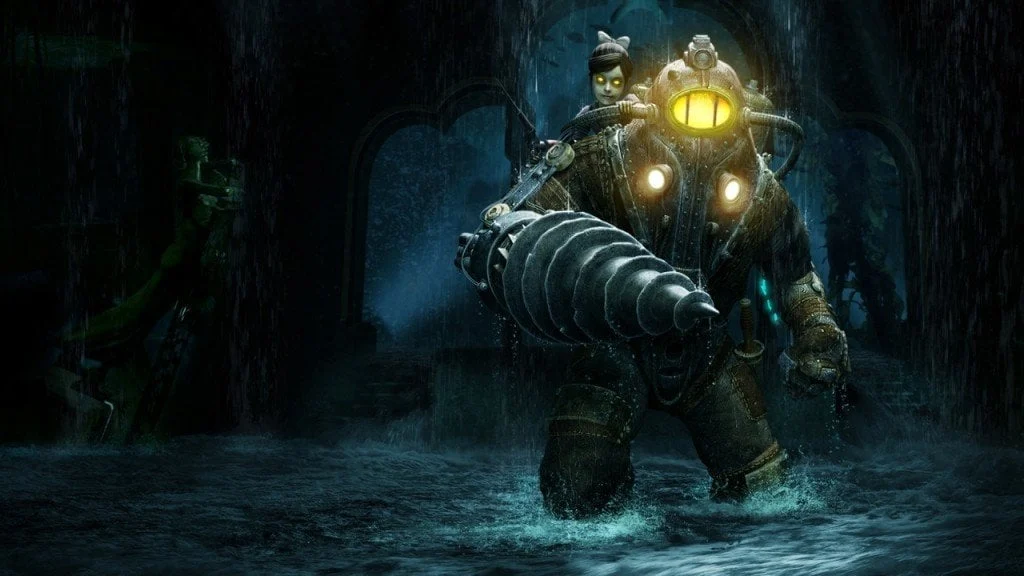
For nearly two decades, the sprawling, Art Deco nightmare of Rapture has remained one of the most coveted yet elusive prizes in Hollywood. BioShock, the 2007 magnum opus of game design, promised a revolution in interactive storytelling, blending Ayn Rand-inspired objectivism with claustrophobic, underwater horror. Yet, despite its cinematic potential, the journey to bring the city of Rapture to the silver screen has been paved with cancelled projects, budgetary roadblocks, and a fundamental creative incompatibility that even the most visionary directors have struggled to reconcile.
The latest revelation comes from none other than master of the macabre, Guillermo del Toro. In a candid interview with IGN, the Pan’s Labyrinth director confirmed that he once entertained the possibility of spearheading a BioShock adaptation—only to abandon the project almost as quickly as it began.
A "Disastrous" Introduction: The del Toro Experience
For Guillermo del Toro, the allure of BioShock was evident. The game’s aesthetic—a rotting, underwater metropolis trapped in a perpetual 1950s fever dream—seems perfectly suited to a filmmaker known for creature design and dark fantasy. However, the reality of the business discussions proved to be a harsh awakening.
Del Toro described his initial foray into the project as "probably one of the most disastrous calls I’ve ever had." When asked if he would revisit the concept, his response was succinct and uncompromising: "So no. Fuck no."
Beyond the interpersonal frustrations of the pitch, del Toro highlighted a core philosophical dilemma that has haunted every attempt to adapt the franchise: the fundamental dissonance between player agency and cinematic passivity. "The dynamics of the video game are very different than a movie," del Toro explained. "They may be cinematically similar in terms of the camera moving and this and that, but the storytelling is very different because you’re not solving puzzles. You’re not assembling."
He argued that a film adaptation struggles to replicate the "illusion of an infinite sandbox" that the game provides. In BioShock, the player feels they are making choices—deciding whether to harvest or save the Little Sisters, choosing which genetic modifications (Plasmids) to equip. A film, by its nature, must "corner" the audience. It must dictate the path, whereas the magic of BioShock lies in the player’s belief that they are the architect of their own survival in a decaying utopia.
A Chronology of Failure: Two Decades in Development Hell
The struggle to adapt BioShock is a well-documented saga in Hollywood’s "development hell." The history of the project reads like a cautionary tale regarding the collision of artistic ambition and corporate risk management.
The Verbinski Era (2008–2010)
In 2008, Universal Pictures ignited hope among fans by announcing that Gore Verbinski, fresh off the massive success of the Pirates of the Caribbean franchise, would direct a BioShock feature. With a script penned by John Logan (Gladiator, Skyfall), the project seemed destined for success. The production design was reportedly underway, aiming to capture the grandeur of Rapture’s Art Deco architecture.
However, the project hit a terminal wall when the studio demanded a budget reduction. Verbinski, committed to the vision of a hard-R-rated, gritty adaptation, refused to compromise. When the studio pulled the plug on the $200 million price tag, Verbinski stepped back into a producing role, attempting to pivot to a smaller budget with director Juan Carlos Fresnadillo. The effort was ultimately futile.
The Budgetary Impasse (2012)
By 2012, Fresnadillo confirmed the project was effectively dead. The primary friction point remained the rating. Executives were wary of greenlighting a massive, tentpole-budget film that was restricted to adult audiences. "We just didn’t have any takers on an R-rated movie with that price tag," Verbinski later admitted. The industry at the time viewed high-budget R-rated films as a financial gamble, a narrative that has only recently shifted with the success of films like Deadpool and Logan.

The Netflix Revival (2022–Present)
The torch was passed to Netflix in 2022. The streaming giant announced a high-profile partnership to bring the franchise to life, tapping Francis Lawrence—known for Constantine and I Am Legend—to direct, with the acclaimed Michael Green attached to write the screenplay.
As of late 2024, the project remains in a state of suspended animation. Producer Roy Lee noted in recent months that the film is currently waiting for Lawrence to conclude his obligations on The Hunger Games: Sunrise on the Reaping. While the project remains officially "in development," the lack of a release date or casting news suggests that the same ghosts that haunted Verbinski and del Toro—budgeting, tone, and narrative structure—continue to loom over the production.
The Architectural Challenge: Building Rapture
Beyond the screenplay, the physical reality of BioShock presents a monumental logistical challenge. Rapture is not merely a setting; it is a character. The city requires a balance of "Art Deco retrofuturism" that feels both grounded and alien.
The difficulty lies in the scale. A film must convey the feeling of being trapped under the crushing weight of the Atlantic Ocean while simultaneously portraying grand, cavernous ballrooms and intricate, claustrophobic research labs. If the film leans too heavily into CGI, it risks the "uncanny valley" effect, losing the tactile, gritty texture that makes the game’s environment so oppressive. If it relies on practical sets, the costs balloon rapidly—the very problem that shuttered the Verbinski iteration.
Furthermore, the iconic enemies of the series—the Big Daddies—pose a unique design problem. Translating these hulking, diving-suit-clad behemoths into a live-action format without them looking like cartoonish costumes requires a level of artistry that is as expensive as it is difficult to execute.
Implications for Video Game Adaptations
The BioShock saga highlights a shifting landscape in media. We are currently in a "Golden Age" of video game adaptations, with successes like The Last of Us (HBO) and Fallout (Amazon Prime) proving that long-form television is perhaps a better medium for these complex stories than the two-hour theatrical film.
The failure of feature-length BioShock attempts suggests that the game’s narrative density—which relies on hours of exploration, audio logs, and environmental storytelling—cannot easily be condensed into a traditional three-act movie structure.
If Netflix’s iteration eventually makes it to the screen, it will serve as a litmus test for the industry. It will answer a question that has been asked for nearly 20 years: Can the philosophy of Andrew Ryan and the horror of Rapture survive the transition from a controller-in-hand experience to a screen-only one? Or is the "illusion of an infinite sandbox," as del Toro suggests, simply too essential to the experience to ever be replicated in a medium where the audience is, by definition, a passive observer?
For now, the city of Rapture remains submerged, a beautiful, decaying monument to the dangers of unchecked ambition—much like the film projects that have sought to bring it to the surface. Whether the future brings a cinematic breakthrough or another quiet cancellation remains to be seen, but one thing is clear: BioShock will continue to be a siren song that tempts the greatest minds in Hollywood, even as it breaks their hearts.
