
Echoes of the Delta: How Ludwig Göransson Reimagined the Blues for Ryan Coogler’s Sinners
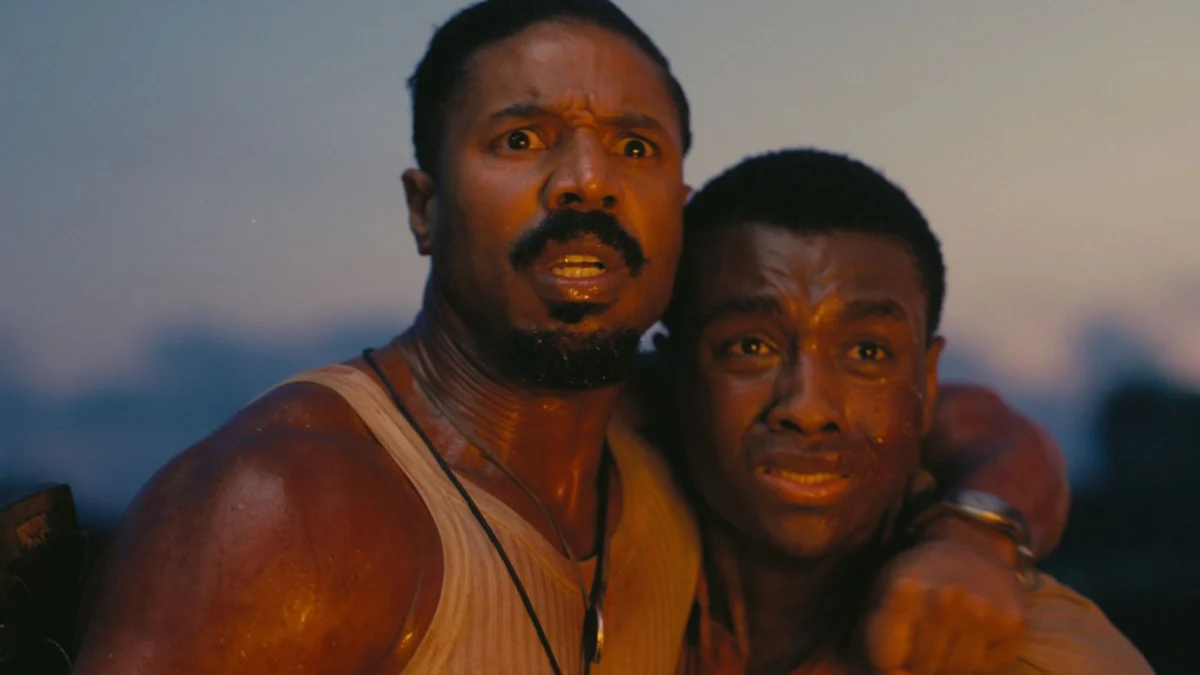
The haunting, rhythmic pulse of the Mississippi Delta has always been steeped in folklore, but rarely has it been as literal—or as supernatural—as it appears in Ryan Coogler’s latest genre-bending spectacle, Sinners. As the film transports audiences to the sweltering, atmospheric landscape of 1932 Mississippi, it relies on a sonic foundation as gritty and revolutionary as the vampire mythology it explores. At the center of this auditory journey is Oscar-winning composer Ludwig Göransson, who embarked on an exhaustive, deeply personal quest to capture the dangerous, subversive spirit of the early blues.
The Genesis of a Sound: Beyond the Myth
For Göransson, the invitation to score Sinners was not merely a professional assignment; it was a homecoming of sorts. The Swedish composer, renowned for his work on Tenet and Black Panther, found himself working with an instrument he hadn’t envisioned utilizing: the vintage resonator guitar.
"I grew up with the blues around me," Göransson shared in an exclusive interview with IndieWire. "My dad is a blues guitar player who put a guitar in my hands when I was six and actually wanted to name me Albert after the great Albert King. So, this hit close to home."
This sentiment resonated deeply with director Ryan Coogler, whose own family roots in Mississippi fueled his desire to explore the cultural weight of the blues. Coogler, known for his ability to weave social commentary into high-concept storytelling, took the legend of Robert Johnson—the seminal guitarist who famously "sold his soul to the devil"—and twisted it. In Sinners, the protagonist is a young bluesman named Sammie Moore (newcomer Miles Caton), whose raw, electrifying debut at a Clarksdale juke joint acts as a beacon for both benevolent and malevolent spirits. The juke joint, managed by twin cousins Smoke and Stack (played by Michael B. Jordan), serves as the epicenter of a story where music is not just entertainment—it is a conduit to the divine and the damned.

Chronology of an Authentic Sonic Expedition
To move beyond the romanticized, dusty tropes of blues music, Göransson and Coogler undertook a rigorous research phase. The process began with a pilgrimage: a blues tour traveling from Memphis down to the heart of Clarksdale. Joined by their music team and Göransson’s father, who traveled from Sweden to participate, the group sought to bridge the gap between historical fact and cinematic legend.
"I think what was so interesting about Ryan’s concept of this music is that when you hear it today on the old recordings, it sounds like dog shit," Göransson remarked bluntly, highlighting the limitations of early 20th-century recording technology. "But these were not old men singing at the time. They were young guys. They were dangerous. Their music was edgy. It was ‘the devil’s music.’ If you’re listening to this music, you’re bonding with the devil."
Phase 1: The Quest for the Hero Guitar
Authenticity was the mandate. Coogler requested a specific type of resonator guitar—an instrument that predated amplification and could fill a room with a distinct, metallic bite. Göransson’s search took him across the globe. He eventually secured a 1932 Dobro Cyclops in Los Angeles, but knowing the dangers of production, he tracked down two backups in Nashville and London. This specific instrument became the "hero" of the score, requiring newcomer Miles Caton to dedicate three months of intensive training to master the slide technique necessary to make the performance convincing on screen.
Phase 2: Composing the Supernatural
The film’s score is a study in evolution. It begins in the grounded, acoustic reality of 1932, punctuated by the opening track, "Playin’ Games, Tellin’ Ghost Stories." As the narrative scope expands, the score shifts, moving from traditional blues motifs into a surreal, expansive soundscape. Göransson worked closely with Grammy-winning songwriter Raphael Saadiq to pen "I Lied to You," a song that serves as Sammie Moore’s confessional pivot point, marking his liberation through the blues.

Supporting Data: The Anatomy of a Surreal Montage
Perhaps the most complex sequence in the film is the "Surreal Montage," a bravura, single-take sequence that spans space and time. Shot in a single day using a 65-pound IMAX camera on a Steadicam, the sequence required months of meticulous choreography.
"After my songwriting session with Saadiq, we had the base of what this surreal montage was going to be," Göransson explained. "Reading the script, I had goosebumps. It could only be done because we were on set, living in New Orleans. It took months of prep… mapping it out. And then I had a rough video of the take, and I wrote music to that video."
The resulting sequence is a tapestry of cultural history. It features:
- The African Griot: Playing a precursor to the banjo.
- The 1970s Influence: A guitarist channeling the energy of Jimi Hendrix, portrayed by legendary blues artist Eric Gales.
- The 1980s Transition: A DJ at a table crafting early hip-hop beats using recreated drum machines.
- Global Fusion: African drummers, ballet dancers, and a Chinese dancer sharing the stage.
- The Final Conflict: A symbolic battle between an African ancestral dancer and a modern hip-hop artist.
Official Responses and Creative Synergy
The collaboration between Coogler and Göransson has been described by those on set as a fluid, high-stakes experiment. Coogler’s vision for the scene was to ensure that the music felt "live" and immediate, rather than a pre-recorded backdrop.

"You had little pieces of musical histories coming at you, depending on where the camera is, and it was all happening live the moment we created it," said Göransson. The technical challenge was to maintain a seamless thread through such disparate styles. By utilizing modern Dolby Atmos technology, the team was able to "pan" the music around the audience, ensuring that the sound reflected the disorienting, multi-dimensional nature of the scene.
"We could really play with the Atmos of music panning around you," Göransson noted. "It was very much also using modern technologies."
Implications for Genre Filmmaking
The success of Sinners hinges on its ability to treat the blues not as a historical artifact, but as a living, breathing, and dangerous force. By blending the raw, metallic resonance of a 1932 Dobro with modern electronic production and spatial audio, Göransson has provided a blueprint for how historical music can be revitalized for supernatural narratives.
The implications for the industry are significant. In an era where period pieces often struggle to feel relevant to contemporary audiences, the Sinners approach—collapsing the distance between the past and the present through music—offers a path forward. The film suggests that history is not behind us, but around us, constantly influencing the rhythms of our modern lives.

As Sinners continues its run in theaters, the lasting impact of its score serves as a testament to the power of collaboration. By honoring the lineage of the blues—from the Mississippi Delta to the evolution of hip-hop—Göransson and Coogler have created more than a soundtrack; they have created an immersive experience that challenges the listener to reconsider the nature of the "devil’s music" and the spirits that continue to haunt it.
The film stands as a bold, sonic exploration of how the past can be repurposed to tell stories that are as futuristic as they are ancestral. It is a haunting, masterful blend of tradition and technology that firmly cements both Coogler and Göransson at the forefront of modern cinematic innovation.
