
From Tour Fallout to Solidarity: The Resilient Rise of Macklemore’s ‘Free Palestine’ Tour
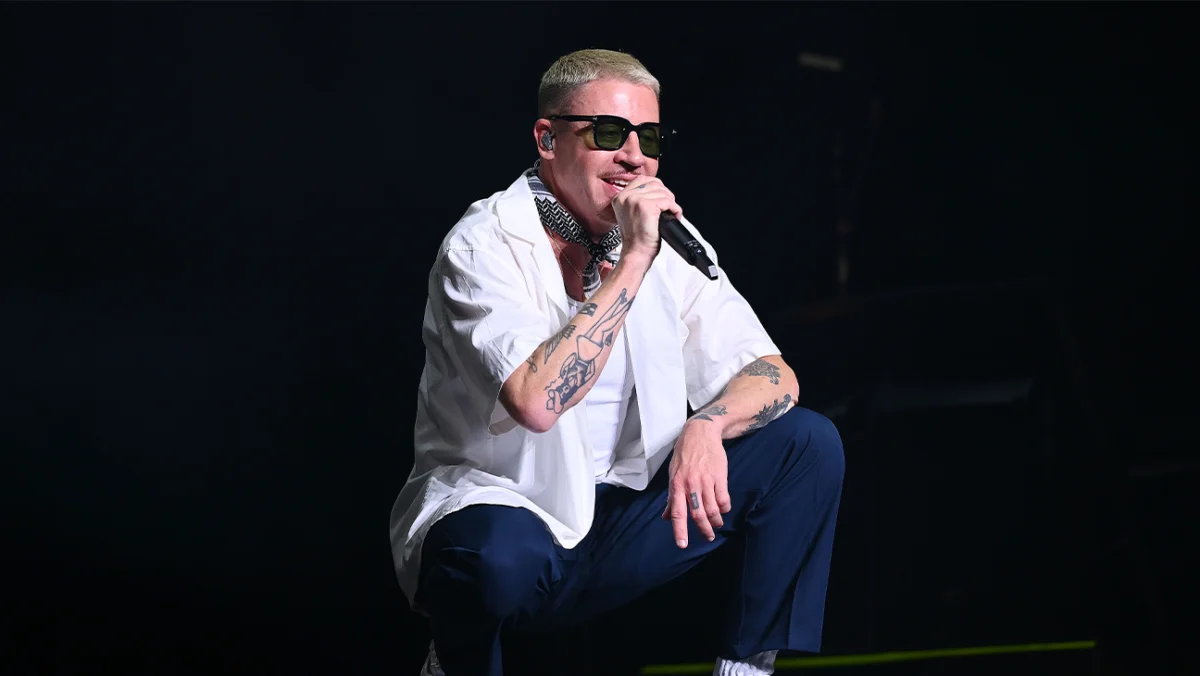
In an industry where the intersection of art and activism often triggers corporate caution, Macklemore has emerged as a focal point of a heated debate regarding free speech, professional contracts, and the limits of political expression in live music. After being dropped from Ed Sheeran’s high-profile Loop Tour—a move attributed to the artist’s vocal and visible support for Palestine—the Seattle rapper has responded not with retreat, but with a defiant and rapidly successful independent venture.
Macklemore announced this week that his self-organized "Free Palestine" tour, encompassing dates in Dublin, Paris, and London, has completely sold out. This development marks a significant turning point in a narrative that has gripped the music industry for weeks, pitting the autonomy of artists against the logistical and political pressures exerted by tour promoters and venue stakeholders.
The Chronology of a Professional Break
The friction began in early September when Macklemore, while serving as a supporting act for Ed Sheeran, utilized his platform at New Jersey’s MetLife Stadium to share pro-Palestinian messaging. This performance, which featured specific imagery and rhetoric, immediately ignited a firestorm.
The backlash was swift. Pro-Israel advocacy groups, along with high-profile figures within the entertainment industry—including singer Pink—publicly condemned the rapper’s stance and demanded his removal from the tour. Despite the pressure, Macklemore remained steadfast, doubling down on his position via social media. He asserted that his advocacy was rooted in a fundamental belief in human equality, famously stating, "Wanting all humans to be treated equal should never be controversial."
The situation escalated behind the scenes as promoters and venue owners—notably those managing stadiums like Gillette Stadium—began to exert influence. According to industry reports, venue owners, including New England Patriots owner Robert Kraft, allegedly threatened to pull the plug on the concerts if the rapper remained on the lineup. By mid-September, it was confirmed that Macklemore had been removed from the tour.
The fallout did not stop with his dismissal. In a show of solidarity, several other scheduled openers for the Loop Tour, including the indie-pop artist Finneas, the Danish group Lukas Graham, and Irish musician Aaron Rowe, withdrew from their respective commitments, signaling a deepening rift between the artists and the tour’s corporate structure.
Official Responses and the Corporate Dilemma
The removal of a major act from a tour of such magnitude necessitated an explanation, and the ensuing statements highlighted the complex relationship between performers, promoters, and venue operators.
Ed Sheeran, whose tour was the primary stage for the controversy, issued a detailed statement to clarify his position. Sheeran distanced himself from the administrative decision, stating, "Macklemore coming off tour was the promoter’s decision, it was not mine. Macklemore’s contract for the tour was with the promoter, not me."
Sheeran further explained his attempts to mediate, noting that he had engaged in "direct talks with promoters along with activists on both sides to try and find a mutual resolution." He emphasized that his goal was to avoid becoming a "political commentator," as he preferred his concerts to be spaces of "unity, not division."
However, Sheeran also addressed the broader humanitarian context of the controversy during a performance in Philadelphia. "What happened in Israel and at the Nova Music Festival on October 7th was horrific and compounded centuries of Jewish pain," he told the audience. "What is happening in Gaza is catastrophic and unjustifiable, and disproportionate."
The Pivot: The "Free Palestine" Tour
Macklemore’s response to his removal was to lean into the very activism that triggered it. Last week, he announced a specialized, short-run tour titled the "Free Palestine" Tour. The rapper pledged that 100% of the proceeds from these shows would be donated to organizations providing aid to the Palestinian people and supporting the movement for liberation.
On Wednesday, the artist shared his reaction to the rapid sell-out of the shows on Instagram. "I’m honestly blown away," Macklemore wrote. "We put these shows together fast and in community, believing that musicians can stand in solidarity with Palestine, use the stage to raise funds and show what collective action can look like. When those in power try to silence our calls for liberation, art will always be a form of resistance."
He expressed gratitude to his fans in Dublin, Paris, and London, viewing the sold-out status as a clear mandate from his audience. "The response to these shows is another reminder of how many people across the world are standing together for a free Palestine," he added. The lineup for these shows, which promises to be as politically charged as the headliner, is expected to be announced in the coming days.
Implications for the Music Industry
This incident serves as a bellwether for the evolving relationship between music culture and global geopolitics. For decades, artists have leveraged their fame to support humanitarian causes, but the modern digital landscape—coupled with the sensitivity of current geopolitical conflicts—has made such advocacy a high-stakes professional gamble.
The Role of Venue Ownership
The role of venue owners in this controversy cannot be overstated. In modern stadium tours, the artist-promoter contract is often secondary to the requirements set by the venue. When venues are owned by high-profile figures with significant political or personal ties to the conflict, the space for dissent narrows. The ultimatum issued to the promoters regarding Macklemore’s presence illustrates that the "neutral" ground of a concert venue is increasingly becoming a battleground for political influence.
The Solidarity Movement
The withdrawal of Finneas and other artists highlights a growing trend of "solidarity clauses" in the music industry—not necessarily written into legal contracts, but held as a moral standard among peers. By choosing to walk away, these artists effectively signaled to promoters that there is a collective cost to suppressing political speech.
Historical Precedent and Public Perception
Critics of Macklemore have pointed to his past controversies, specifically a 2014 incident in which he was criticized for wearing a costume deemed antisemitic, as evidence of a pattern of behavior. Macklemore apologized for that incident at the time, but the resurgence of this narrative suggests that the current conflict has reignited long-standing criticisms of the artist.
The Future of Art as Resistance
As Macklemore prepares for his upcoming shows, the industry is left to grapple with the long-term implications. Will promoters be more selective in their booking processes to avoid similar controversies, or will the success of the "Free Palestine" tour encourage other artists to prioritize their political convictions over mainstream touring opportunities?
The "Free Palestine" tour is, in essence, a case study in the power of independent branding. By bypassing traditional, risk-averse promoters and directly connecting with a demographic that prioritizes political alignment, Macklemore has successfully turned a professional setback into a potent platform for his message.
The success of these three shows is a clear indicator that for a significant segment of the concert-going public, the separation of art from the artist’s political identity is no longer an expectation. Instead, the audience is increasingly seeking out artists who reflect their own values and are willing to bear the professional costs of such expression.
As the tour moves forward, all eyes will be on the turnout, the reception, and the subsequent impact on the organizations receiving the funds. Whether or not this becomes a model for other artists remains to be seen, but one thing is certain: the conversation surrounding the role of musicians in political discourse has been irrevocably altered. In the words of the artist himself, when the stage is the medium, art will continue to act as a form of resistance.
