Deconstructing the Success of Lanterns: Inside the Creative Vision of HBO Max’s Groundbreaking Superhero Noir
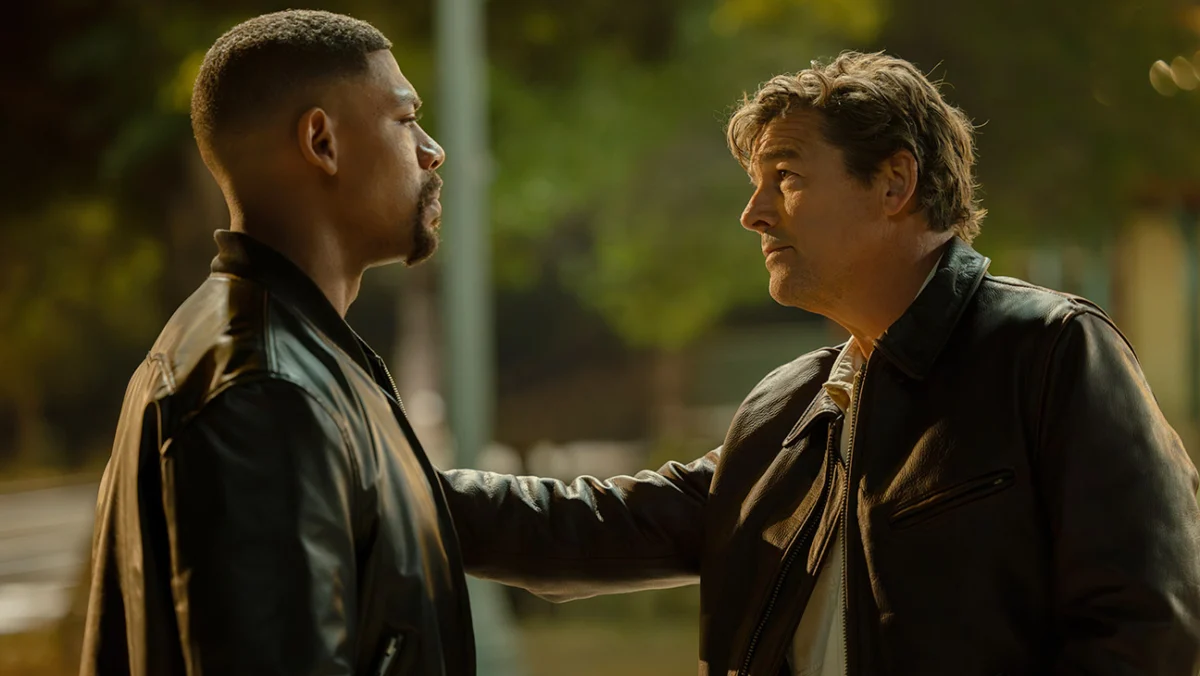
The first season of HBO Max’s Lanterns has officially drawn to a close with an emotionally resonant, deeply grounded finale titled “Dirt and Stars.” Eschewing the conventional, CGI-heavy sky-beam invasions that have long dominated the superhero landscape, the series finale instead prioritizes character-driven intimacy. At its core, the episode charts John Stewart’s (Aaron Pierre) ascension into a wholly independent, uniquely re-imagined Green Lantern, while finally laying bare the complex, tragic history between him and his mentor, Hal Jordan (Kyle Chandler).
Following the high-stakes kinetic clashes of earlier episodes—most notably the "Battle of Rushville" in episode five—showrunner Chris Mundy and co-creators Damon Lindelof and Tom King opted for a deliberate, restrained narrative landing. Rather than leaning on an obligatory, otherworldly threat to manufacture spectacle, the creative team focused squarely on the profound psychological and emotional repercussions of the choices made by its central duo. The resulting finale has sparked intense conversations among fans and critics alike, challenging traditional comic book adaptations and setting a new precedent for the DC Universe on television.
Chronology of the Finale: Unraveling the Mystery of Rushville
To fully understand the emotional weight of “Dirt and Stars,” one must trace the intricate chronology that the finale unfolds, weaving past regrets with immediate consequences.
The episode kicks off immediately following the events of episode five. Sheriff Kerry Kane (Kelly Macdonald) discovers a battered Hal Jordan lying amidst the rubble of a demolished motel in Rushville. Having accepted that his reckless, self-serving bid to retain his Green Lantern status would land him in federal prison—and ultimately clear the path for the Guardians of the Universe to permanently replace him—Hal is entirely resigned to his fate.
The narrative then jumps forward to 2026, tracking the aftermath of Hal’s ten-year prison sentence. Guided by the profound impact of a decade’s worth of letters Hal sent her from behind bars, Kerry picks him up with a six-pack of Schlitz in hand. However, Hal’s return to Rushville is met with localized hostility. Vandalism plagues his rental home, and townspeople harbor deep resentment: Hal’s refusal to surrender his ring not only cost innocent lives, but it also threatened to destabilize the thirty years of health and prosperity provided by Zoe (Poorna Jagannathan) in exchange for protecting her hidden Manhunter identity.
During a tense and hostile local dinner date, Zoe attempts to advocate for Hal, noting his daily efforts to make amends through community service. Her pleas fall on deaf ears. Shortly thereafter, an arsonist sets fire to Hal’s rental. While attempting to escape with his extraterrestrial flower pet, Earl, Hal is seemingly trapped as the staircase collapses.
The Slaughterhouse Revelation and the Fate of Halogram
Hal abruptly awakens inside a slaughterhouse repurposed to house Zoe’s residual Manhunter technology, which possesses the unique ability to heal and regenerate living tissue. Zoe’s grandson, Noah Macon (Shea Pritchard)—revealed to be a Manhunter himself—saved Hal’s life, just as Zoe previously saved John Stewart following a staged car crash. Noah extracts a promise of absolute secrecy from Hal, unaware that his mother, Kerry, remains in the dark about his true nature.
Meanwhile, across the cosmos on Antaan—the home planet annihilated by Zoe in 1986—John Stewart continues piecing together the mystery of Hal’s murder alongside Sinestro (Ulrich Thomsen) and the holographic projection of Hal, affectionately dubbed "Halogram." It is revealed that Noah had previously broken Sinestro out of an Oa prison to forge a ring-charging lantern. Hal, while tracking Noah, discovered Zoe’s hidden portal to Antaan, leading to his fateful final encounter with Sinestro.
Confronting Noah back on Earth, John learns the truth behind the murder. Noah, grappling with the tension between his synthetic programming and human upbringing, ultimately chooses to relinquish the ring and lantern, asking John to euthanize him following his final high school football game. Instead, John turns to Kerry, who confesses the dark truth of Noah’s birth: in exchange for her pact with Zoe in 2007, she was granted not just a physical ailment cure, but the role of expectant mother to a baby Manhunter, believing maternal love could conquer dangerous programming.
When Hal confronted Kerry about Noah’s violent trajectory, a panicked Kerry fatally shot him. Despite this, John refuses to execute Noah, choosing to believe the young man can fight his internal darkness, while also sparing Kerry from a prison sentence out of respect for Hal’s memory.
Supporting Data and Production Metrics: A Ratings Juggle
While the narrative risks taken by the creative team have generated polarizing discussions online, the commercial metrics underlying Lanterns suggest an undeniable cultural footprint.
Viewership Performance: Industry reports indicate that Lanterns season one has averaged an impressive 19 million overall viewers per episode across linear and streaming platforms—a vital benchmark in an era where even renewed television projects face swift cancellations.
Critical Reception: The series has achieved high critical acclaim, currently maintaining a certified fresh rating on aggregate review sites, largely driven by the chemistry between Kyle Chandler and Aaron Pierre.
Industrial Transitions: As the television landscape navigates significant corporate realignments—including Skydance’s impending acquisition of Warner Bros. Television, HBO, and DC Studios—the robust multi-platform viewership numbers offer a strong buffer for the series’ ongoing viability.
Official Responses and Creative Insights: Breaking the Rules of the DCU
During the finale press conference hosted by Mallory Rubin of The Ringer, showrunner Chris Mundy, co-creators Damon Lindelof and Tom King, and stars Aaron Pierre and Kyle Chandler addressed the bold creative choices that defined the season.
Rejecting Superhero Fatigue
From day one, the creative team deliberately avoided conventional superhero tropes. Tom King explained that the "earthy, True Detective-like spin" on the Green Lantern mythos was designed to combat audience fatigue.
"One of our sticking points from day one was to avoid clichés like they’re the plague," King noted. "They make it boring and give you that superhero exhaustion we’ve seen a thousand think pieces about."
Damon Lindelof added that structuring the narrative away from standard third-act CGI spectacles allowed the series to breathe.
"If we had to make a two-hour Lanterns movie, you would have to have a bombastic third-act action set piece… We got to do that [coda] over the course of the last three episodes."
Rewriting the Oath
Perhaps the most heavily debated element of the finale is John Stewart’s modification of the iconic Green Lantern oath, incorporating an acceptance of fear inspired by his interactions with both Hal and Sinestro.
Mundy admitted the writers’ room was "crazily nervous" about altering such sacred text until writer Justin Britt-Gibson reframed the move: "We’re not rewriting it; we’re remixing it."
King elaborated on the narrative justification for the change:
"John is not a hundred percent a Green Lantern anymore. He has an unsanctioned lantern that has a bit of yellow and a bit of fear in it… So getting his own unique oath seemed to line up very much with the lore and where we’re going from here."
Lindelof emphasized that John’s journey demanded absolute autonomy:
"If we’re not afraid of doing an idea, then we probably shouldn’t do it. It just felt right, and we understood that it’s probably going to be the thing that divides the fandom."
Implications for the Future of the DC Universe
The conclusion of Lanterns season one leaves the overarching DC Universe in a fascinatingly volatile state. By definitively keeping Hal Jordan dead—refusing to deliver a comic-accurate "resurrection rug-pull" akin to Green Lantern: Rebirth—the creators have signaled that actions and mortality carry permanent weight within this corner of the franchise.
Furthermore, the introduction of an unsanctioned, fear-infused lantern operating entirely outside the jurisdiction of the Guardians of the Universe establishes John Stewart as an unprecedented independent power player. With Guy Gardner left fuming, the Guardians alerted to a rogue terrestrial operative, and a potentially dangerous Manhunter youth roaming free in Nebraska, the chessboard is expertly set for a complex second season.
As Chris Mundy’s writers’ room continues developing season two ahead of an official green light presentation to DC Studios co-chiefs James Gunn and Peter Safran, Lanterns has firmly proven that superhero television can thrive by trading cosmic noise for profound, grounded human emotion.
As Halogram’s final, lingering message reminds both John Stewart and the audience: "Don’t be afraid to be afraid."
Lanterns season one is now streaming in full on HBO Max.