
The Voice of the Void: How Leonard Nimoy Defined Two Iconic Eras of Transformers
Main Facts: The Legacy of a Sci-Fi Icon in Animated Cinema
In the rich tapestry of Western animation, few cinematic endeavors match the raw, unexpected cultural footprint left by 1986’s The Transformers: The Movie. Far from a standard Saturday-morning cartoon expanded for the silver screen, the animated feature famously shocked audiences—and traumatized an entire generation of children—with an uncompromising narrative marked by the brutal, definitive deaths of beloved toy-line heroes and villains alike. Among its most enduring legacies is its star-studded voice cast, a masterclass in Hollywood prestige meeting Saturday-morning IP.
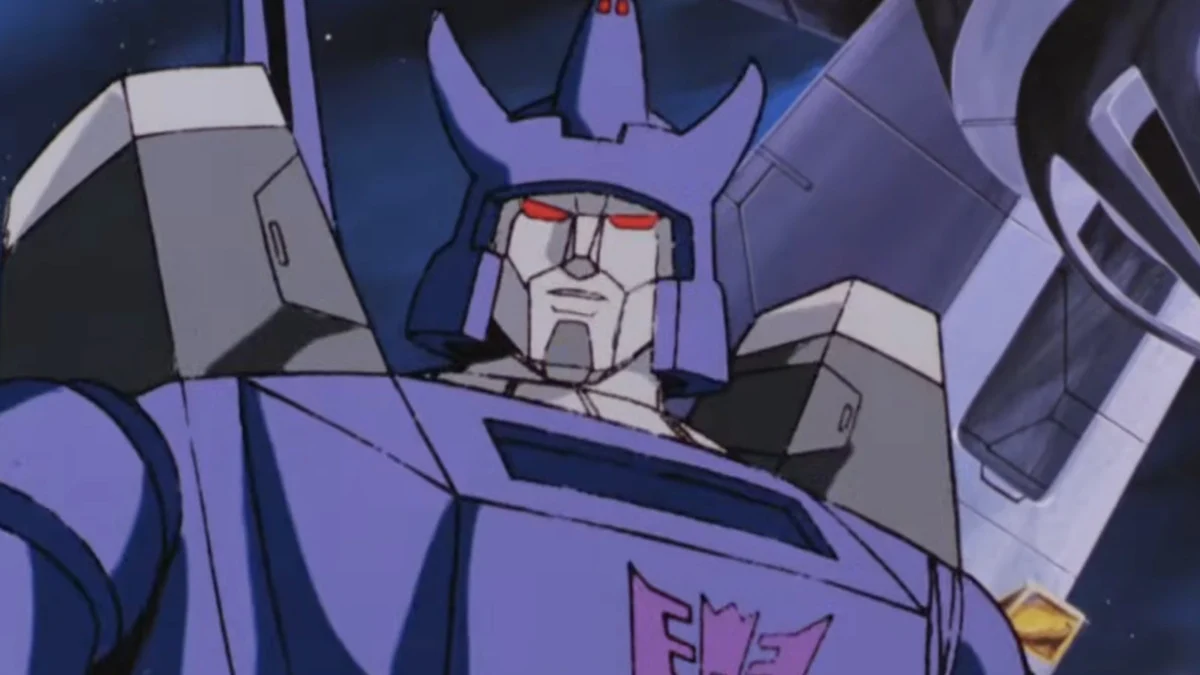
While the film famously featured Judd Nelson (The Breakfast Club) as the rising Autobot leader Hot Rod, and legendary actor Orson Welles in his final role as the planet-consuming god of chaos, Unicron, another legendary genre icon quietly delivered a career-defining vocal performance. Leonard Nimoy—forever immortalized globally as the logical, stoic Mr. Spock from Star Trek—lended his unmistakable vocal talents to Galvatron, the terrifying, crucible-forged reincarnation of the Decepticon leader Megatron.
Nimoy’s involvement in the 1986 animated classic fundamentally altered the trajectory of the Transformers franchise. Shedding the cerebral, composed cadence that defined his live-action Starfleet career, Nimoy crafted a booming, cavernous, and terrifyingly unhinged vocal persona for Galvatron. It was a masterclass in villainous transformation that not only elevated the animated feature beyond its commercial origins but also established a template for villainy that subsequent iterations of the franchise would draw upon for decades.
Chronology: From the Fall of Megatron to the Rise of Galvatron
To understand the magnitude of Leonard Nimoy’s entry into the Transformers mythos, one must examine the precise narrative and real-world timeline that birthed the character of Galvatron.
1984–1985: The Rise and Reign of Megatron
In the original generation-one (G1) animated continuity produced by Marvel Productions and Sunbow Entertainment, Megatron (voiced with raspy, theatrical menace by Frank Welker) ruled the Decepticons with cunning, ruthless ambition. He was a handgun-wielding despot locked in an eternal stalemate with Optimus Prime (Peter Cullen) and the Autobots. However, toy manufacturer Hasbro and animation studio executives recognized that the burgeoning franchise required a narrative reset to introduce a fresh wave of characters and merchandise for the 1986 film.
1986: The Cinematic Bloodbath and Rebirth
The Transformers: The Movie delivered that reset with shocking finality. During the climactic battle for Autobot City, Megatron and Optimus Prime engage in a brutal, near-fatal duel. Though Optimus ultimately perishes from his injuries, Megatron is left mortally wounded.
Cast out into the cold expanse of space by his treacherous second-in-command, Starscream (Christopher Collins), along with other crippled Decepticons, a helpless Megatron drifts toward certain doom. That is, until he crosses paths with Unicron. The planet-sized entity offers Megatron a Faustian bargain: a new body and supreme power in exchange for his absolute servitude.
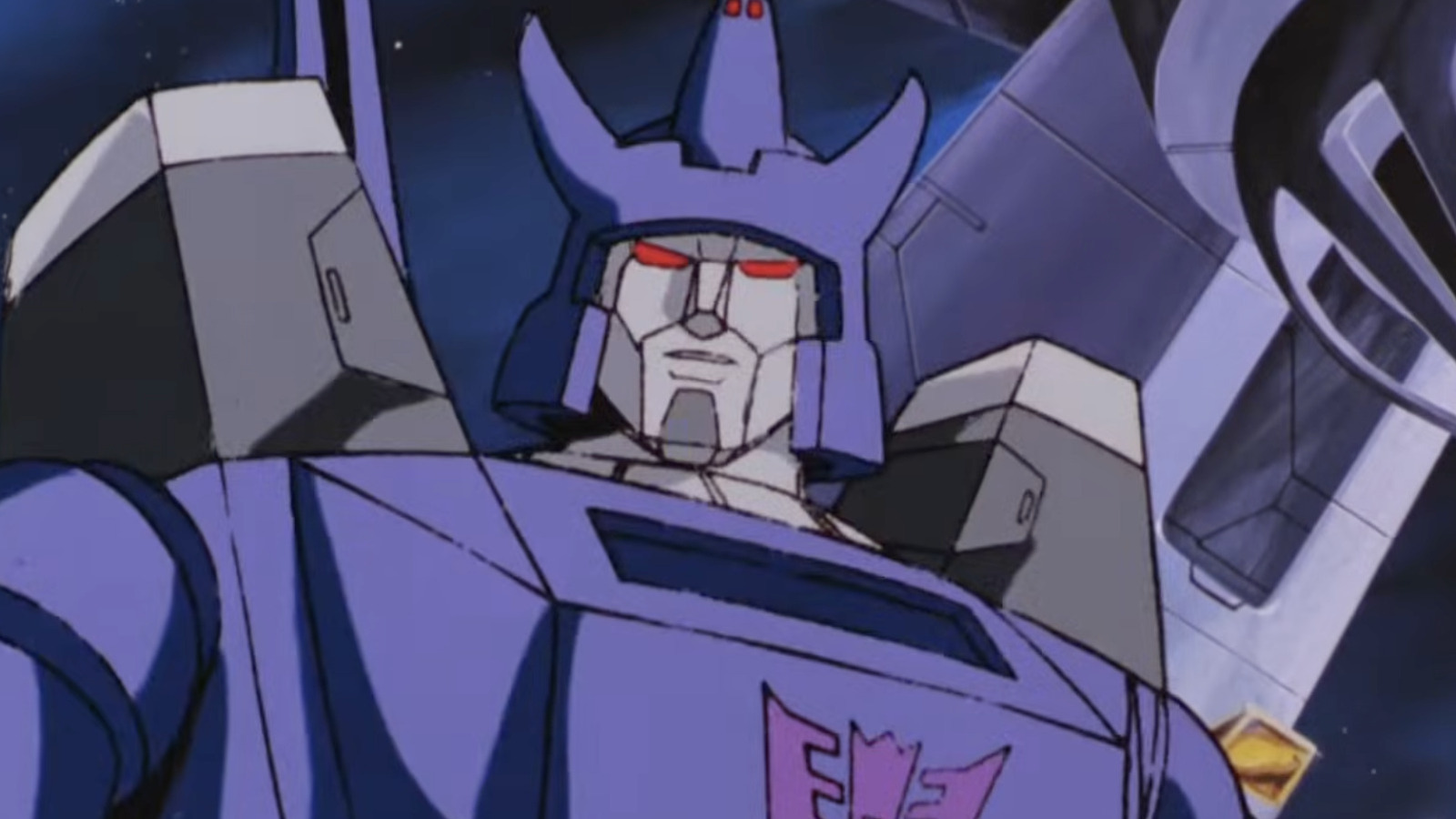
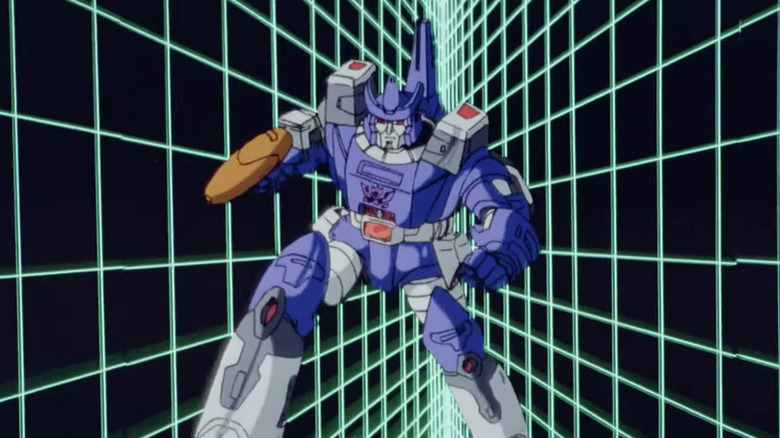
Cornered by mortality, Megatron accepts. Reborn in a fiery, infernal matrix of dark energy, he emerges as Galvatron. Clad in regal blue-purple armor, sporting a crown-like triple-horned helmet, and transforming into a massive, devastating particle cannon, Galvatron immediately asserts his dominance. In his very first act under his new moniker, he obliterates Starscream in front of the entire Decepticon army, vaporizing him into ash.
Post-1986: Television Evolution and Mental Decay
Following the movie, The Transformers TV series transitioned into its third season. Because Leonard Nimoy was unavailable to reprise his role for television, original voice actor Frank Welker stepped back into the boots of the character. Welker imbued Galvatron with a higher-pitched, increasingly screechier delivery to reflect the character’s profound mental deterioration, following a disastrous immersion in molten lava on the planet Thrull—a descent into madness that eventually led the Decepticons to institutionalize their own leader in the memorable Season 3 episode "Webworld."
2011: The Full-Circle Return in Live-Action
Twenty-five years after breathing life into Galvatron, Leonard Nimoy returned to the Transformers universe under very different circumstances. Cast in director Michael Bay’s live-action blockbuster Transformers: Dark of the Moon, Nimoy voiced Sentinel Prime, the predecessor and ideological mentor to Optimus Prime. In a tragic twist that mirrored his earlier villainous pivot, Sentinel is revealed as a traitor who conspires with the Decepticons to enslave humanity and strip-mine Earth to restore Cybertron. This marked one of Nimoy’s final professional acting roles before his passing in February 2015.
Supporting Data & Production Insights: Crafting a Sci-Fi Legend
The creation of Galvatron and the casting of Leonard Nimoy were not merely happy accidents of Hollywood casting agents; they were deliberate artistic choices rooted in philosophy, narrative structure, and vocal contrast.
- Philosophical Underpinnings: According to Ron Friedman, the credited screenwriter of The Transformers: The Movie, the decision to transform Megatron into Galvatron rather than simply introducing a brand-new villain was driven by an overarching theme of transformation. Speaking at TFCon Toronto in 2019, Friedman explained that birth and death in the Transformers universe are fundamentally forms of transformation. He deliberately sought to "take a transforming character, Megatron, and transform him through death."
- Vocal Direction: Unlike Frank Welker’s original portrayal of Megatron, which leaned into dramatic camp and theatrical bluster, Leonard Nimoy’s Galvatron was conceptualized as a character with "less bluster, more ruthless action." Nimoy utilized a deep, resonant, chest-driven register that sounded scorched and battered by Unicron’s hellish forge.
- Franchise Interconnectivity: Nimoy’s connection to the franchise extends beyond his direct performances. Decades of behind-the-scenes trivia and fan documentation note that the cold, hyper-logical Decepticon assassin Shockwave was originally modeled conceptually in part after Nimoy’s iconic portrayal of Mr. Spock. When Shockwave finally made his live-action feature film debut in Transformers: Dark of the Moon (2011), the production cleverly cast Nimoy as Sentinel Prime, bringing his deep-seated influence on the intellectual property full circle.
Official Responses and Creative Perspectives
The artistic choices behind the 1986 film and Nimoy’s involvement have been frequently discussed by creators, cast members, and fans alike over the decades.
Reflecting on the monumental shift in tone between the television series and the 1986 feature film, producer and writer statements over the years have emphasized the daring nature of the project. While studio executives initially worried about the dark, violent narrative turns—including the execution of Optimus Prime and the merciless vaporization of Starscream—the creative team stood firm on the idea that the characters needed to evolve physically and psychologically.
Ron Friedman noted that the transition from Megatron to Galvatron was designed to strip away the comedic, Saturday-morning villainy of the early television episodes and replace it with high-stakes existential dread. Megatron’s desperate plea to Unicron—“I belong to nobody!”—contrasted sharply with his eventual capitulation, creating a complex narrative about fear, pride, and total subjugation.
Similarly, director Michael Bay and the producers of Transformers: Dark of the Moon viewed casting Leonard Nimoy as Sentinel Prime as a massive coup for the live-action franchise. They required an actor whose vocal gravity could match—and occasionally eclipse—that of Peter Cullen. Nimoy’s ability to transition from a wise, benevolent father figure and mentor to a cold, pragmatic zealot provided the 2011 blockbuster with its most emotionally resonant dramatic core.
Implications: The Enduring Blueprint for Sci-Fi Antagonists
The impact of Leonard Nimoy’s vocal work in the Transformers franchise extends far beyond a single cult classic 1980s animated film. It established a narrative and stylistic precedent that modern iterations of the franchise continue to emulate.
- The Resurgence Trope: The dynamic of a fallen leader resurrected and subjugated by a god-like entity has become a staple of modern Transformers storytelling. This exact arc was lovingly recreated in the epilogue movie of the 2010s animated series Transformers: Prime, titled Predacons Rising, wherein a deceased Megatron is resurrected by Unicron (voiced by John Noble) and forced into subservience.
- Against-Type Casting: Nimoy proved that actors known for high-minded, heroic, or rational sci-fi archetypes (such as Spock) can pivot into terrifying, operatic villainy with electrifying results. This paved the way for other prestige actors to lend their talents to animated and blockbuster action franchises without fear of typecasting.
- Elevating Animation: By attaching heavy-hitting dramatic actors like Orson Welles, Judd Nelson, and Leonard Nimoy to an adaptation of a children’s toy line, The Transformers: The Movie helped bridge the gap between commercial animation and high-art genre filmmaking. It signaled that animated features could support complex themes of mortality, corruption, and servitude.
Ultimately, while generations of fans will forever salute Leonard Nimoy as the logical, green-blooded science officer of the USS Enterprise, his terrifyingly majestic contributions to the Transformers universe—both as the hellfire-forged Galvatron and the fallen mentor Sentinel Prime—cement his legacy as an irreplaceable titan of science fiction cinema.
