
From Midnight Flop to Cult Phenomenon: The Unpredictable Journey of Manos: The Hands of Fate and Its Star, Jackey Neyman
By Global Cinema Desk
Published: October 24, 2023
There is something inherently and beautifully unpredictable about independent filmmaking. A multi-million-dollar studio venture can command global attention for a single weekend before vanishing into obscurity, while a shoestring production—assembled with questionable equipment, exhausted crews, and amateur enthusiasm—can stubbornly endure for generations.
Few cinematic artifacts illustrate this phenomenon better than Manos: The Hands of Fate. Long before it was cemented into pop culture history, the film was simply a localized gamble born out of an El Paso fertilizer salesman’s ambitious bet. At the center of this strange Hollywood footnote is Jackey Neyman. Cast at just six years old, Neyman had a front-row seat to a cinematic disaster that ultimately morphed into one of the most beloved cult classics of all time. Decades later, Neyman—now an established artist, actress, and producer—returned to the very universe that traumatized her childhood to help birth its unlikely sequel, Manos Returns.
Main Facts: The Anatomy of an Accidental Legend
At its core, Manos: The Hands of Fate represents the absolute bedrock of independent filmmaking stripped down to raw, unvarnished ingredients: human willpower, whatever gear could be sourced, and a sheer, irrational determination to see a project through to the end.
The production had no elaborate infrastructure. There were no craft services tables; young Jackey and the rest of the cast kept their sack lunches in a shared household refrigerator. The movie was filmed primarily on weekends and late into the night. Neyman’s father, who was active in local community theater, was approached by writer-director-producer Hal Warren after Warren boasted that making a movie was easy. When the production needed a young girl, six-year-old Jackey was brought onboard.
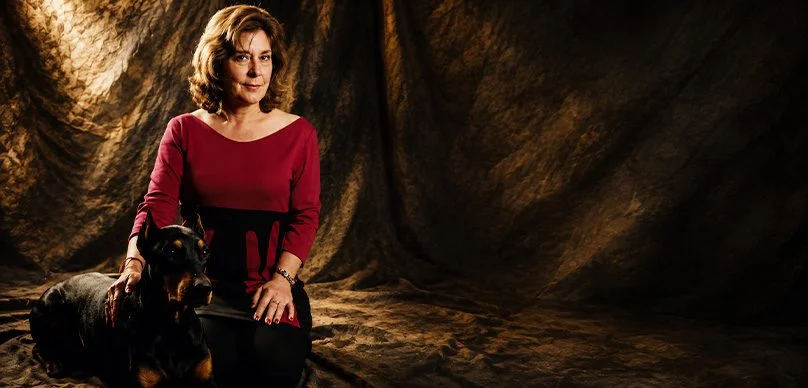
However, the Neyman family’s contributions extended far beyond acting. Jackey’s father built the sets, crafted the props, and designed the costumes. The production relied heavily on borrowed items from the family’s personal life—their furniture, their family car, and even their pet Doberman Pinscher.
Despite the chaotic and amateur production conditions, the experience provided a young Neyman with a foundational, early education regarding the stark contrast between the glamorous illusion captured in front of the lens and the exhausting, unglamorous mechanics happening behind the scenes.
Chronology: From El Paso Premiere to Midnight Movie Revival
1. The El Paso Premiere (1966)
Hal Warren understood how to manufacture spectacle. For the premiere of Manos in El Paso, Texas, he rolled out the traditional Hollywood treatment: searchlights cut through the night sky, a red carpet was unrolled, a limousine arrived carrying local dignitaries, and eager autograph seekers lined the sidewalks.
Jackey and her father sat roughly five rows back from the screen. As the projector rolled, the mood in the theater shifted rapidly. Initial whispers of confusion devolved into open laughter. While Jackey was initially thrilled simply to see herself on a motion picture screen, that excitement evaporated the moment her character spoke. Hearing her own voice amplified in a crowded theater mortified the young actress. Her face burned red, she burst into tears, and she sat through the remainder of the premiere in absolute misery.
2. Decades of Obscurity
Following the disastrous premiere, Manos essentially vanished. For years, the cast and crew attempted to distance themselves from the project. Neyman recalled that nobody involved wanted to discuss the film, and she operated under the assumption that she would never encounter the movie again.
3. The Mystery Science Theater 3000 Renaissance
Then came an event that no one involved in the original production could have ever anticipated: Mystery Science Theater 3000 (MST3K) secured the rights and aired the film.
Overnight, Manos found a massive, ravenous audience. The very technical shortcomings, flat line readings, and bizarre creative choices that once mortified its creators became the fuel for its cult status. What was once considered an embarrassing local failure slowly transformed into a badge of honor within cult-film history. Fans began establishing fan clubs, crafting independent artwork, staging theatrical performances, and building an entire counterculture around a movie that Hollywood had left for dead.
4. The Legacy Continues: Manos Returns (2018)
Decades after the MST3K airing, the fervent fan base created an opening for an almost unthinkable venture: producing a sequel. Stepping back into this cinematic universe presented Jackey Neyman and the creative team behind Manos Returns with a delicate creative conundrum: How do you intentionally follow up a movie whose primary charm stems from its accidental, earnest incompetence?
The team wisely decided against deliberately crafting a "bad" movie. Neyman noted that the original lightning-in-a-bottle quality could never be artificially replicated, as it was born from the genuine, unguided ambition of amateurs. Instead, Manos Returns acknowledged the bizarre legacy of its predecessor while establishing its own modern identity. Neyman returned to the screen, her father contributed scenes at the age of 80, and the production actively sought out surviving members and descendants of the original cast and crew.
Supporting Data: Modern Crowdfunding Meets Low-Budget Indie Realities
The production of Manos Returns highlighted just how drastically the independent filmmaking landscape had transformed since the 1960s. Rather than relying on traditional studio gatekeepers or wealthy local investors, the filmmakers launched a Kickstarter campaign with a modest base goal of $24,000.
Running a modern crowdfunding campaign proved to be an eye-opening, full-time operational hurdle. Neyman quickly learned that a campaign requires specialized division of labor rather than expecting a single filmmaker to shoulder production, publicity, crowdfunding management, editing, and social media simultaneously.
- Rachel Jackson spearheaded Kickstarter management and press outreach alongside Neyman and director Tonjia Atomic.
- Joe Sherlock, serving as Director of Photography, handled graphic design elements.
- Steve Foley managed editing and screenwriting duties while contributing heavily to campaign promotional videos.
For contemporary independent filmmakers, the production of the sequel offered a vital lesson: the crowdfunding campaign is a production in its own right.
While the core low-budget team possessed the capability to make the film at a bare-bones level, additional funding allowed them to elevate the production value—improving costumes, expanding scope, bringing in seasoned collaborators, and ultimately putting a more polished product on screen.
Official Responses and Creative Philosophy
Reflecting on the legacy of Hal Warren and the original production, Neyman shares a pragmatic philosophy that modern indie filmmakers would do well to adopt.
According to Neyman, Warren was fully aware that he was not crafting a cinematic masterpiece. However, he was relentlessly attempting to execute the best possible movie he could with the extreme limitations at his disposal. Furthermore, Manos was never intended to be an isolated artistic experiment; Warren envisioned it as the catalyst for a regional film industry in El Paso, proving to local investors that West Texas could support cinematic ventures.
While those grand ambitions outpaced his resources and technical experience, the foundational instinct remains deeply relatable to independent creators worldwide. As Neyman frequently notes:
“Sometimes your first movie isn’t supposed to be a masterpiece. Sometimes its primary purpose is simply to prove that you can actually finish the damn thing.”
This sentiment underlines a core truth of the medium: a larger budget does not automatically equate to a better film, but additional resources managed by experienced creators buy vital time, flexibility, and creative options.
Implications: The Uncontrollable Life of Art
The enduring saga of Manos: The Hands of Fate and Jackey Neyman’s lifelong journey carries profound implications for the global film community.
By almost every conventional Hollywood metric, the original 1966 film was an unmitigated failure. It alienated its audience, mortified its young star, and disappeared into cinematic purgatory for decades. Yet, through forces entirely beyond human control, it emerged from the shadows to outlive countless technically superior, high-budget studio productions from the exact same era.
Its unexpected resurgence birthed literary analyses, gallery art, stage adaptations, thriving fan communities, and eventually, a legacy sequel.
Filmmakers routinely spend millions of dollars and countless hours attempting to decode, manufacture, and predict what audiences will consume. Yet, Manos serves as a stark, comforting reminder that once a piece of art is released into the wild, its trajectory becomes entirely autonomous and unpredictable.
Creators cannot guarantee critical acclaim. They cannot guarantee immediate commercial success. They cannot even guarantee that audiences will understand or appreciate the work upon initial release.
Ultimately, there is only one variable entirely within a filmmaker’s control: refusing to quit, crossing the finish line, and giving the work a fighting chance to find its audience.
