
The Silicon Valley Mirage: Inside Luca Guadagnino’s ‘Artificial’ and the Race for Oscar Gold
The landscape of modern cinema is frequently defined by the tension between artistic ambition and the cold, hard realities of the balance sheet. In the case of Luca Guadagnino’s latest feature, Artificial, this tension has manifested as a high-stakes industry drama that is as much about the volatile nature of tech-age power as it is about the shifting sands of Hollywood’s awards season. After a turbulent journey that saw the film dropped by Amazon MGM, only to be scooped up by Neon, Artificial has finally arrived—and with it, a narrative that is already dominating conversations in both Silicon Valley boardrooms and Academy voting circles.
The Rocky Road to Release: A Studio’s Gamble
To understand the significance of Artificial, one must first acknowledge the skepticism that surrounded its production. The film’s early development was plagued by reports of creative friction and industry speculation. When Amazon MGM unceremoniously dropped the project, industry insiders were quick to cite it as a casualty of the studio’s strategic partnership with OpenAI. The implication was clear: a film critical of the tech sector’s unchecked growth was not a priority for a studio deeply embedded in that very ecosystem.
However, the reality of the film’s marketability—or perceived lack thereof—also played a role. With a $40 million budget and a cast led by Yura Borisov, a powerhouse actor best known for his supporting work in arthouse hits, Artificial was never going to be an easy sell for a risk-averse studio. It took the bold, calculated maneuvering of Neon—a studio that has built its reputation on championing uncompromising, auteur-driven cinema—to bring the project to the finish line just in time for the current awards cycle.

A Tale of Two Leads: The Garfield Effect
The film opens with a deliberate, almost sterile, pacing. Mark Rylance and Yura Borisov occupy the screen as scientists who, while technically proficient, are intentionally stripped of traditional charisma. The scene is set in a corporate purgatory, populated by characters who seem like ghosts of the tech industry’s past—including an uncredited performance so reminiscent of Edward Snowden that the audience is left questioning the film’s tonal intent.
For the first act, the viewer is left to ask: "Who are these people, and why does their work matter?" There is a vacuum where the usual Hollywood magnetism should be. But then, Andrew Garfield arrives.
Stepping into the role of tech executive Sam Altman, Garfield’s presence acts as a kinetic spark. Initially presented as a meek, unassuming accessory to Ike Barinholtz’s bombastic, anti-comedy iteration of Elon Musk, Garfield’s character gradually reveals a chilling, calculated intensity. It is in this transformation from corporate martyr to corporate menace that the film finds its pulse.

The comparison to David Fincher’s The Social Network is not just inevitable—it is a central feature of the film’s DNA. While Garfield missed out on an Oscar for his role as Eduardo Saverin in 2011, his performance in Artificial feels like a deliberate, full-circle reclamation. He is no longer the betrayed partner; he is the architect of the betrayal. It is a nuanced, career-best performance that has already positioned him as the frontrunner for Best Actor.
Chronology of the Production
The development of Artificial serves as a case study in contemporary filmmaking.
- 2025 (Early Year): Initial reports surface regarding the "disappearing" of the film from Amazon MGM’s slate.
- Late 2025: Neon officially acquires the distribution rights, signaling a pivot toward an aggressive awards-season campaign.
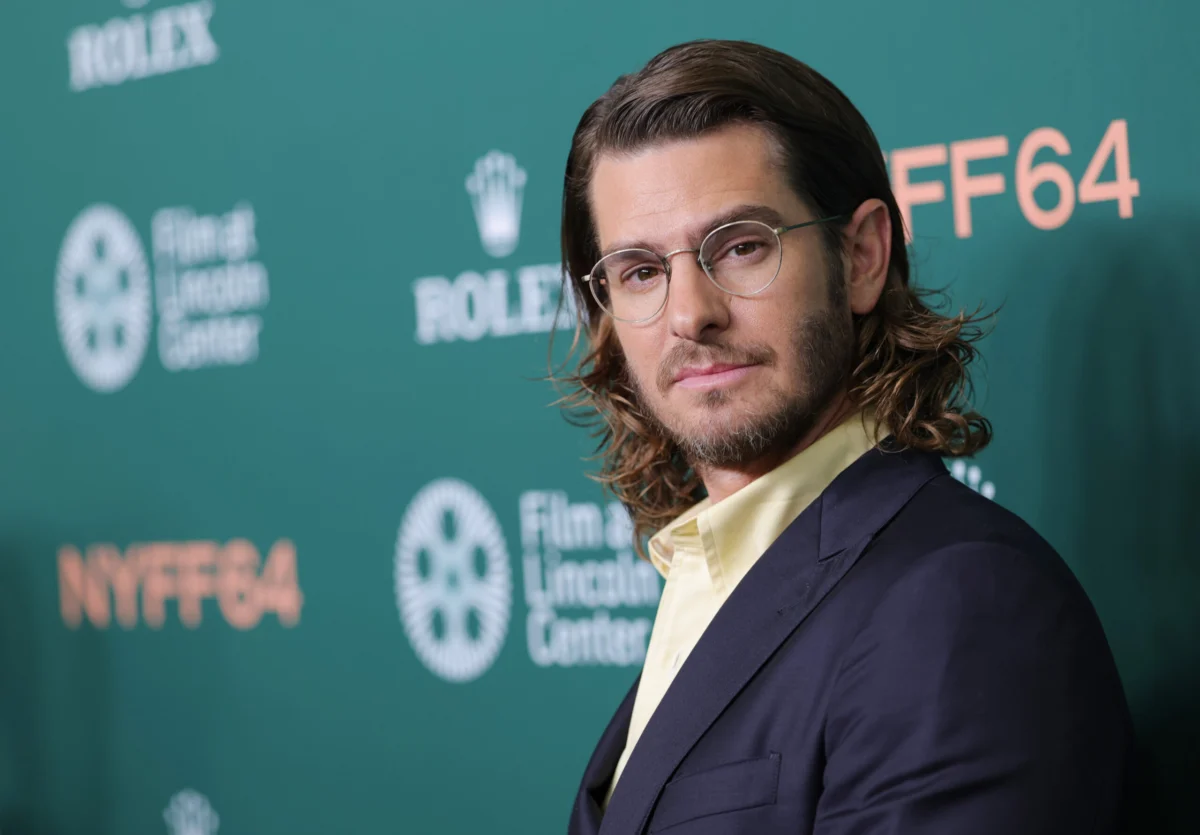
- October 2026: The film makes its high-profile premiere at the 64th New York Film Festival at Alice Tully Hall, where director Luca Guadagnino engages in an extensive Q&A regarding the film’s origins.
- November 2026: Wide release commences, accompanied by a heavy marketing push emphasizing the "Social Network" parallels and the existential threat of AI.
The Script and the Satire of Existential Dread
The true structural integrity of Artificial lies in the screenplay by Simon Rich. A former Saturday Night Live writer with a sharp eye for the absurd, Rich manages to infuse the film with moments of dark, satirical humor that ground the more heady, technical concepts of the story.

More importantly, Rich brings an authentic sense of urgency to the narrative. Having been a vocal participant in the discourse surrounding AI—even appearing in the documentary short Josh’s Wedding, which examines the personal fractures caused by friends working at AI firms—Rich writes from a place of genuine, lived-in anxiety. He captures the "existential dread" of an era where power is increasingly consolidated in the hands of a few, unvetted individuals. While the screenplay faces stiff competition from films like Club Kid and Tender Loving Care, its intellectual rigor and topical relevance make it a formidable contender for Best Original Screenplay.
Crafting the Aesthetic: The Guadagnino Touch
Visually, the film is a masterclass in atmosphere. Cinematographer Malik Hassan Sayeed, following his work on the Guadagnino-helmed After the Hunt, brings a crisp, haunting clarity to the streets of San Francisco. The city serves as a character in its own right, reflecting the cold, architectural beauty of the industry the film depicts.
Editor Marco Costa deserves equal recognition. Despite a runtime of two hours and 20 minutes, the film never drags. Costa manages to maintain a rhythmic tension that mirrors the rapid-fire evolution of the tech industry itself. However, the decision to look beyond longtime collaborators Trent Reznor and Atticus Ross for the score was a bold one. By bringing in Damon Albarn (Blur/Gorillaz), Guadagnino opts for a soundscape that is more eclectic and raw. While Albarn may face an uphill battle against the heavyweights of the score category, his end-credits track is widely considered a lock for a Best Original Song nomination.

Implications for the Industry and the Oscars
The success of Artificial rests on whether Academy voters are willing to embrace a mid-budget, intelligent drama in an era dominated by polarized extremes—the small indie or the mega-blockbuster. Guadagnino, who gained immense prestige with Call Me By Your Name, is currently in a position similar to Denis Villeneuve: he is prolific, highly respected, and consistently delivers high-quality work, yet voters sometimes delay recognition, assuming "there will be another one soon."
However, Artificial is different. It is a film that demands to be reckoned with. Producers David Heyman (a four-time nominee and incoming architect of the Bond franchise) and Jennifer Fox (a veteran of the Michael Clayton era) have carefully steered the film through the political waters of the awards circuit.
If Neon can successfully bridge the gap between critical acclaim and commercial viability, Artificial could very well emerge as the defining film of the year. It captures the zeitgeist of 2026: a world grappling with the realization that the "artificial" tools we built have begun to dictate the reality we live in. Whether it takes home the gold or not, the film has already succeeded in its primary goal—it has ensured that the conversation about the cost of progress is one we can no longer afford to ignore.
