
Crafting the Upside Down: Inside the High-Stakes Visual Effects of Stranger Things Season 5
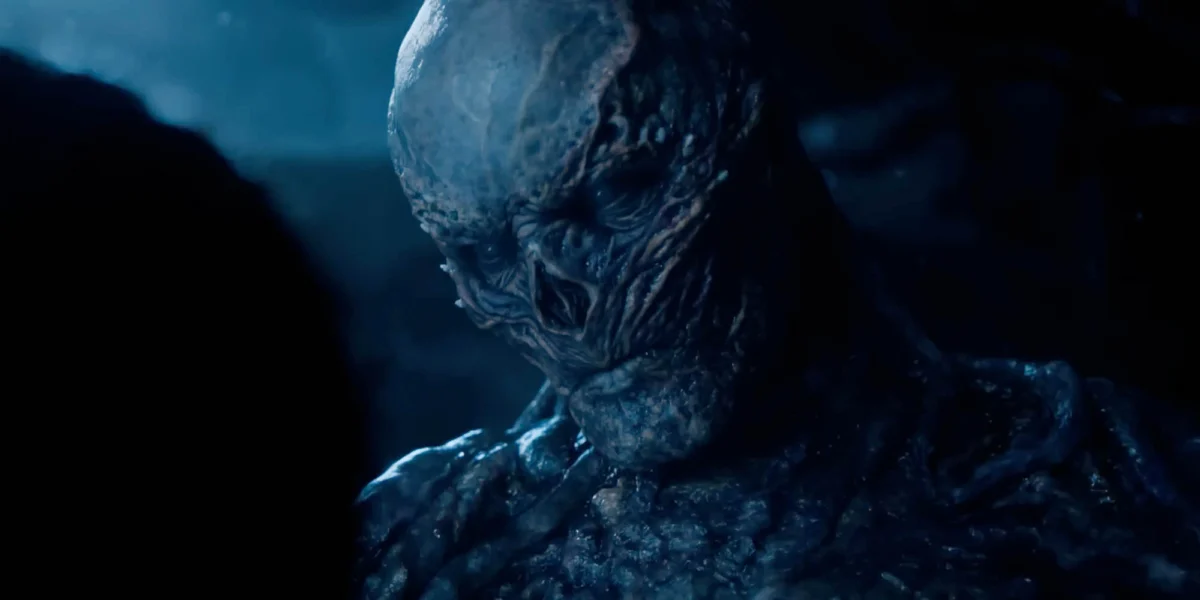
As the cultural phenomenon that is Netflix’s Stranger Things reaches its epic conclusion, the barrier between physical filmmaking and digital artistry has never been thinner—nor more rigorously tested. In a recent fxpodcast conversation, lead visual effects supervisor Betsy Paterson pulled back the curtain on bringing the Duffer Brothers’ landmark sci-fi series to a close. Spanning just over three years of intensive development from the arrival of the earliest scripts, Paterson’s mandate for Season 5 was clear: reject the false dichotomy of "practical versus digital" and instead engineer an invisible, seamless handoff where every department contributes its strongest work.
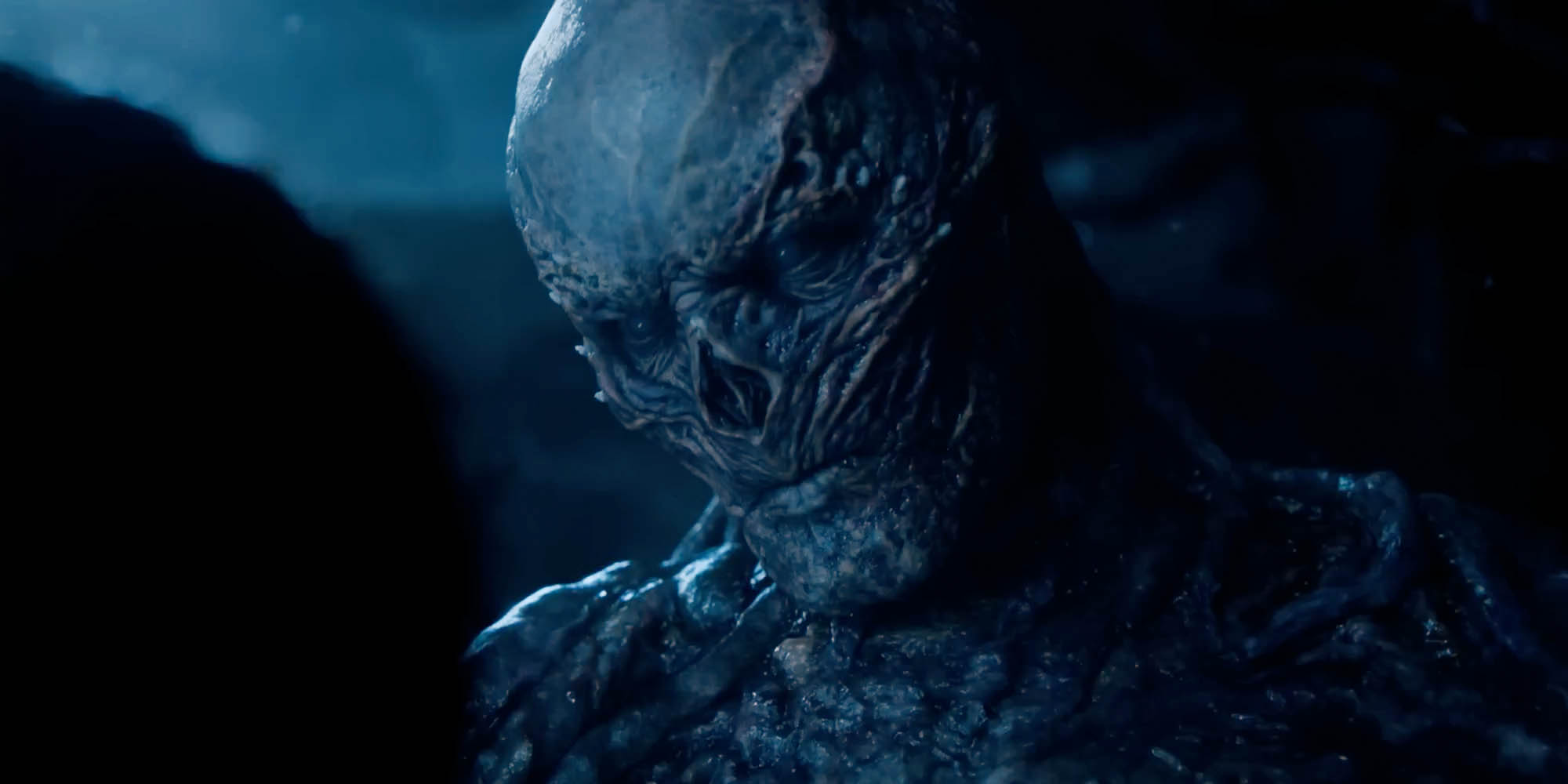
The final season confronted a fundamental truth about modern blockbuster storytelling. While public discourse often clings to the romanticized notion that a cinematic marvel was achieved entirely "in camera," a series featuring alternate dimensions, towering demonic entities, and grotesque supernatural sorcerers has no luxury for such fiction. The Upside Down is a fabrication, the Demogorgons do not wait in green rooms, and the terrifying antagonist Vecna is far more than an actor wearing simple prosthetic makeup.
Instead, the convincing realism of Season 5 stems from a collaborative philosophy. The exceptional cast and crew generated as much tangible, physical performance and environmental detail on set as possible, offering visual effects artists a concrete foundation of physical interactions and real-world photography upon which to build their digital architecture.
Chronology of Production: From Previs to Final Pixels
The journey to the screen for Stranger Things Season 5 followed a meticulously mapped timeline, rooted in an unusually generous one-year preparation window before principal photography commenced.
Phase 1: Pre-Production and Previs (Years 1–2)
As soon as the Duffer Brothers’ scripts arrived, Paterson and her team began laying the groundwork. Previs (pre-visualization) became the universal language across all departments, establishing the grand choreography of major sequences—such as monster placement, creature scale, and spatial geography—while preserving the organic choices actors make during on-set rehearsals. During this phase, production design also anticipated post-production needs; elements like glass walls in laboratories and radio stations were custom-built to be removable or tilt-adjustable, allowing crews to manipulate reflections on the fly.
Phase 2: Principal Photography and Hybrid Environments (Year 3)
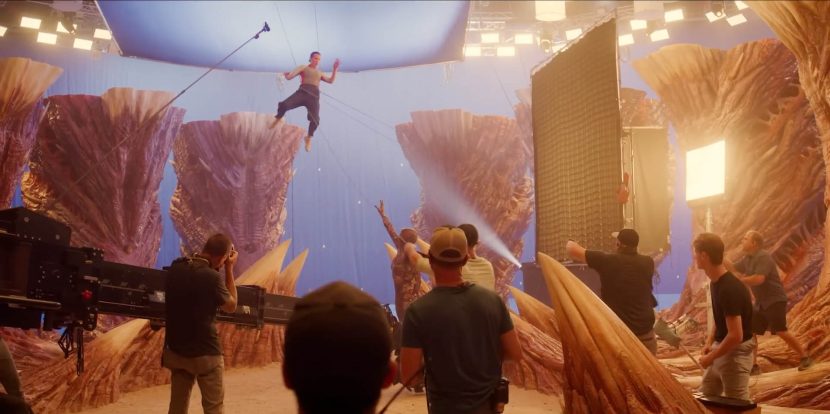
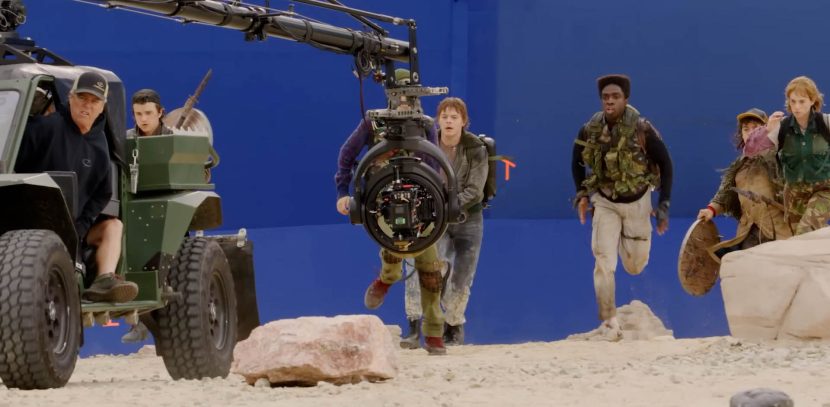
On set, the production embraced hybrid environments. For a major quarry sequence, the team mapped out a layout modeled after a real New Mexico canyon. Rather than shooting entirely on location, they constructed a bluescreen stage floor surrounded by rocky terrain. Using an augmented-reality setup on iPads, crew members could view creatures at scale in real time, synchronizing physical sand bursts with digital footfalls to provide actors with genuine timing, scale, and physical impact.
Phase 3: Post-Production and Vendor Coordination (Months 36–38)
The final stretch involved monumental multi-vendor coordination. Wētā FX handled the lion’s share of complex creature work (Vecna, Demogorgons, Demodogs), young Will’s facial reconstruction, Vecna’s lair, and the massive Abyss battle. Industrial Light & Magic (ILM) focused heavily on environmental destruction, fleshy walls, and vine-constriction mechanics. Additional heavy lifting was supplied by Eyeline, Rodeo FX, BigHug FX, and BOT VFX, all managed through intense twice-daily review cycles where Paterson sometimes reviewed upwards of 300 shots a day.
Supporting Data: Breaking Down the Heavy Hitting Sequences
Season 5’s visual effects portfolio is defined by three major technical mountains: Vecna’s physical-digital hybrid design, the refined Demogorgon mechanics, and the high-risk digital de-aging of young Will.
Vecna: Preserving Jamie Campbell Bower’s Performance
Rather than converting Vecna into a purely motion-captured digital character, the production insisted that actor Jamie Campbell Bower remain physically present on set for nearly all of his demanding wire and stunt work.
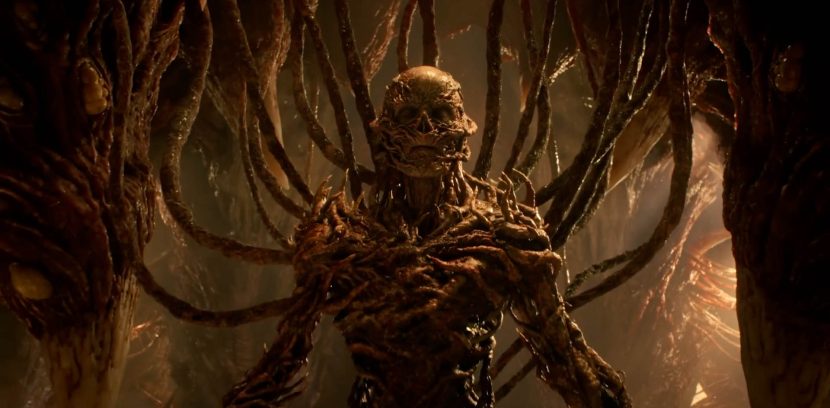
- The Suit: Bower wore a streamlined performance-capture suit featuring minimal tracking markers under digital body-replacement layers.
- Physical Presence: To combat the slim profile of the digital silhouette, Bower requested shoulder and underarm padding, a modification that grounded his physical stance and posture.
- Makeup Shift: While Season 4 required grueling 8-to-9-hour makeup applications, Season 5 streamlined this to a two-hour practical base, preserving essential facial presence before Wētā FX stepped in with digital enhancements.
Refining the Demogorgons
Audiences already knew the iconic monsters, but the scripts for Season 5 subjected them to severe scrutiny. Rather than a total redesign, Paterson focused on anatomical optimization:
- Improved muscle simulation and refined shoulder and hip movements.
- Enhanced subsurface scattering, slime physics, and slobber dynamics.
- Complex lighting integration, where violently flickering set fixtures during mid-season combat scenes were meticulously matched across digital creature renders.
Young Will: The Ultimate "VFX Face" Test
Perhaps the season’s highest-stakes technical hurdle was the opening sequence featuring a young Will Byers, matching the appearance of Noah Schnapp from Season 1.
- The Double: The production cast a young performer, Luke, whose proportions matched Schnapp’s childhood appearance. Schnapp worked directly with Luke on set to guide his physical expressions.
- Capture Package: The young actor wore facial tracking dots, captured simultaneously by two witness cameras on the main rig and four additional cameras positioned around the forest set.
- The Pipeline: Eschewing AI-driven face replacement in favor of a traditional fully CG face built by Wētā FX, the team cross-referenced historical footage, outtakes, and interviews. While eyes were solved early, the human mouth—specifically the subtle muscle transitions of the lips—represented the ultimate test, successfully cleared in roughly 40 dedicated facial shots.
Official Responses and Industry Insights
The collaborative ethos driving the production was repeatedly emphasized by leadership throughout the post-production cycle.

"We need to do as much real as possible, and the line becomes when it is just not possible anymore," explained lead VFX supervisor Betsy Paterson. "Yes, the Demogorgon is fully CG, but we work really hard to make sure the stuff it interacts with is real."
This philosophy extended down to the smallest tactical choices on set. For instance, rather than asking actors to mime interacting with an organic parasite, the prop department fabricated a scuba-style mouthpiece so young actors could physically feel an object between their teeth and react organically to its extraction before digital replacement took over.
Furthermore, the integration of color science early in the process ensured that visual effects were not designed in a vacuum. Because Stranger Things utilizes heavily stylized lighting that can inadvertently expose mismatches invisible under neutral viewing transforms, the project’s colorist worked directly alongside the VFX team in the same facility. This allowed Paterson to test LUTs directly with vendors and request optimized renders rather than attempting to rescue misaligned pixels purely in the color grade.
Implications for the Future of Television Production
The triumph of Stranger Things Season 5 offers a blueprint for high-end television production in an era increasingly dominated by digital shortcuts. By refusing to treat practical production and visual effects as opposing forces, the Duffer Brothers and Betsy Paterson demonstrated that digital creatures only achieve genuine terror when they disrupt a physically grounded reality.
The lessons learned on the set of Hawkins—from gimballed glass panels and actor-specific padding to advanced facial capture pipelines and cross-departmental pre-planning—redefine expectations for streaming blockbusters. Ultimately, the monsters of the Upside Down feel terrifyingly present because an entire crew agreed, long before the first digital pixel was rendered, on how to share reality.
For the complete story behind the visual effects of the final season, listeners can tune into the full fxpodcast interview with Betsy Paterson.
