
The End of an Era: How the Emmys’ Move to Prime Video Signals a New Dawn for Television
The landscape of television is undergoing a seismic shift, one that effectively closes the book on nearly eight decades of broadcast tradition. On Tuesday, October 6, 2026, the Television Academy announced a landmark decision that will fundamentally alter how the world watches "TV’s biggest night." Beginning in 2027, the Primetime Emmy Awards will depart from their traditional broadcast network rotation, moving exclusively to Amazon Prime Video for a six-year term.
This decision marks the end of the "Wheel Deal," a collaborative arrangement that has seen the ceremony rotate annually among the "Big Four" broadcast networks—CBS, NBC, Fox, and ABC—for generations. By choosing a streaming giant as its permanent home, the Television Academy is not merely updating its distribution strategy; it is acknowledging that the future of prestige television now lives, breathes, and thrives in the digital ecosystem.
A Historical Pivot: The End of the "Wheel Deal"
For decades, the Emmy Awards have functioned as a communal ritual of American broadcast television. The "Wheel Deal" was designed to share the prestige—and the advertising revenue—of the telecast among the major networks. It was a system that worked well in an era where the broadcast networks held a monopoly on cultural conversation.
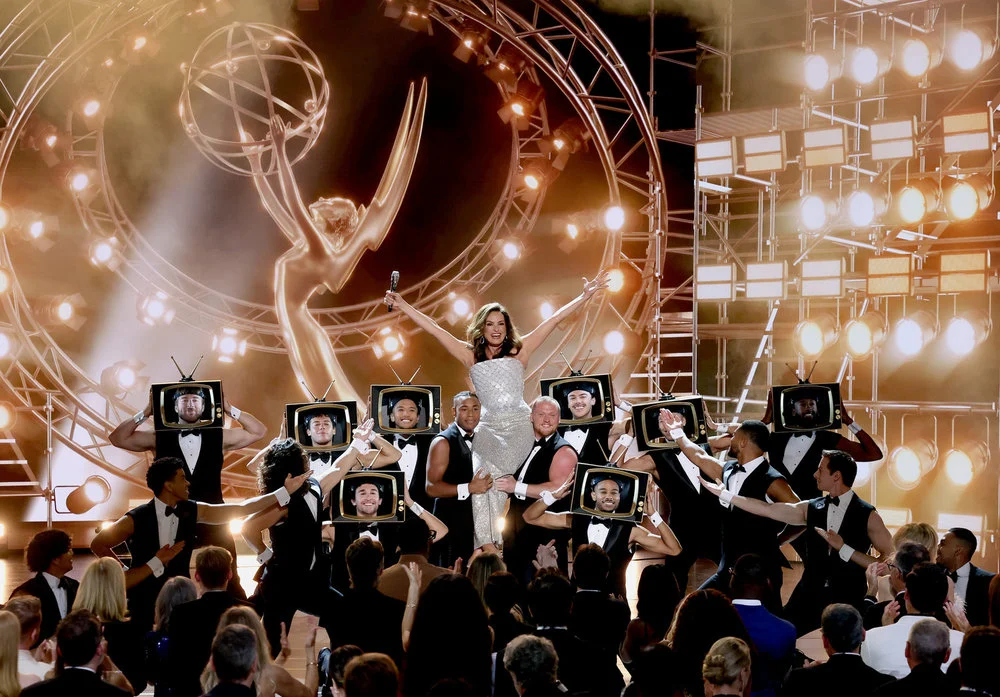
However, as linear viewership has cratered in the face of streaming competition, the efficacy of this rotation has been called into question. The 2026 ceremony, which featured an acclaimed hosting performance by Mariska Hargitay on NBC, served as the final chapter of this traditional arrangement. While the Emmys remain a significant cultural touchstone, the numbers tell a story of a shrinking audience. This year’s broadcast saw a 10 percent decline in viewership compared to 2025, drawing only 6.8 million viewers. For an awards show that once routinely commanded tens of millions of eyeballs, these metrics signal a desperate need for a reinvention that only a global streaming platform can provide.
The Strategy Behind the Stream: Why Amazon?
The shift to Amazon Prime Video is not just a migration of platform; it is a fundamental change in the economics of the broadcast. Perhaps most significantly, the Television Academy has confirmed that the ceremony will be available to watch for free worldwide on Prime Video. This removes the "subscription barrier" that often limits the reach of prestige streaming content, allowing the Academy to leverage Amazon’s massive global infrastructure to capture a broader, more international audience.
Amazon’s interest in the Emmys is a strategic play to bolster its position as a primary destination for premium entertainment. With their existing, high-profile investment in Thursday Night Football—which similarly utilizes an ad-supported, free-access model—Amazon has already proven it can handle the technical demands of live, high-traffic events. By housing the Emmys, Amazon cements its role as a cultural powerhouse, signaling that it is no longer just a content producer, but the primary venue for the industry’s most prestigious celebrations.

The Evolution of the Television Academy
This transition arrives on the heels of another monumental shift: the merger of the Television Academy and the National Academy of Television Arts and Sciences (NATAS). For years, the two organizations operated with a competitive, sometimes frosty relationship, managing different segments of the industry (Primetime vs. Daytime). Their recent union has brought the entirety of the television awards landscape under one roof, creating a unified front that is now better equipped to negotiate with massive tech conglomerates like Amazon.
This consolidation, paired with the move to a single, dedicated home for the Emmys, suggests a lean, more centralized future for the organization. By moving away from the quarterly rotation of networks, the Academy gains stability, a singular creative partner, and the ability to innovate on the presentation of the awards year-over-year without having to start from scratch with a different network’s production team every autumn.
Official Responses: A Vision for Global Reach
The leadership of both the Television Academy and Amazon have framed this move as a necessary evolution for a globalized medium.
"Television has never been more global, and the Emmys should be a celebration that the world can share," said Cris Abrego, chair of the Television Academy, in a statement released on Tuesday. "Now Prime Video audiences in more than 200 countries will be able to experience the Emmys live with no subscription required. Our broadcast partners have been tremendous stewards of the Emmys for many years… but having a dedicated home with Prime Video allows us to build on that legacy with unprecedented global reach."
Abrego’s emphasis on "unprecedented reach" highlights the primary motivation for the change: relevance. In an era where a show produced in South Korea or Spain can become a global phenomenon, a US-centric broadcast model felt increasingly anachronistic.
Mike Hopkins, head of Prime Video and Amazon MGM Studios, echoed this sentiment, framing the move as a service to the customer. "Streaming the Emmys free on Prime Video is another way we’re delivering the best in entertainment to our customers worldwide," Hopkins noted. "We look forward to collaborating with the Television Academy on this iconic event."

Implications for the Industry
The move is being viewed by industry analysts as a "canary in the coal mine" for other legacy awards shows. The Oscars, which have historically struggled with similar ratings declines on ABC, recently made headlines for an experimental move toward YouTube distribution. The Emmys’ permanent move to a streamer suggests that the "Big Four" networks are no longer the gatekeepers of cultural prestige.
Furthermore, this decision creates an interesting tension regarding the "home-field advantage." Historically, the network hosting the Emmys often saw its own shows heavily represented and celebrated during the broadcast. While Amazon has produced critically acclaimed hits like Fleabag and The Marvelous Mrs. Maisel, the streamer notably struggled in the most recent Emmy cycle, failing to secure a single nomination in the "Big Three" categories: Outstanding Comedy, Drama, or Limited Series.
Does this move suggest that Amazon will eventually gain a "home-court" benefit in the awards process, or will the Academy maintain the independence of its voting body? That remains the central question for industry insiders. Some worry that the consolidation of the platform and the awards body could lead to conflicts of interest, while others argue that the increased exposure for the nominees will benefit the entire industry, regardless of which network or streamer produced the content.
A Future Without Borders
As we look toward 2027, the television industry stands at a crossroads. The transition to Amazon Prime Video is a clear admission that the broadcast era has ended and the era of "Global Streaming" has fully matured. By removing the subscription wall and targeting an international audience, the Emmys are attempting to transform from an American television institution into a truly international celebration of the medium.
For the viewer, this means a more accessible, potentially more innovative, and undoubtedly more digital experience. The loss of the traditional broadcast ceremony—the water-cooler talk on Monday morning following a network telecast—may be mourned by purists. However, the promise of a ceremony that can reach every corner of the globe simultaneously is a prospect that the Television Academy believes will ensure the long-term survival of the awards.
Whether this move will stabilize the dwindling ratings or simply accelerate the migration of the audience to digital platforms remains to be seen. What is certain, however, is that the 2027 Emmy Awards will be the most-watched experiment in the history of the ceremony. The world will be watching—and for the first time in history, they will all be watching in the same digital room.
