
Anatomy of a Cultural Phenomenon: How Sony’s KPop Demon Hunters Masterminded the Ultimate Cinematic Fusion
By Trevor Hogg
October 6, 2026
Main Facts: The Triumph of a Modern Masterpiece
It is rare for an animated feature to not only sweep the major guilds and academies, but also secure an induction into the prestigious Criterion Collection. Yet, Sony Pictures Animation’s KPop Demon Hunters achieved this rare trifecta, capturing the 2026 Visual Effects Society (VES) Awards for Outstanding Animation in an Animated Feature, Outstanding Character in an Animated Feature (for the complex protagonist, Rumi), and Outstanding Effects Simulations in an Animated Feature.
The film’s dominance extended across the entire awards circuit, conquering the Oscars, Annie Awards, Golden Globes, Producers Guild of America (PGA) Awards, and Critics’ Choice Awards.
At its core, KPop Demon Hunters presents a high-concept premise: a world-famous K-pop girl group navigates the grueling demands of global stardom by day, only to moonlight as covert supernatural operatives battling hordes of malevolent entities. But the project’s true triumph lies in its execution. To understand how a film blending pop music culture, K-drama melodrama, and dark fantasy became a global cultural phenomenon, industry critics and fans alike point to one definitive turning point: the Bathhouse Battle sequence.
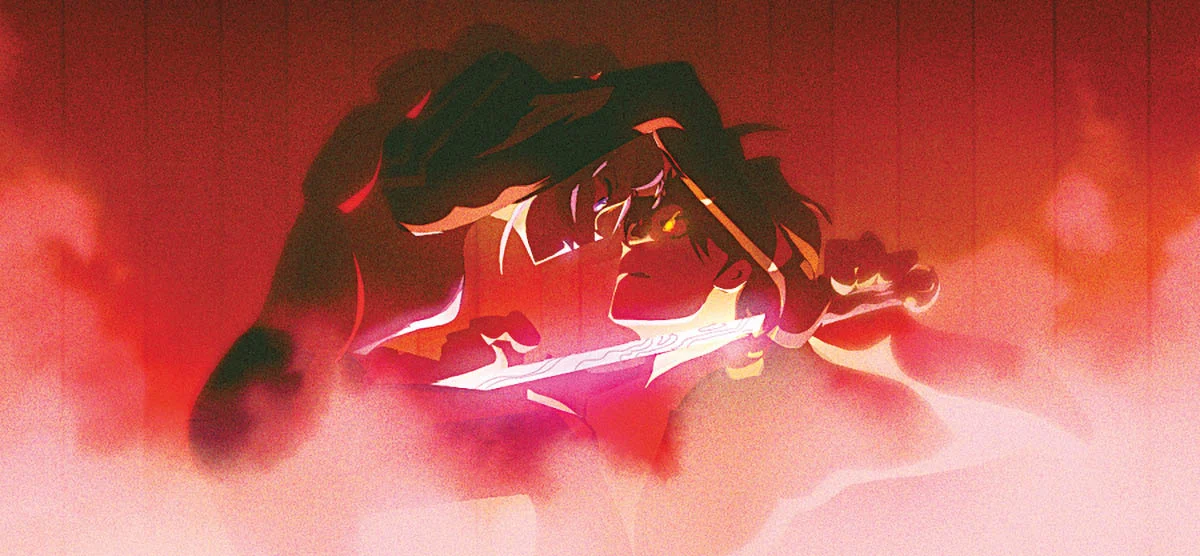
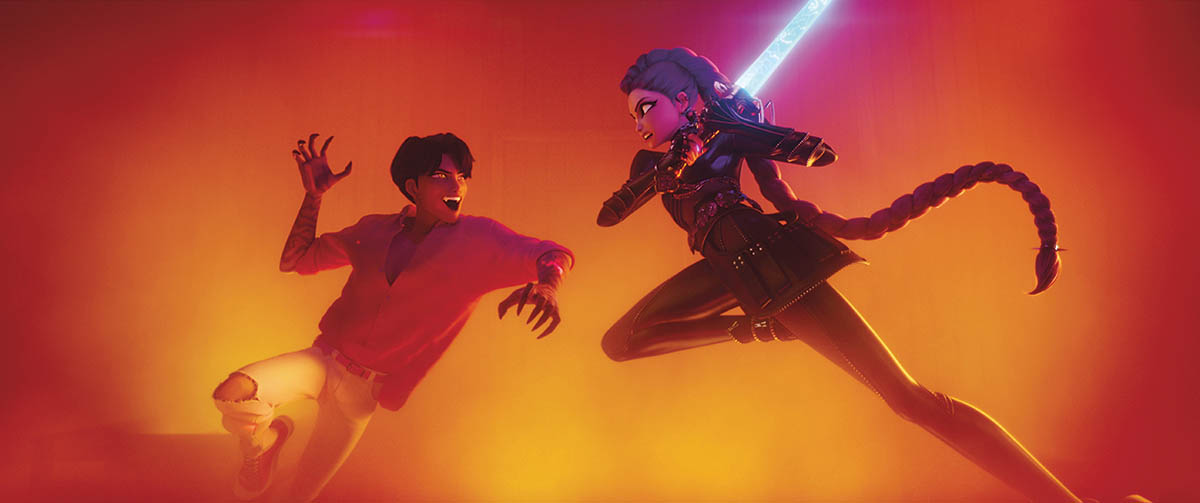
Spanning a chaotic intersection of action spectacle, visual effects (VFX), and character-driven intimacy, this sequence sees the rival boy band—the Saja Boys—unleash a terrifying wave of Water Demons upon the heroines of HUNTR/X. Amidst the carnage, the film pivots emotionally, transitioning the dynamic between Rumi and rival singer Jinu from fierce adversaries to star-crossed romantics after they discover a shared demonic heritage.
Chronology: Crafting the Bathhouse Battle Pipeline
The realization of the Bathhouse Battle sequence required a meticulous production chronology, breaking ground technically and stylistically for Sony Pictures Animation.
Pre-Visualization and Unreal Engine Integration
Historically, major animated features relied heavily on traditional software like Maya for early layout and pre-visualization (previs), forcing artists to approximate depth of field and camera behaviors with the hope that downstream departments would preserve their intent. KPop Demon Hunters, however, became the first film at Sony Pictures Animation to complete its entire layout and previs pipeline inside Unreal Engine.
"For a cinematographer, Unreal Engine is great because the camera behaves physically to the real world," notes Gary H. Lee, Head of Cinematography Layout. "It means that when we use our large-format camera, set our focus point and f-stop, they are accurate to the real world. We’re able to make those choices even when we’re shooting previs."
Spatial Cheats and Pacing Rules
Because narrative momentum dictated physical space, the layout team had to cleverly manipulate the architecture of the bathhouse and sauna. By seamlessly cheating the sauna layout directly adjacent to the main bathhouse—allowing a crumbling wall to visually connect the two spaces—directors Maggie Chan and Chris Appelhans maintained critical character geography.
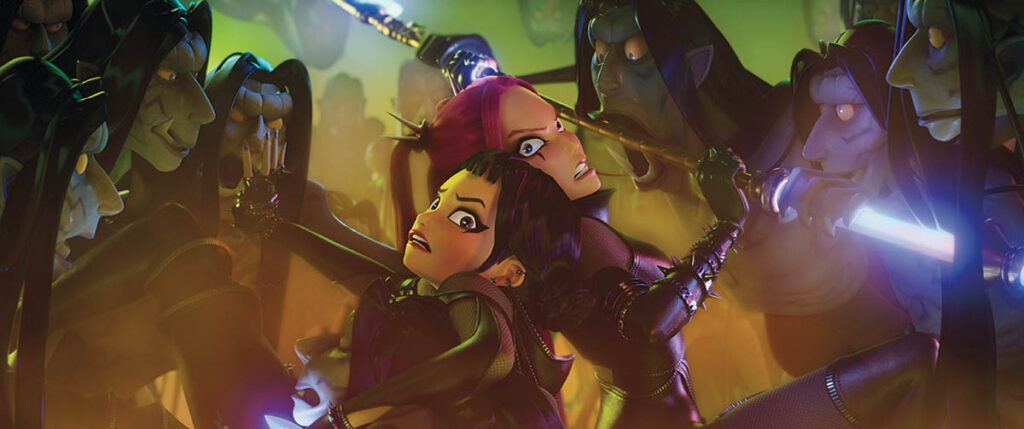
The sequence also operated under strict pacing rules regarding time manipulation. Slow motion was strictly reserved for emotional resonance rather than conventional action glorification. Whether Jinu grabs Rumi for a 360-degree spin or Mira and Zoey nearly catch a glimpse of the hidden demonic pattern on Rumi’s shoulder, time suspension underscores vulnerability. Conversely, when the narrative demanded full-throttle action, the rulebook was entirely discarded.
Supporting Data: Technical Innovation and Cultural Authenticity
The technical metrics and design philosophies driving KPop Demon Hunters highlight a meticulous blend of modern technology and deeply rooted Asian cinematic aesthetics.
Cinematography and Lens Selection
To capture the romanticized, high-end look of contemporary South Korean television dramas, the cinematography team selected the ARRI ALEXA LF camera system.
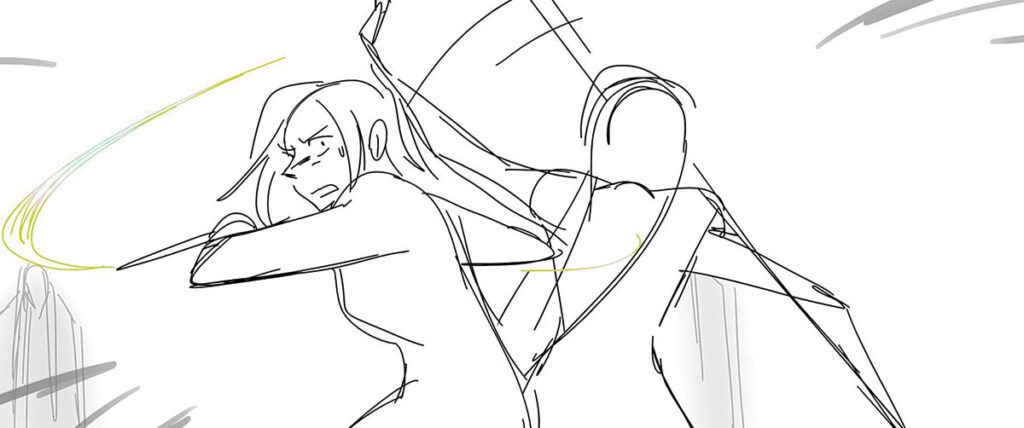
- The Sensor Advantage: The large sensor format enabled a shallow depth of field, artfully blurring out environmental clutter to isolate characters in a manner typical of emotional K-drama location shoots.
- Focal Length Dynamics: While long lenses honored traditional Asian cinematic aesthetics, the crew dynamically switched to wide, short lenses (such as 18mm or 14mm) during high-octane choreography—like Zoey scaling walls and launching darts—to maximize spatial tension.
Cultural Materiality and Prop Design
The weaponry in KPop Demon Hunters was elevated from mere tools to fully realized characters with distinct identities:
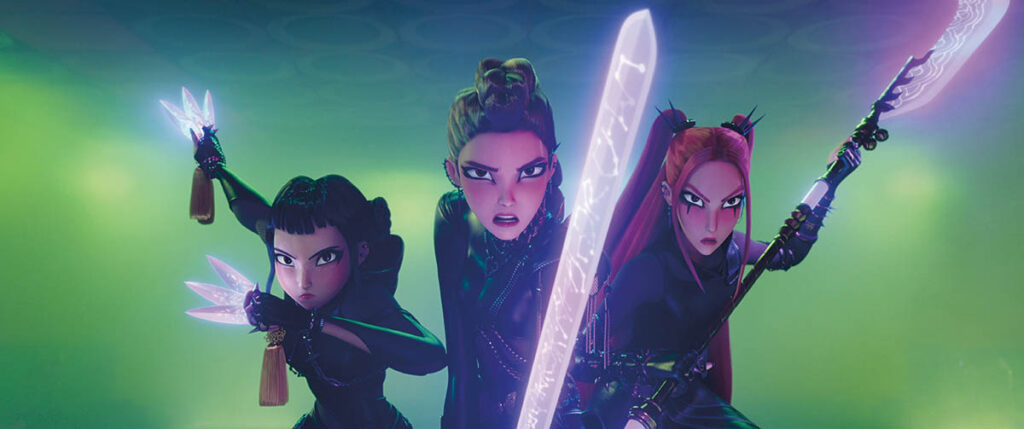
- Zoey’s Shin-kal daggers
- Mira’s Gok-do (a long-handled polearm)
- Rumi’s Sain-geom (the Four Tiger Sword)
Co-Visual Effects Supervisor Clara Chan explained that weapon formation was treated as an intricate visual effect. Drawing energy from the mystical Honmoon, the lines weaving together to form the blades were directly inspired by traditional Korean knot-tying art (norigae).
Even minute cultural details were meticulously researched. When background bathhouse patrons were integrated into the scene, a team member corrected the scrubbing tools used by characters, replacing generic props with authentic fingerless exfoliating mitts worn over the hand.
Color Theory, Lighting, and Simulation
The atmospheric environment of the Bathhouse Battle relied on a stark, memorable color script:
- The Color Palette: Monochromatic green and red steam dominated the frames, masterfully balanced by Visual Effects Supervisor Benjamin Hendricks to ensure character clarity.
- The Demon Motif: Pink served as the universal signature of demonic presence—manifesting as pink clouds during Jinu’s teleportation and exploding into showers of sparkling pink glitter whenever a demon was vanquished.
- The Hair Challenge: According to Animation Director Joshua Beveridge, simulating the intricate, heavy braid-rings worn by the Water Demons, Rumi, and Mira pushed the character effects (CFX) and animation departments to their absolute limits, requiring custom rigging to maintain graphic appeal alongside physical simulation.
Official Responses: Insights from the Creative Frontline
Key creative leads on KPop Demon Hunters shared deep insights into the collaborative effort required to pull off the Bathhouse Battle sequence:
-
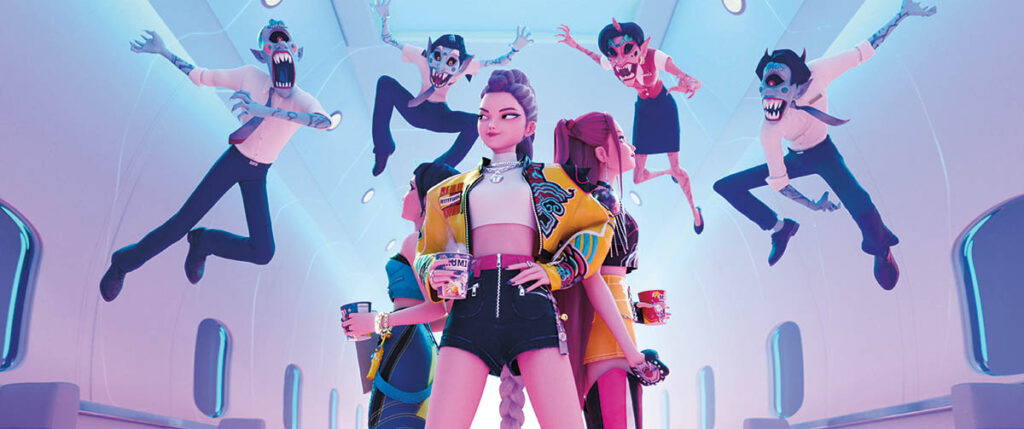
Gary H. Lee (Head of Cinematography Layout): Emphasized the cultural blending that informed the project. "It was important to me to make sure we channeled the right things in the movie, such as [using] K-dramas, K-pop music videos and big concert performances, like Blackpink’s… At the beginning of the sequence, there is a lot of centralized composition. To frame the girls, you have that heroic triangle of Rumi in the middle and the two on the side."
-
Joshua Beveridge (Animation Director): Discussed the design philosophy behind the antagonists. "We tried to [assign] every demon a different class level and set of rules. Each one has been banished to a deeper level of shame, so the Water Demons are almost animalistic. They’re eerie and creepy… Lucky enough, we learned that no matter how violently you slice things open, if they blow up in pink sparkle glitter, we’re good!" Beveridge also praised animator Ryusuke Furuya for orchestrating the chaotic sandbox clearing where Rumi decapitates a Water Demon in a single, fluid motion designed to mentally "reset" the audience.
-
Clara Chan (Co-Visual Effects Supervisor): Highlighted the narrative density packed into a brief cinematic window. "All the effects are unique. We don’t see them often. The demon design is fun. There are so many things that come together in this short moment, and the almost monochromatic green and orange create such a big visual impact. It has a clarity to it. There are moments of humor as well as a romantic moment… There is so much story in this one little sequence."
Implications: A New Era for Animated Cinema
The runaway success of KPop Demon Hunters—culminating in its historic awards sweep and critical permanence in the Criterion Collection—signals a monumental shift in Western feature animation.
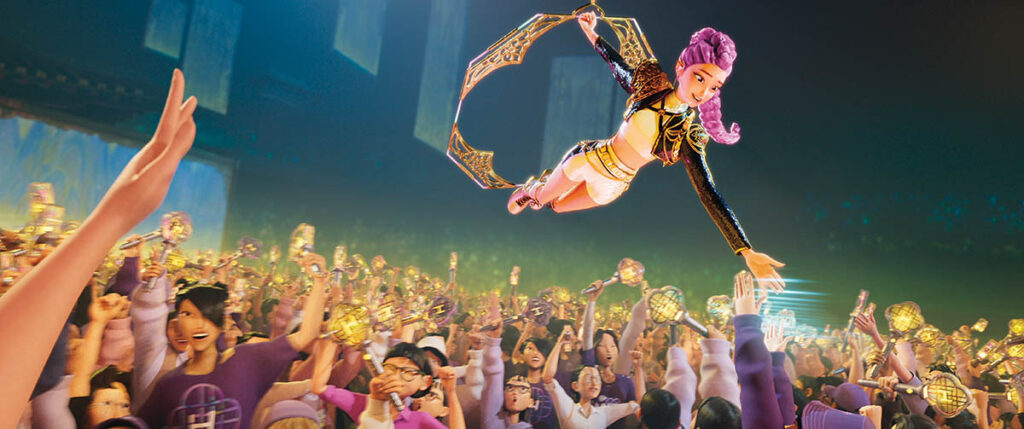
For decades, mainstream Hollywood animation largely catered to homogenous demographic formulas. KPop Demon Hunters shattered these boundaries by placing authentic Korean cultural geography, folklore, and modern pop aesthetics at the center of a blockbuster narrative. By championing a trio of fierce female protagonists taking center stage in high-stakes action sequences—traditionally dominated by male archetypes—the film has redefined audience appetites globally.
Furthermore, the technical gamble of executing an entire layout and previs pipeline within Unreal Engine proves that real-time game engine technology is no longer just an alternative tool for television or pre-production; it is a premier engine for cinematic excellence. As directors Maggie Chan and Chris Appelhans have demonstrated, when deeply resonant cultural storytelling merges with cutting-edge visual technology, the results transcend mere entertainment—they permanently reshape the language of cinema.
