
Beyond the Shadow of the Screen: How European Festivals Transformed Film Composers into Global Icons
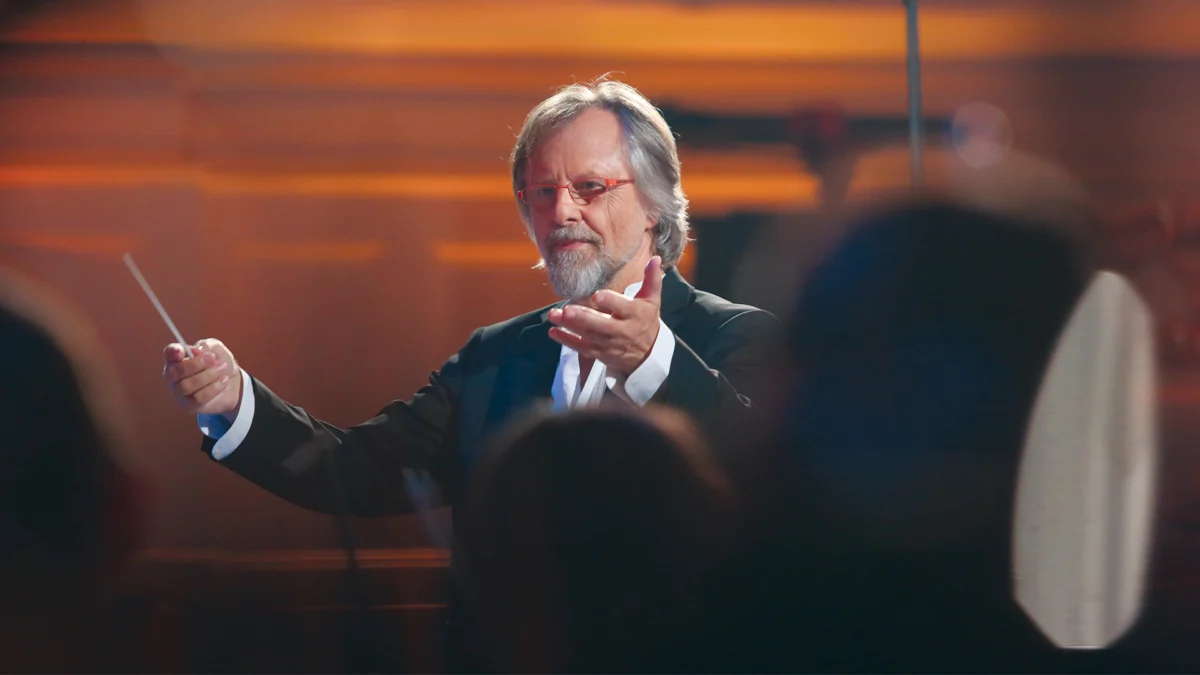
For decades, the standard narrative of the film industry has been one of hierarchy. At the top sit the directors, the producers, and the A-list stars whose names adorn the marquee. Far beneath them, often sequestered in the "hovels" of windowless recording studios, sit the composers. They are the invisible architects of emotional resonance, crafting the sonic landscapes that define cinematic masterpieces, yet they frequently remain secondary figures in the public imagination.
However, a cultural shift is underway. Across Europe, a burgeoning circuit of specialized film music festivals has begun to flip the script, placing the composer front and center. In these spaces, the men and women behind the music are not mere technicians; they are rock stars, greeted by adoring fans, autograph seekers, and standing ovations.
The Rise of the Maestro: A New Celebrity Status
The metamorphosis of the film composer from "hired hand" to "cultural icon" is most visible in the specialized festival circuits of Europe. At the International Festival of Film Music in Cordoba, Spain, the intensity of fan engagement is startling to those used to the Hollywood status quo.
"Autograph signings went on for three hours," recalls Mike Todd, ASCAP’s senior director of film, TV music, and new media. "They’re rock stars there."
This sentiment is echoed by Doreen Ringer Ross, vice president of film/TV relations at BMI. She recalls an incident at a festival where composer Christopher Lennertz, attempting a simple, private trip to the restroom, was met with a spontaneous, thunderous standing ovation from the crowd. For these artists, the festival circuit offers a rare, intoxicating validation: the realization that their work—often created in total isolation—has touched thousands of lives.
A Chronology of Sound: From Ghent to the World
The epicenter of this movement remains the Flanders International Film Festival in Ghent, Belgium. Since its inception in 1985, the festival has served as the gold standard for honoring the craft of the score. The launch of the World Soundtrack Awards in 2001 cemented its status as the premier destination for the industry’s elite.
As the festival approaches its 40th anniversary this October, it plans a massive tribute: 40 original, one-minute compositions commissioned from 40 of the world’s most renowned composers, including Oscar winners Mychael Danna, Dario Marianelli, Rachel Portman, Gustavo Santaolalla, and Gabriel Yared.
Following in the footsteps of this Belgian titan, a network of festivals has emerged across the continent, each with its own regional flair:
- The International Festival of Film Music (Cordoba): Originally based in Ubeda, this festival has become a beacon for intimacy, fostering close proximity between creators and their audiences.
- Fimucite (Tenerife, Canary Islands): Now in its seventh year, it has quickly become a key hub for innovation and performance.
- Krakow Film Music Festival: Entering its sixth year, it has distinguished itself by shifting its calendar to maximize grant funding and focusing on high-concept live-to-picture performances.
- Transatlantyk Festival (Poznan, Poland): A relative newcomer that has gained prestige for its intellectual depth, combining film music with environmental and social activism.
- Festival of Music and Images (Paris): The youngest of the bunch, signaling that the appetite for this medium continues to grow in major cultural capitals.
The Infrastructure of Appreciation
While these events differ in scope and budget, they share a structural blueprint. Workshops, Q&A panels, public masterclasses, and live orchestral performances form the backbone of the experience. For the performing-rights organizations (PROs) like ASCAP and BMI, these festivals are essential outposts.
"At ASCAP, we have to be mindful of our foreign composers who license through us in the U.S.," says Todd. "We want to make sure we’re visible."
This visibility is equally important for soundtrack record labels. Industry stalwarts such as Varese Sarabande, La-La Land Records, and MovieScore Media use these festivals as staging grounds. While Robert Townson, VP and producer at Varese Sarabande, admits that there is no "obvious sales bump" from the events, he emphasizes that the value lies in advocacy.
"It’s just about spreading the word—taking music I feel passionately about and sharing that with the audience," Townson explains. "We’re so grateful to have that experience and see in their eyes what the music means to them."
Implications: Networking and Professional Growth
For the composers, the benefits extend beyond the thrill of the applause. These festivals serve as high-stakes networking arenas where career-defining decisions are made.
Consider the case of Howard Shore. After presenting his work at the World Soundtrack Awards in Ghent, Shore was so impressed by the festival’s house orchestra, the Brussels Philharmonic, that he hired them to record the score for Martin Scorsese’s The Aviator. Similarly, Elliot Goldenthal returned to Poland to record his ballet Othello at Alvernia Studios after being honored at the Krakow festival.
Agents, too, see the festivals as vital promotional tools. Robert Messinger of First Artists Management notes that these events have been the launchpad for his clients’ most significant live performances. "I’ve been fortunate to have been (at Ghent) with my clients to premiere several scores," he says, citing the concert premieres for Brokeback Mountain, The Kite Runner, and The Ice Storm. Following these premieres, many composers, including Clint Mansell, were able to parlay that success into standalone concert tours in London, Los Angeles, and New York.
The Reality Check: Is It Worth It?
Despite the fanfare, there is a pragmatic skepticism among some in the industry. Marco Beltrami, who participated in Cordoba, Tenerife, and Transatlantyk in a single year, offers a sobering perspective.
"Look, it’s nice to get out of our hovels, out of our studios, out of the dark and meet other people," Beltrami says. "It feels good to do that, but, professionally, it’s not like I’m going to get a job."
This sentiment highlights a crucial tension: the festivals are excellent for community-building and artistic recognition, but they rarely serve as direct "job fairs" for the next blockbuster contract. Instead, their value is intrinsic—a communal celebration of a solitary art form.
The Path Forward: Cooperation or Overcrowding?
As the number of festivals continues to climb, the industry faces a potential problem: dilution. Patrick Duynslaegher, the artistic director of the Ghent festival, acknowledges the double-edged sword of this growth. "Competition is healthy and can be stimulating, but overcrowding can also be a nuisance," he admits.
However, there is a prevailing "cooperation mentality" among the organizers. Rather than fighting for exclusive access to composers, festivals are beginning to share talent. Diego Navarro of Fimucite frequently conducts at other festivals, and composers like Beltrami are feted across multiple borders in a single summer.
Robert Piaskowski of the Krakow festival envisions a more formal future: a "syndicate" of film music festivals. Such an organization would aim to standardize the industry, ensuring fair pay, legal access to scores and footage, and the highest possible production standards for performances.
For David Doncel Barthe of the Cordoba festival, the budget constraints—which he describes as likely the lowest in the circuit—have forced a move toward radical creativity. By focusing on intimacy and the "friendly atmosphere" between guest and attendant, Cordoba has carved out a niche that even the best-funded festivals cannot replicate.
Ultimately, the proliferation of these festivals is a testament to the endurance of the medium. As Jan A.P. Kaczmarek, the founder of Transatlantyk, puts it, these events are "festivals of ideas." By leveraging the emotional power of film music, these organizations are proving that the composer is no longer a footnote to the film—they are the heartbeat of the entire cinematic experience. Whether through a massive orchestral performance of The Matrix in Krakow or an intimate Q&A in a Spanish plaza, the message is clear: the era of the invisible composer has come to an end.
