
How Back to the Future Rewrote the Rules of Cinema and Broke Hollywood’s Time Travel "Roads"
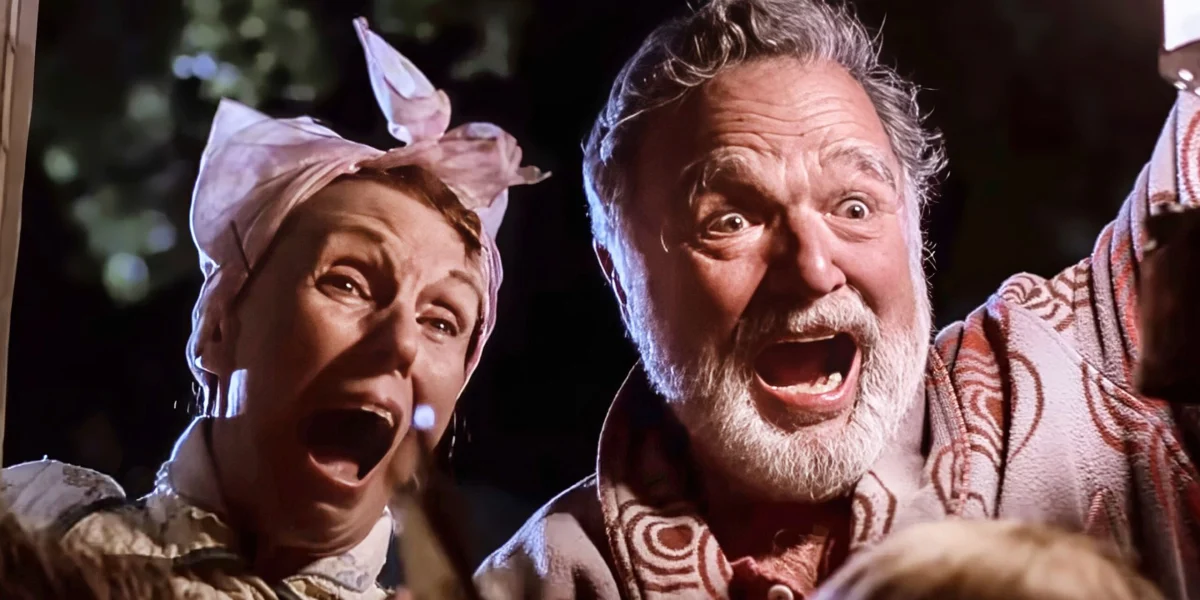
Main Facts: The Phenomenon of a 1985 Masterpiece
Released on July 3, 1985, Robert Zemeckis’s Back to the Future did more than simply dominate the summer box office; it completely re-engineered the sci-fi adventure genre. Produced by Steven Spielberg’s Amblin Entertainment and distributed by Universal Pictures, the film grossed over $380 million worldwide against a modest $19 million budget, making it the highest-grossing film of 1985.
At its core, the film follows Marty McFly (Michael J. Fox), a quintessential 1980s high schooler accidentally sent back to 1955 in a nuclear-powered DeLorean time machine invented by the eccentric, wild-haired Dr. Emmett "Doc" Brown (Christopher Lloyd). What followed was a masterclass in scriptwriting, character chemistry, and high-stakes comedic timing. Yet, beyond its box office dominance and cultural footprint, the film’s lasting legacy is cemented in its iconic final moments.
As Doc Brown reappears in a flying DeLorean to whisk Marty and his girlfriend Jennifer (Claudia Wells) away to 2015, Marty notes the lack of sufficient road to reach the mandatory 88 mph. Doc’s iconic retort—"Roads? Where we’re going, we don’t need roads"—did more than set up a blockbuster sequel. It served as a thematic manifesto for the entire franchise and a turning point for Hollywood storytelling, shattering the predictable tropes of mid-century science fiction.

Chronology: From Cheesy B-Movies to High-Concept Blockbusters
The Evolution of the Time Travel Subgenre
To understand the radical departure of Back to the Future, one must look at how cinema previously treated time travel. In the 1950s and 1960s, time travel stories were largely anchored in B-movie tropes. Picture a stereotypical scientist tinkering away in a dimly lit laboratory, pulling levers on a bulky, static machine that resembled an oversized refrigerator or a spinning metallic cage. Once displaced, the protagonist would inevitably land in a predictable historical or prehistoric era populated by cardboard-cutout monsters or rigid societies, focusing heavily on exposition rather than dynamic character growth.
The subgenre began to mature in the late 1970s and early ’80s with sophisticated, darker offerings like Nicholas Meyer’s Time After Time (1979) and James Cameron’s relentless sci-fi/horror hybrid The Terminator (1984). These films injected urgency and grit into the concept, but they still adhered to strict internal rules and suspenseful limitations.
The Rocky Road to Production
The journey of Back to the Future to the silver screen was fraught with near-misses and creative retooling. Co-writers Robert Zemeckis and Bob Gale famously pitched their script dozens of times, facing rejection from major studios—including Disney, which famously balked at the subplot involving a teenage Marty accidentally romancing his own mother, deeming it inappropriate.

Even after Universal greenlit the project, production hit a massive roadblock. Eric Stoltz was originally cast as Marty McFly. However, several weeks into filming, Zemeckis and executive producer Steven Spielberg realized Stoltz was playing the role with too much dramatic intensity. They made the costly and unprecedented decision to fire Stoltz and bring in Michael J. Fox, who was already pulling grueling double-duty filming the hit television sitcom Family Ties.
This casting shift changed everything. Fox brought an effortless, charismatic charm that grounded the high-concept absurdity. Furthermore, Zemeckis and Gale’s masterstroke was abandoning the static time machine of early drafts in favor of a sleek, stainless-steel DeLorean DMC-12. By turning the time machine into an actual automobile, mobility became central to the narrative, tearing down the geographical limitations that plagued earlier cinematic time machines.
Supporting Data: Production Metrics and Cultural Impact
The success of Back to the Future can be measured not only by its critical acclaim and box office milestones, but by the meticulous framework that held its fictional science together.

- The Power Requirement: To initiate temporal displacement, the DeLorean required precisely 1.21 gigawatts of electrical energy, a figure famously sparked by a bolt of lightning striking the Hill Valley courthouse clock tower.
- The Velocity Threshold: The vehicle had to accelerate to exactly 88 miles per hour while maintaining a steady spatial trajectory.
- Box Office Dominance: Earning over $380 million in its initial theatrical run, it outpaced all competitors in 1985 and spawned two back-to-back sequels (Back to the Future Part II and Back to the Future Part III), which were filmed concurrently—a pioneering feat for the era.
- Critical Accolades: The film received four Academy Award nominations, taking home the Oscar for Best Sound Effects Editing, alongside nominations for Best Original Screenplay, Best Original Song ("The Power of Love" by Huey Lewis and the News), and Best Sound.
Official Responses and Creative Vision
The creative minds behind the trilogy have frequently reflected on the philosophy that governed the franchise’s design. Director Robert Zemeckis and co-writer Bob Gale deliberately chose to subvert audience expectations at every turn, ensuring that the sequels did not simply repeat the formula of the original film.
In retrospective interviews, Bob Gale noted that the ending of the first film was never initially designed to be a cliffhanger for a guaranteed franchise, as studios rarely banked on sequels in 1985 with the absolute certainty they do today. Instead, the flying DeLorean and Doc Brown’s final line were intended as a massive, joyful punchline—a narrative exclamation point that promised the audience that the rules of reality no longer applied.
Michael J. Fox has often spoken about the grueling physical demands of shooting the trilogy while simultaneously anchoring Family Ties, yet he has consistently highlighted the timeless joy the films brought to viewers. Christopher Lloyd’s portrayal of Doc Brown—inspired in part by classical conductors and Albert Einstein—created a mad scientist archetype that remains unrivaled in cinematic history. When Doc straps himself into the driver’s seat of the flying DeLorean, his confidence embodies the filmmakers’ ultimate ethos: art, imagination, and storytelling require no established pathways.

Implications: Redefining Hollywood Sci-Fi and Pop Culture
The cultural ripple effects of Back to the Future extended far beyond the closing credits of 1990’s Part III. By proving that a time travel narrative could seamlessly blend blockbuster sci-fi spectacle with intimate character comedy, the franchise cleared a wide-open highway for the decades of genre-bending cinema that followed.
Paving the Way for Modern Sci-Fi and Comedic Time Loops
Without the groundwork laid by Zemeckis and Gale, the landscape of modern speculative fiction would look entirely different. Consider how subsequent filmmakers embraced the limitless potential of time manipulation:
- Action & Speculation: James Cameron pushed boundaries further with Terminator 2: Judgment Day (1991), freeing the franchise from the linear constraints of its predecessor much like the DeLorean shed its terrestrial tires.
- The Time Loop Subgenre: Harold Ramis’s Groundhog Day (1993) took the temporal mechanics of Back to the Future and looped them inward, giving birth to an entirely distinct narrative subgenre that films like Edge of Tomorrow and Palm Springs continue to utilize today.
- Comedy & Horror Crossovers: Cult classics like Bill & Ted’s Excellent Adventure, Hot Tub Time Machine, Happy Death Day, and Totally Killer owe a massive debt to the tonal fluidity of the Back to the Future trilogy, proving that time travel could serve as the engine for teenage comedy, existential philosophy, and slasher horror alike.
Ultimately, Back to the Future did not just predict the future of Hollywood blockbusters—it authored it. By burning rubber at 88 mph and taking flight into the unknown, Doc Brown, Marty McFly, and their iconic DeLorean left a permanent mark on cinema history. As the decades roll on, the franchise remains a cherished cultural cornerstone, continuing to prove to generations of moviegoers that when it comes to the boundless possibilities of the imagination, we truly don’t need roads.
