
Hell in the Spotlight: The Evolution of Helluva Boss as It Enters Season 3
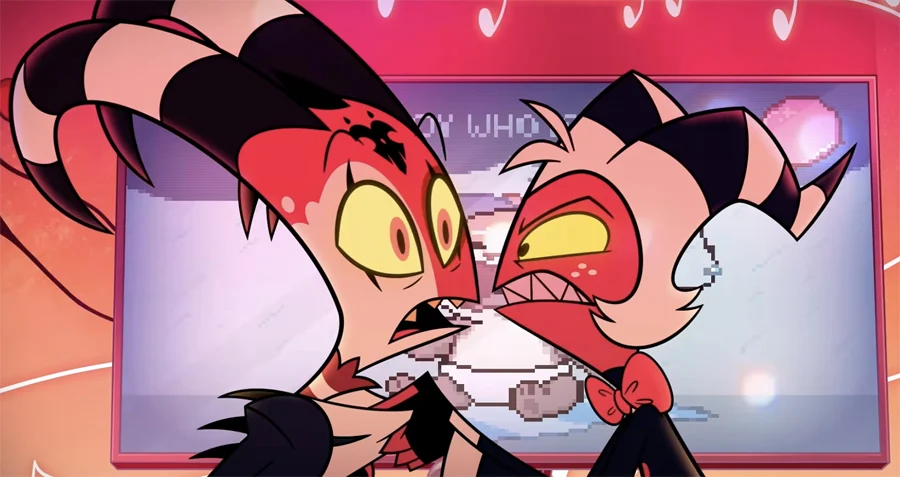
The landscape of adult animation has been irrevocably altered by the rise of independent, creator-driven projects that bypass traditional broadcast bottlenecks. At the forefront of this revolution is Helluva Boss, the razor-sharp, emotionally resonant series created by Vivienne Medrano. As the show prepares for its highly anticipated third season, premiering this Wednesday, October 14th, on Prime Video, the buzz surrounding the I.M.P. (Immediate Murder Professionals) crew has reached a fever pitch.
During New York Comic Con (NYCC), the creative force behind the series, along with its stellar voice cast, gathered in a pressroom to discuss the trajectory of the show, its thematic maturity, and the grueling, collaborative process that brings the denizens of Hell to life.
The Premise: More Than Just "Love in Hell"
Helluva Boss follows the chaotic operations of a hitman service in Hell, led by the erratic and deeply flawed Blitzo (voiced by Brandon Rogers). While the premise—demons killing humans for hire—suggests a focus on gratuitous gore, the show has earned a dedicated global following by pivoting toward something far more poignant: the complexities of human-like relationships.
Richard Horvitz, the voice behind the fan-favorite Moxxie, summarized the show’s ethos with a striking sentiment during the press session: "Those who don’t know our show misunderstand it. They think we’re just about gratuitous violence and sex. It’s not that at all. Our show is about love and relationships. As I always say, ‘Love is Hell. We just happen to be Love in Hell.’"
This duality is the backbone of the third season. As the audience will discover in the premiere, the narrative leans heavily into modern anxieties, including the pervasive influence of social media and the messy, often contradictory dynamics of interpersonal relationships.
A Chronology of Success: From Indie Hit to Streaming Staple
The journey of Helluva Boss is a case study in modern animation success. What began as a bold, independently produced pilot on YouTube evolved into a powerhouse franchise that defied industry expectations.
- The Incubation Phase: Vivienne Medrano’s vision for a workplace comedy set in Hell resonated immediately, tapping into a demographic hungry for adult animation that didn’t rely solely on shock value.
- The Pivot to Professionalism: As the series garnered millions of views, the production quality underwent a massive evolution. The shift to a larger distribution platform like Prime Video for the third season represents the culmination of years of building a brand that is both artistically ambitious and commercially viable.
- The Current Milestone: The NYCC reveal of Season 3 signifies a new chapter. The series is no longer just an "indie experiment"; it is a flagship property capable of driving significant audience engagement and critical discourse.
The Craft of the Booth: Empathy in Animation
One of the most enlightening aspects of the NYCC discussion was the insight into the technical and emotional demands placed on the voice cast. Unlike live-action, where actors have the benefit of physical space and chemistry, voice actors in animation must inhabit their characters in a vacuum.
Harvey Guillen, who voices Vassago, offered a glimpse into the physical toll of the process. "It’s really hard to do animation," he explained. "In live-action, you use your body and language through facial expressions. You can’t do that behind the booth. You literally have to rely entirely on your vocals to tell a story, to show empathy, or to show anger. Sometimes I sleep the hardest when I do recordings because it’s so tough. It’s one of the hardest jobs out there."
This sentiment was echoed by the rest of the cast, who emphasized that the "voice" is only the first step in a complex pipeline. Bryce Pinkham, the voice of Stolas, described the experience as a "collaborative marathon." He noted that he often discovers new layers to his performance only after seeing the final animation. "The voice actor gets the race started, and then the animators get it across the finish line," Pinkham remarked. "I learn so much about a scene I’ve already recorded because there are things I can’t know—a look that has no words, or something subtle in the background."
The "BoJack" Effect: Balancing Whimsy and Woe
When asked about the tonal tightrope the show walks—switching from slapstick comedy to devastating emotional beats—creator Vivienne Medrano cited BoJack Horseman as a spiritual touchstone.
"One of my favorite series is BoJack Horseman," Medrano said. "It has the most silly, childish, whimsical world, but the story is one of the darkest, most depressing stories I’ve ever seen. I love that a show can do that. Our show obviously has a different tonal style, but I like that it can be earnest and honest in one moment, while we, as writers, are just trying to make each other laugh in the next."
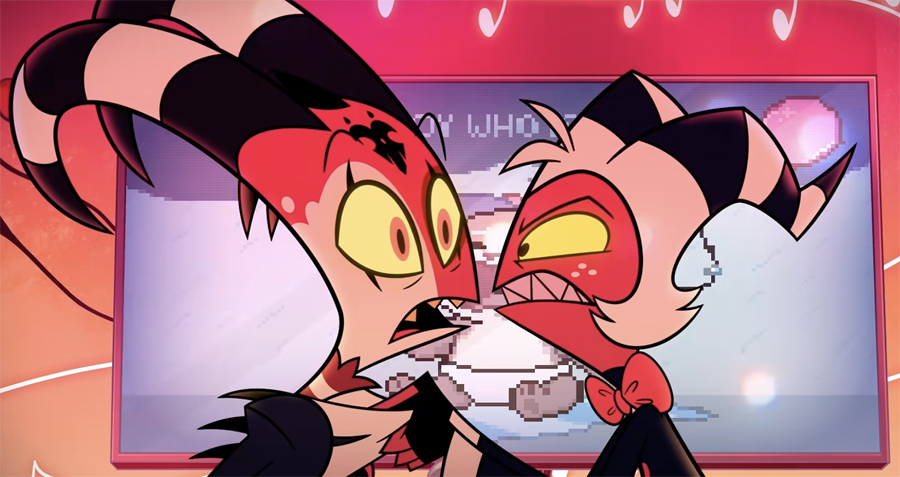
Erica Lindbeck, the voice of Loona, perfectly synthesized this approach, noting, "That’s life, though. That’s literally what life is like." This grounded approach to character-writing is what allows the show to transcend its supernatural setting. Whether the characters are imps or humans, their struggles—insecurity, unrequited love, professional failure—are universal.
The Intention of Detail: Why Fandoms Remain Committed
The devotion of the Helluva Boss fanbase is not accidental. It is a byproduct of the intense level of detail embedded in every frame. Brandon Rogers, who brings the chaotic energy of Blitzo to life, praised the intentionality of the animation team.
"Every little prop is so intentional," Rogers noted. "People will look at the backgrounds and read things on bulletin boards because they were put there to be looked at."
This level of world-building is crucial to the show’s longevity. When the audience knows that the creators have put effort into the smallest background gag, it fosters a sense of trust. The viewers know that the show is rewarding their attention. As Vivian Nixon Williams (the voice of Millie) pointed out, this is why the fans are so committed. "You could drop these characters into any other scenario, place, or time," she said. "The stories are what you’re dealing with, what I’m dealing with. That’s the beauty of what Viv has created."
Implications for the Future of Adult Animation
The success of Helluva Boss poses a significant challenge to traditional animation studios. It proves that there is a massive, underserved audience for shows that are willing to take risks—not just in terms of adult content, but in terms of emotional vulnerability.
The transition to Prime Video for the third season suggests that streaming platforms are increasingly willing to bet on established, high-quality animation franchises that have already proven their value in the "wild west" of the internet. If Season 3 continues to perform as expected, it will likely pave the way for more creator-led projects to bypass traditional gatekeepers entirely.
Furthermore, the show’s success highlights a shift in audience expectations. Viewers no longer want "just" a comedy or "just" a drama. They want a hybrid experience where the absurdity of the premise does not preclude the depth of the character work.
Conclusion: Looking Ahead to Wednesday
As the premiere of Season 3 approaches on October 14th, the expectations are higher than ever. The cast and creator have promised a season that continues to explore the "human" side of their infernal cast, blending high-stakes drama with the off-the-wall humor that defined the series’ early days.
Whether you are a longtime fan of the I.M.P. crew or a newcomer intrigued by the intersection of high-concept animation and deeply relatable storytelling, Helluva Boss stands as a testament to the power of a clear creative vision. It reminds us that even in the depths of Hell, there is room for growth, humor, and, most importantly, love.
As the industry watches, Helluva Boss prepares to set a new standard for what adult animation can achieve, proving that when you lean into the absurd, you often find the most honest truths waiting on the other side.
