
A Century of Starlight: Remembering Eva Marie Saint (1924–2026)
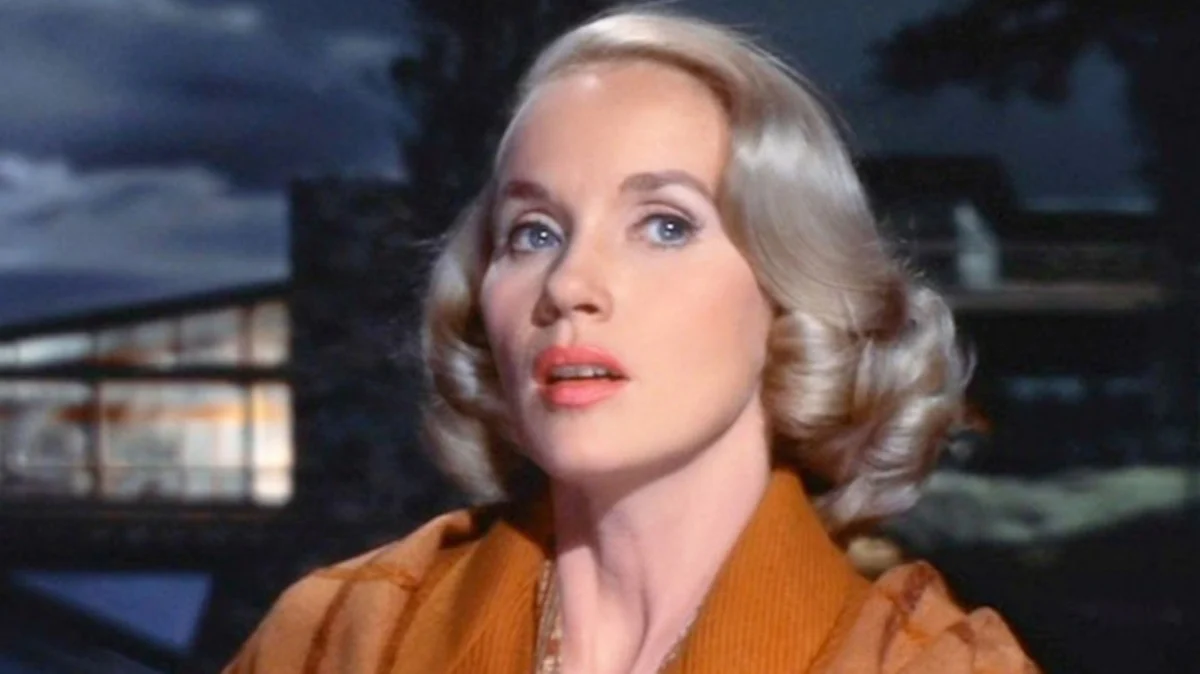
The firmament of Classic Hollywood has grown dimmer with the passing of Eva Marie Saint, an actress whose career spanned the evolution of modern cinema and defined the term "Golden Age." Saint, a performer of immense subtlety, intelligence, and grace, died at her home in Los Angeles at the age of 102. Her passing marks the end of an era, as she was widely recognized as one of the final surviving icons who bridged the gap between the studio system’s height and the contemporary blockbuster era.
An Oscar winner, a Broadway darling, and a muse to some of the greatest directors in history, Saint’s legacy is not merely one of longevity, but of consistent, transformative brilliance. From the gritty, naturalistic docks of New Jersey to the polished, suspense-filled trains of an Alfred Hitchcock masterpiece, she inhabited every role with a quiet authority that commanded the screen.
The Early Years: From New Jersey to Broadway
Born in Newark, New Jersey, in 1924, Eva Marie Saint’s path to stardom was paved with academic rigor and an earnest pursuit of the craft. After graduating from Bowling Green State University, where she was an active participant in the theater department, Saint moved to New York City to seek her fortune.
The early 1950s saw her navigating the bustling, often grueling world of early television. Before she was a household name, she worked as an NBC page—a job that provided a front-row seat to the burgeoning medium of broadcast television. She cut her teeth on variety shows and game shows like "Campus Hoopla," but her heart remained in the theater. She quickly established herself as a formidable talent on Broadway, culminating in a triumphant performance in Horton Foote’s 1953 play, "The Trip to Bountiful." Her work in the production was critically lauded, earning her a Drama Critics Award and catching the eye of high-profile casting directors who were looking for a new kind of leading lady: someone who could project both vulnerability and steel.
The Breakthrough: "On the Waterfront"
If there is a singular moment that defines the arrival of a legend, it was 1954’s "On the Waterfront." Directed by Elia Kazan, the film is often cited as the definitive American crime drama. Starring Marlon Brando, the film required a female lead who could anchor the story against Brando’s explosive, method-driven performance.
Saint, a relative unknown in the film world at the time, was cast as Edie Doyle. The chemistry between Saint and Brando—specifically in the legendary glove-drop scene—remains a masterclass in screen acting. She brought a grounded, poignant humanity to the role, standing toe-to-toe with Brando and, in many scenes, holding the audience’s focus through her expressive, contemplative gaze. The performance did not just earn her the Academy Award for Best Supporting Actress; it solidified her reputation as a force of nature, an actress capable of immense depth within the constraints of the studio system.
The Hitchcock Muse: "North by Northwest"
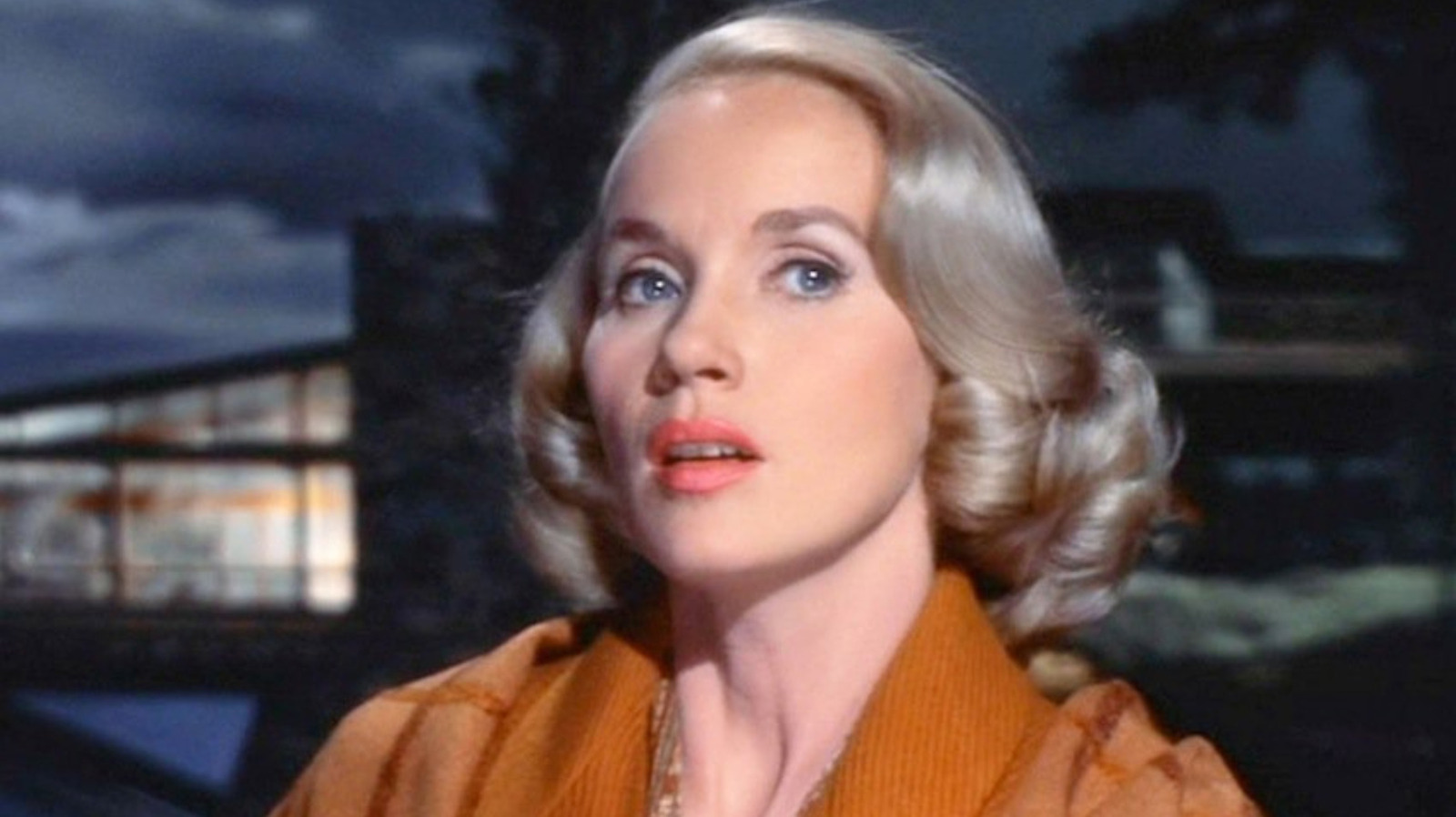
By the late 1950s, Saint had firmly established herself, but it was Alfred Hitchcock who would elevate her to the status of an international icon. In 1959’s "North by Northwest," she played Eve Kendall, a character wrapped in layers of mystery, espionage, and danger.
In the lexicon of film noir, the "femme fatale" is often a trope—a one-dimensional temptress. Saint, however, infused Eve with a sophisticated, icy wit that was uniquely her own. Playing opposite the incomparable Cary Grant, she proved that she could handle the brisk, razor-sharp dialogue of a screwball comedy as easily as the tension of a thriller. Her work in this film effectively shattered the "housewife" archetypes that studios had attempted to pigeonhole her into following her Oscar win. She was, in the eyes of Hitchcock, the perfect vessel for his brand of calculated, stylish suspense.
A Career of Unmatched Range
Following her success with Hitchcock, Saint embarked on a decades-long journey that saw her refuse to be confined by genre. Her filmography reads like a history of 20th-century American cinema:
- Biblical Epics: In 1960, she starred in Otto Preminger’s sprawling epic "Exodus," showcasing her ability to carry the emotional weight of historical tragedy.
- The Western: In 1968, she appeared in "The Stalking Moon" alongside Gregory Peck, demonstrating her versatility in a genre that was, at the time, dominated by men.
- Comedy and Drama: In 1986, she showed her comedic timing in "Nothing in Common," proving she could hold her own alongside Tom Hanks.
- The New Millennium: Even as she approached her 80s, Saint refused to retire. In 2006, she stepped into the shoes of Martha Kent for Bryan Singer’s "Superman Returns," introducing her legendary status to a new generation of comic book movie fans.
Perhaps most surprisingly, her reach extended to the world of animation. In 2012, she provided the voice for the elderly Katara in "The Legend of Korra," a testament to her willingness to experiment with her craft well into her late 80s.
Supporting Data: A Life in Numbers
While awards and credits tell part of the story, the sheer endurance of Saint’s career is the most impressive metric. Spanning over seven decades, she witnessed the transition from the golden era of celluloid to the digital age of streaming.
- Oscar History: Won Best Supporting Actress (1955) for "On the Waterfront."
- Collaborations: Worked with industry titans including Elia Kazan, Alfred Hitchcock, Otto Preminger, and Fred Zinnemann.
- Personal Life: Remained married to director and producer Jeffrey Hayden for 65 years, from 1951 until his death in 2016. The couple raised two children and saw their family grow to include four grandchildren and two great-grandchildren.
Official Responses and Industry Legacy
The film community has responded to the news of her passing with an outpouring of grief and reverence. Industry leaders have cited her not only as a titan of performance but as a bridge between generations.
"Eva Marie Saint was the embodiment of grace," noted a spokesperson for the Academy of Motion Picture Arts and Sciences. "She possessed a rare gift—the ability to be entirely present in every frame. She did not just act; she existed within the story."
Colleagues and historians alike have highlighted her refusal to play "celebrity" in the modern sense. She was a working actor until the very end, viewing her craft as a lifelong pursuit rather than a means to achieve fame. Her legacy is one of quiet consistency; she never chased the spotlight, yet the spotlight never truly left her.
The Final Curtain: Implications for Hollywood
The passing of Eva Marie Saint marks the closing of a significant chapter in film history. As the last generation of actors who worked under the strict, high-pressure studio contract systems of the 1940s and 50s fades away, so too does the direct, living connection to the "Old Hollywood" method of craft.
However, her influence remains etched into the DNA of modern acting. The "naturalistic" style of performance that she perfected in "On the Waterfront" is still the standard by which all dramatic acting is measured today. Actors who prioritize internal emotion over performative outbursts owe a debt to the foundation laid by Saint and her contemporaries.
Eva Marie Saint’s life was a century-long dedication to the art of storytelling. She saw the world change, she saw the industry evolve, and she remained a constant, flickering light through it all. While she has departed, the images of her—standing on the edge of Mount Rushmore, or walking the docks of the New Jersey waterfront—remain timeless. As the curtain falls on a life that spanned 102 years, we are left with the indelible imprint of a woman who didn’t just witness history; she helped write it.
