
Unpacking the Lens: Rory Kennedy’s ‘The Trial of Alec Baldwin’ Examines a Career Under Siege, But Leaves Crucial Questions Unanswered
Main Facts
Documentary filmmaker Rory Kennedy’s latest feature, The Trial of Alec Baldwin, opens with a standard legal disclaimer clarifying that its subject had no editorial control, provided no financing, and received zero compensation for his participation. Yet, as the 111-minute documentary unfolds, these disclaimers feel less like industry protocol and more like a preemptive shield.
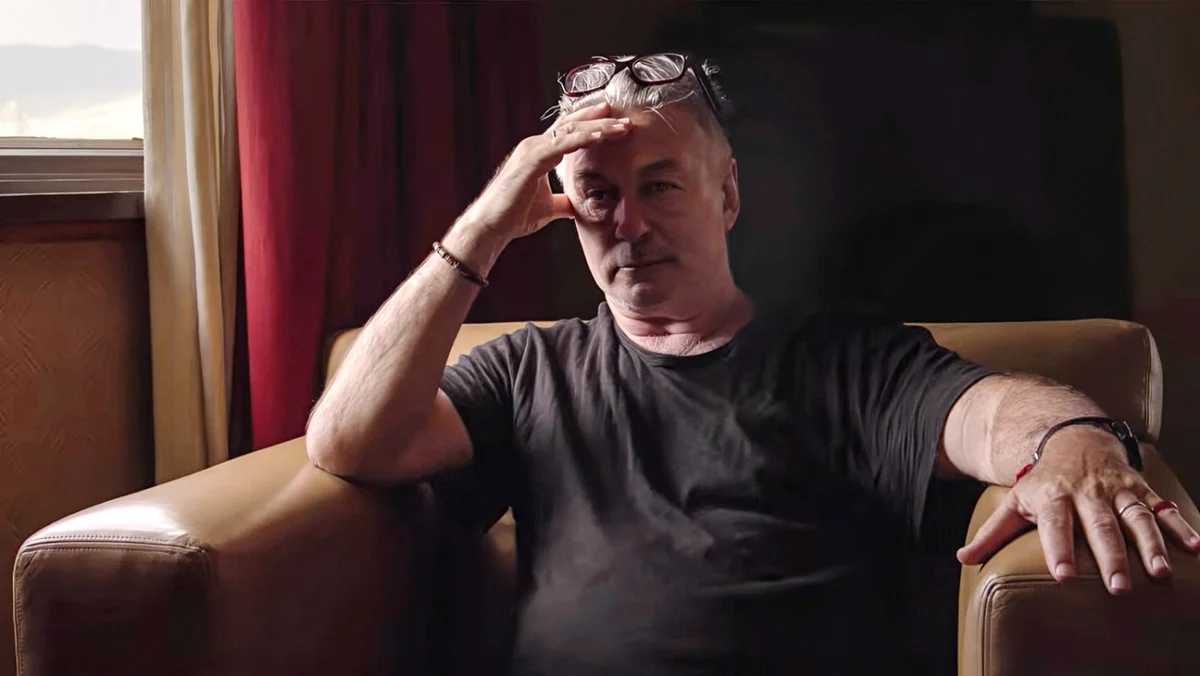
The film, which premiered on October 1, presents a provocative, frustrating, and deeply narrow exploration of the embattled actor. Rather than functioning as a comprehensive investigative piece into the tragic October 2021 shooting on the set of the indie western Rust—which resulted in the death of cinematographer Halyna Hutchins—Kennedy’s project pivots sharply. It transforms instead into an intimate, often disquieting psychological profile of Alec Baldwin himself.
The documentary gains unprecedented, close-up access to Baldwin starting in the winter of 2023, tracking him through criminal charges, a return to Montana to complete production on Rust to benefit Hutchins’ young son, limbo in New York City, and ultimately the New Mexico courtroom where his involuntary manslaughter trial dramatically collapsed.
Despite securing shocking moments of unfiltered access, the film makes a striking editorial choice: Halyna Hutchins is nearly invisible. Her life, career, and legacy are given virtually no context, and she is largely absent from the film’s second half and its concluding moments. Instead, The Trial of Alec Baldwin centers on Baldwin’s multi-decade persecution complex, his strained relationship with the public and media, and the staggering ineptitude of the New Mexico prosecution team.
Chronology: A Trajectory of Conflict
To understand the architecture of Kennedy’s documentary, one must trace the timeline of both Baldwin’s life and the documentary’s production, which intersect in the wake of the Rust tragedy.
- Early Life and Rise to Stardom: Boosted by archival clips and interviews with his sister Elizabeth, the film traces Baldwin’s economically challenged upbringing, his detour from law or politics into acting, and his subsequent rise as a prominent film and television star (30 Rock, Miami Blues).
- Decades of Public Strife: The documentary charts Baldwin’s long-standing, contentious relationship with the paparazzi and the mainstream press, alongside various legal run-ins. It features his daughter, Ireland Baldwin, to address the fallout from the infamous "rude, thoughtless little pig" voicemail leak—an incident that permanently stained public perception of the actor.
- October 2021: The tragic shooting on the set of Rust claims the life of cinematographer Halyna Hutchins and injures director Joel Souza, triggering immediate global shockwaves, police interrogations, and intense media scrutiny.
- Winter 2023: The state of New Mexico officially files criminal charges against Baldwin. It is around this period that Rory Kennedy, previously an "acquaintance" of Baldwin, begins embedding with him and a small camera crew.
- Production and Trial (2023–2024): Kennedy captures Baldwin returning to Montana to finish Rust, navigating professional limbo in New York, and facing the legal battle in New Mexico.
- July 2024: Baldwin’s involuntary manslaughter trial concludes abruptly when a judge dismisses the case with prejudice due to police and prosecutorial suppression of evidence.
- October 1: The Trial of Alec Baldwin is released, drawing immediate critical debate regarding its focus and omissions.
Supporting Data and Comparative Analysis
Evaluating The Trial of Alec Baldwin requires looking closely at its runtime distribution, visual strategies, and how it measures up against competing cinematic accounts of the same tragedy.
- Runtime: 1 hour and 51 minutes (111 minutes).
- Focus Distribution: The actual legal trial in New Mexico occupies only the final 30 minutes of the film. The preceding hour and twenty minutes are heavily dedicated to Baldwin’s personal history, public grievances, and psychological state.
- Visual Framing: Cinematography is weaponized to reflect mood. Wife Hilaria Baldwin is generally captured in bright, clear lighting, looking prepared and poised. Conversely, Alec Baldwin is frequently framed in gloomy, natural "found light" from uncomfortable angles—such as the passenger seats of cars—to emphasize his haggard appearance, exhaustion, and depression.
- Comparative Media: Kennedy’s documentary inevitably invites comparison with Rachel Mason’s Hulu documentary, Last Take: Rust and the Story of Halyna, which premiered earlier in 2025. While Mason’s film faced its own criticisms, it directly addressed the central questions viewers cared about: "What happened on the set of Rust?" and "Who was Halyna Hutchins?" Kennedy’s film notably bypasses both questions, opting instead to interrogate public perception of Baldwin himself.
Official Responses and Perspectives
The documentary relies heavily on the firsthand perspectives of the Baldwin family, contrasted against the backdrop of a hostile public sphere and a botched legal apparatus.
- Rory Kennedy’s Approach: In press notes, Kennedy describes herself as an acquaintance of Baldwin before embarking on the project. By gaining access during his most vulnerable moments, she attempts to answer a meta-question: Who do we perceive Alec Baldwin to be, and can unvarnished access change that perception? Kennedy appears to argue that the public "trial" of Baldwin has spanned four decades, making an objective judgment during his absolute nadir nearly impossible.
- Alec Baldwin’s Persona: Despite possessing full awareness of how his past public statements—such as his infamous George Stephanopoulos interview where he claimed sadness but not remorse—were received, Baldwin displays a similar lack of outward contrition in the film. He emerges not as a calculated media manipulator trying to spin a narrative, but as a depressed, borderline anhedonic man detached from the pleasures of his career and past life.
- Supporting Interviews: Contributions from family members, including sister Elizabeth and daughter Ireland, attempt to humanize the actor and contextualize his defensive posture against a relentless media cycle. However, the glaring absence of any substantive focus on Halyna Hutchins remains the primary friction point for critics and audiences alike.
Implications
The Trial of Alec Baldwin raises critical ethical questions about contemporary documentary filmmaking, celebrity access, and the hierarchy of empathy in tragedy.
By dedicating nearly two hours to examining whether a notoriously prickly, privileged actor has been unfairly judged by the public over a 40-year span, the film risks trivializing the actual human cost of the Rust tragedy. The implication of Kennedy’s work is provocative: it suggests that society was predisposed to condemn Baldwin at his worst because it had already resented him at his best.
Yet, this thematic ambition exposes a profound blind spot. In choosing to construct a psychological portrait of a depressed and persecuted celebrity, the documentary sidelines the victim whose life was irrevocably cut short. Ultimately, The Trial of Alec Baldwin leaves audiences wrestling with a lingering discomfort—not because it sheds new light on a legal or safety failure on a movie set, but because it asks viewers to sympathize with a man’s existential crisis while completely erasing the memory of Halyna Hutchins from the final frame.
