
The Human Cost of Conflict: How ‘Rock, Paper, Scissors’ Captured the World’s Attention
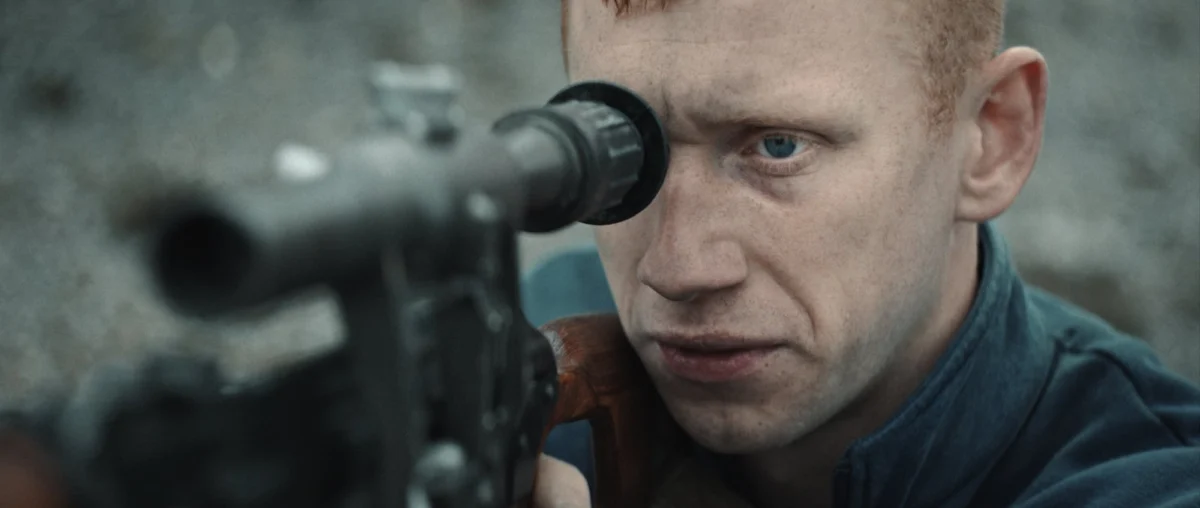
In the pantheon of contemporary cinema, few short films have managed to pierce the collective consciousness with the visceral immediacy of Franz Böhm’s Rock, Paper, Scissors. The film, which recently claimed the prestigious BAFTA Award for Best British Short Film in 2025, serves as more than just an NFTS (National Film and Television School) graduation project; it is a harrowing, meticulously crafted window into the harrowing realities of the ongoing war in Ukraine.
By centering its 20-minute runtime on the claustrophobic confines of a makeshift hospital bunker, the film eschews the broad-brush tropes of geopolitical warfare in favor of an intimate, pulse-pounding character study. Driven by a powerhouse performance from Ukrainian actor Oleksandr Rudynskyi, Rock, Paper, Scissors has become a vital cultural touchstone, reminding global audiences that behind the headlines of strategic maneuvers and territorial disputes lie millions of individual lives irrevocably altered by violence.
Main Facts: A Story of Resilience Under Fire
At its core, Rock, Paper, Scissors follows the journey of Ivan, a young man who finds himself tasked with the protection and maintenance of a makeshift medical facility during the heat of the conflict. The film operates as a high-stakes drama, where the "enemy" is not always a visible soldier, but the omnipresent threat of collapse—both physical and psychological—that comes with life in a bunker.
The film’s brilliance lies in its refusal to sensationalize. While the setting is undeniably grim, director Franz Böhm opts for a grounded, humanistic approach. The title itself, Rock, Paper, Scissors, serves as a poignant metaphor for the chaotic, unpredictable nature of war, where the hierarchy of survival is as fickle and transient as a children’s game. Through Rudynskyi’s expressive, understated performance, the audience witnesses the transition of an ordinary civilian into a guardian of the vulnerable, articulating the quiet heroism that often goes unnoticed in the shadow of major military operations.
Chronology: From Concept to BAFTA Glory
The trajectory of Rock, Paper, Scissors is a testament to the rigorous standards of the National Film and Television School and the dedication of its production team.
- Development Phase (2023–2024): Franz Böhm began conceptualizing the project during his final year at the NFTS. Recognizing the urgency of the war in Ukraine, he sought to create a piece that felt both immediate and timeless. The screenplay went through multiple iterations to ensure it avoided the pitfalls of exploitation, focusing instead on the emotional truth of the civilian experience.
- Production and Principal Photography: The film was shot in two distinct locations in the UK. London served as the primary location for the interior of the bunker, while the Welsh landscape provided the backdrop for the external scenes. This geographic bifurcation was a calculated move by the production team to maintain a tight control over the visual language of the film.
- Post-Production: The editing process was crucial in maintaining the film’s claustrophobic tension. By opting for practical effects over heavy CGI, the team ensured the film retained a gritty, tactile quality that anchors the viewer in the reality of the characters’ plight.
- The 2025 Awards Circuit: Following its festival run, the film garnered critical acclaim, culminating in its nomination and eventual win at the 2025 BAFTAs. The win signaled a shift in the Academy’s appreciation for short-form storytelling that tackles urgent, real-world political crises.
Supporting Data: The Craft Behind the Lens
The technical mastery of Rock, Paper, Scissors is perhaps its most compelling secondary feature. In an era where digital intervention is the industry standard, Böhm’s commitment to practical filmmaking is noteworthy.
Cinematography and Production Design
The synergy between the cinematographer and the production designer is the backbone of the film’s emotional weight. The bunker is not merely a setting; it is a character in its own right. Through the use of tight framing, low-key lighting, and a color palette restricted to the muted greys and blues of concrete and fluorescent bulbs, the film evokes a palpable sense of confinement.
The Role of Performance
Oleksandr Rudynskyi’s performance is the anchor of the narrative. Rudynskyi, known for his work within the Ukrainian film industry, brings an authentic weight to the role of Ivan. His performance is characterized by what he doesn’t say—the micro-expressions of fatigue, the flickers of hope, and the hardened resolve of a man protecting his makeshift sanctuary. This performance was instrumental in the film’s success, as it bridged the gap between a dramatized script and the lived reality of those currently in the conflict zone.
Official Responses and Critical Reception
The critical reception of Rock, Paper, Scissors has been overwhelmingly positive, with industry analysts noting that the film’s win at the BAFTAs was a watershed moment for the short film category.
"Böhm has managed the impossible," noted one prominent critic. "He has created a film that is profoundly political without ever feeling like a lecture." The BAFTA jury’s decision to award the film was widely seen as an endorsement of cinema’s ability to act as a witness to history.
Moreover, the Ukrainian film community has praised the project for its sensitivity. By casting a Ukrainian lead and focusing on the humanity of the civilians, the production avoided the "white savior" complex often found in Western-produced narratives about foreign conflicts. The collaboration between international filmmakers and Ukrainian talent is viewed by many as a blueprint for how to tell stories about ongoing, sensitive geopolitical situations.
Implications: The Future of Conflict Cinema
The success of Rock, Paper, Scissors has broader implications for the film industry, particularly concerning how we document and narrate active wars.
Moving Beyond "War Porn"
For decades, war cinema has often been criticized for aestheticizing violence—a phenomenon sometimes referred to as "war porn." Rock, Paper, Scissors serves as a counter-narrative to this trend. By focusing on the waiting—the lulls between explosions, the sharing of meager food, the quiet conversations in the dark—the film highlights the mental toll of war rather than just the physical destruction.
The Rise of Franz Böhm
As for the director, the industry is watching his next steps with great interest. Since graduating from the NFTS, Böhm has already pivoted to his debut narrative feature, Keep Her Quiet. Co-directed with Suli Kurban, the film promises to continue his exploration of complex, human-centric narratives. The industry buzz surrounding Keep Her Quiet suggests that Böhm is quickly establishing himself as a director who is not interested in the easy path, but in stories that demand social and emotional accountability.
A Lasting Legacy
Ultimately, the legacy of Rock, Paper, Scissors will be measured by its longevity. In a 24-hour news cycle where interest in the war in Ukraine can fluctuate, a piece of art that humanizes the experience of the victim becomes a vital historical document. It reminds us that behind the artillery strikes and the diplomatic press conferences, there are people living in bunkers, sharing games of rock, paper, scissors to pass the time while the world outside their door falls apart.
The BAFTA win is, for many, the beginning of a larger conversation about the role of the filmmaker in the 21st century. As the lines between documentary and narrative continue to blur, films like Böhm’s demonstrate that the most powerful weapon in the filmmaker’s arsenal is not the spectacle of the explosion, but the unflinching, empathetic gaze upon the human spirit.
In conclusion, Rock, Paper, Scissors stands as a masterclass in economy and emotional resonance. It is a film that asks little of its audience in terms of time, but demands everything in terms of empathy. It is a sobering, beautiful, and necessary addition to the modern cinematic canon, ensuring that the stories of those in the shadows of the Ukraine conflict are not lost to the march of time. As Franz Böhm moves into his feature-length career, the foundation laid by this short film remains a beacon of what is possible when craft, conscience, and character collide.
