
Beyond the First Draft: Veteran Screenwriter Glenn Benest on the Architecture of Cinematic Storytelling, Mentorship, and the Reality of Hollywood
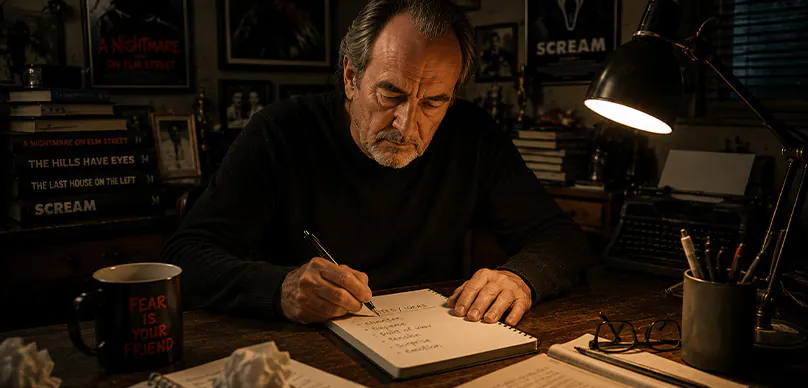
Every emerging screenwriter sits before a blank page with a quiet, persistent hope: that their very first script will bypass the messy trials of the craft and somehow reveal an innate, fully formed genius. Reality, however, has a vastly different and far more humbling lesson planned.
In a deep-dive industry discussion, veteran screenwriter and educator Glenn Benest—whose impressive career includes collaborations with legendary horror auteur Wes Craven and decades spent mentoring the next wave of cinematic talent—offers something immeasurably more valuable than industry shortcuts. He presents a masterclass and a philosophical framework built squarely on persistence, rigorous revision, strategic mentorship, and the unvarnished truth that professional writing is not about waiting for lightning to strike, but about the relentless, continuous refinement of raw material.
Benest’s insights peel back the romanticized veneer of Hollywood to expose the actual machinery of screenwriting: an art form where resilience matters more than raw inspiration, and where a script’s survival depends on navigating the treacherous waters of structure, genre expectations, and critical feedback.
1. Main Facts: The Anatomy of a Screenwriting Veteran
At its core, the conversation with Glenn Benest dismantles the modern misconceptions surrounding cinematic success. Key takeaways from his decades in the trenches include:
- The Script is the Only Currency: While film schools offer valuable networks and access to equipment for directors and cinematographers, Benest argues they hold little weight for writers. In screenwriting, diplomas are irrelevant; the quality of the script is the sole currency that opens industry doors.
- Genre Promises Must Be Paid: Whether it is scares in horror, adrenaline in thrillers, or laughs in comedy, audiences come to a theater with explicit expectations. Character development and brilliant dialogue are essential, but they must ultimately serve and honor the core promise of the genre.
- The Myth of the Perfect First Draft: Paralyzing perfectionism is the silent killer of aspiring careers. Benest asserts that a first draft’s only purpose is to exist on the page. True writing begins in the rewrite.
- The Necessity of Informed Guidance: Random opinions from friends and family pollute the creative process. Writers require specialized, professional mentorship that can pinpoint structural flaws without breaking the author’s creative confidence.
2. Chronology: From Harvard Playwriting to Hollywood Horror
Glenn Benest’s journey into the cinematic arts did not begin with a childhood obsession with Hollywood blockbusters. Instead, his roots are firmly planted in the dramatic traditions of the theater.
The Theatrical Foundation
Benest initially pursued a path in playwriting, studying at Harvard University before furthering his education with an MFA in playwriting at UCLA. This theatrical background ingrained in him a profound, lifelong appreciation for the mechanics of dialogue, spatial structure, and the nuances of live performance.
However, the theater also exposed him to a harsh economic reality: very few playwrights are able to make a sustainable living purely from their stage productions. This realization served as a vital turning point. It catalyzed a pivot toward screenwriting, a medium where his deep-seated passion for dramatic storytelling could reach vastly larger audiences while still preserving the structural integrity and artistic rigor of the theatrical craft.
Collaborating with a Master: Wes Craven
One of the most defining and formative chapters of Benest’s professional career materialized when he began collaborating with visionary filmmaker Wes Craven, long before Craven achieved global household-name status.
Working alongside Craven on projects such as A Stranger in Our House (1978) and later Deadly Blessing (1981), Benest experienced firsthand the meticulous methodology of a master horror director. Craven possessed an innate understanding of audience psychology—a foundational lesson that many novice writers completely overlook. Craven understood that audiences do not enter a dark theater simply to admire character arcs; they arrive craving a specific emotional payoff.
Through this collaboration, Benest learned that originality in commercial cinema rarely requires inventing an entirely brand-new plot structure out of thin air. Instead, true originality frequently stems from subverting, reinventing, and breathing unexpected life into familiar, time-tested tropes.
Mentoring Kevin Williamson and the Genesis of Scream
Perhaps one of the most culturally significant anecdotes from Benest’s teaching career involves his time mentoring writer Kevin Williamson during the early conceptualization and development of what would ultimately transform into the cultural phenomenon Scream.
Reflecting on the monumental success of the 1996 horror landmark, Benest analyzes the precise mechanics of why the script succeeded so brilliantly. Williamson’s screenplay achieved a razor-thin balancing act: it deeply respected the time-honored traditions of the slasher genre while simultaneously and playfully dissecting them in real-time. It fused sharp, self-aware wit with genuine, white-knuckle suspense. This allowed audiences to laugh knowingly at the tropes without ever losing the visceral tension of watching a terrifying horror movie.
Mastering this delicate equilibrium of tone remains one of the steepest hurdles for any writer, and Benest’s firsthand recollections illustrate how structured workshops, targeted critique, and collaborative dialogue can elevate a promising indie idea into an enduring cinematic classic.
3. Supporting Data & Industry Insights: The Mechanics of the Craft
Moving beyond biographical history, Benest’s insights provide a masterclass in the technical realities of screenwriting, offering concrete principles for those attempting to break into the industry.
The Danger of Uninformed Feedback
One of the most persistent hazards for emerging writers is the acquisition of bad notes. Benest argues vehemently that writers do not merely need opinions—they need informed guidance.
When a writer circulates an early draft among well-meaning friends, family members, or colleagues who lack a structural understanding of screenwriting, the resulting feedback almost invariably creates confusion rather than clarity. Amateur notes tend to focus on superficial elements (such as plot nitpicks or personal taste preferences) rather than deep structural ailments.
Productive feedback, by contrast, diagnoses foundational issues in pacing, stakes, and character motivation while actively preserving the writer’s creative confidence. Much like elite Olympic athletes who rely entirely on seasoned, objective coaches, screenwriters drastically benefit from mentors who deeply understand both the technical architecture of story and the fragile psychology of the artist. If a writer implements notes and the script consistently grows weaker, the root problem is rarely the writer’s capability—it is the poor quality of the advice being followed.
Demystifying the First Draft
The psychological barrier of the blank page stops more careers than lack of talent ever could. Too many writers freeze in their tracks because they harbor the unrealistic expectation that their initial output must mirror a polished studio release.
Benest systematically dismantles this toxic myth. A first draft is not an artistic monument meant to instantly dazzle studio executives; it is merely raw clay meant to be shaped. By granting oneself permission to write a "bad" first draft—simply allowing the narrative momentum to spill onto the page—the writer creates a tangible foundation.
Once problems are visible on paper, they suddenly become solvable. Subsequent revisions allow the writer to target specific weaknesses layer by layer—first locking down structure, then refining character voice, and finally polishing dialogue. This patient, iterative marathon stands in stark contrast to the destructive romanticized myth of effortless, instantaneous inspiration.
4. Official Perspectives and Pedagogical Philosophy
Benest’s philosophy represents a broader shift in how Hollywood regards the education of storytellers. While film schools historically focused heavily on the technical acquisition of cameras, lighting grids, and editing bays, the modern industry recognizes that the bottleneck in Hollywood has never been a lack of equipment—it is a severe shortage of exceptional, airtight scripts.
From an educational standpoint, Benest’s approach emphasizes humility and community. Writing is fundamentally a solitary act during the drafting phase, but screenwriting as a commercial medium is inherently collaborative. Great scripts are practically never forged in total isolation; they are built, stressed-tested, and perfected through rigorous peer review, intelligent editorial criticism, and the endurance to push past creative exhaustion.
5. Implications for the Future of Screenwriting
The wisdom imparted by Glenn Benest carries profound implications for the next generation of filmmakers navigating an increasingly saturated digital media landscape.
As streaming platforms and independent production houses demand an unprecedented volume of content, the temptation to rush unpolished material to market has never been higher. Yet, Benest’s career-spanning perspective serves as an anchor. It reminds creators that the foundational rules of dramatic tension, genre fulfillment, and structural integrity cannot be bypassed by algorithms or shortcuts.
For aspiring writers and independent filmmakers absorbing these lessons, the takeaway is ultimately one of profound encouragement. Cinematic excellence is not an exclusive club reserved solely for the naturally gifted prodigy; rather, it is an attainable craft earned by those who possess the grit to keep rewriting, workshop after workshop, until the story finally becomes everything it was always meant to be.
For those looking to dive deeper into Glenn Benest’s methodologies and hear the complete conversation firsthand, the full audio discussion is available for download.
