
The Art of the Absent: Lee Chang-dong’s "Possible Love" and the Architecture of Human Desire
In the 2018 masterpiece Burning, Lee Chang-dong gifted cinema one of its most poignant metaphors: a young woman mimes eating a tangerine, explaining that the secret to the act is not to pretend the fruit exists, but to fully forget its absence. It was a Zen koan captured on celluloid, a fleeting moment of grace that has now found a spiritual successor in Lee’s latest feature, Possible Love.
In this sprawling, meditative, and deeply empathetic drama, the director returns to his familiar preoccupation with the intersection of class, memory, and the invisible boundaries that dictate human happiness. Possible Love is not a film of grand, explosive plot points; it is a film of delicate, seismographic shifts in the human heart. Through the story of two marriages colliding across a stark social divide, Lee examines the insidious nature of covetousness—not as a sin of action, but as a silent, internal erosion of the soul.
The Architecture of Class and Conflict
The narrative centers on Mi-ok (played with breathtaking, multifaceted nuance by Jeon Do-yeon) and her husband, Ho-seok (Sul Kyung-gu). They are a family living in the shadow of industrial collapse. Ho-seok, a laborer recently discarded by the region’s largest factory following a failed strike, embodies the weary, masculine stoicism of a man whose identity has been stripped away by corporate downsizing.
Their world is one of modest survival, observed with keen, unblinking realism by cinematographer Kim Ji-yong. The couple’s young son, Cheol (Jung Seop), acts as the film’s silent witness—a boy who spends his time lurking in the periphery, listening to the muffled anxieties of adults. The domestic tension is palpable, yet it is never forced. Lee Chang-dong masterfully allows the frustration to build, culminating in a rare, shattering moment where Ho-seok’s emotional dam finally breaks, revealing the vast reservoir of grief he has been forced to maintain to keep his family afloat.
The Collision of Two Worlds: A Chronology of Entanglement
The lives of the working-class couple intersect with the affluent world through an unexpected catalyst: Ye-ji (Cho Yeo-jeong), an aspiring filmmaker and socialite who has descended upon the factory town to document the "human cost" of the recent layoffs.
- The Funeral: Following a spate of suicides in the wake of the factory closure, Ho-seok attends a funeral for a former colleague. Feeling alienated by his former comrades, he succumbs to a soju-fueled outburst. It is this moment of vulnerability that draws the attention of Ye-ji, who views the tragedy through the lens of her camera.
- The Interview: While Ho-seok remains cynical of Ye-ji’s intentions, Mi-ok agrees to be interviewed. What begins as a clinical sociological observation quickly devolves into a complex, unequal friendship.
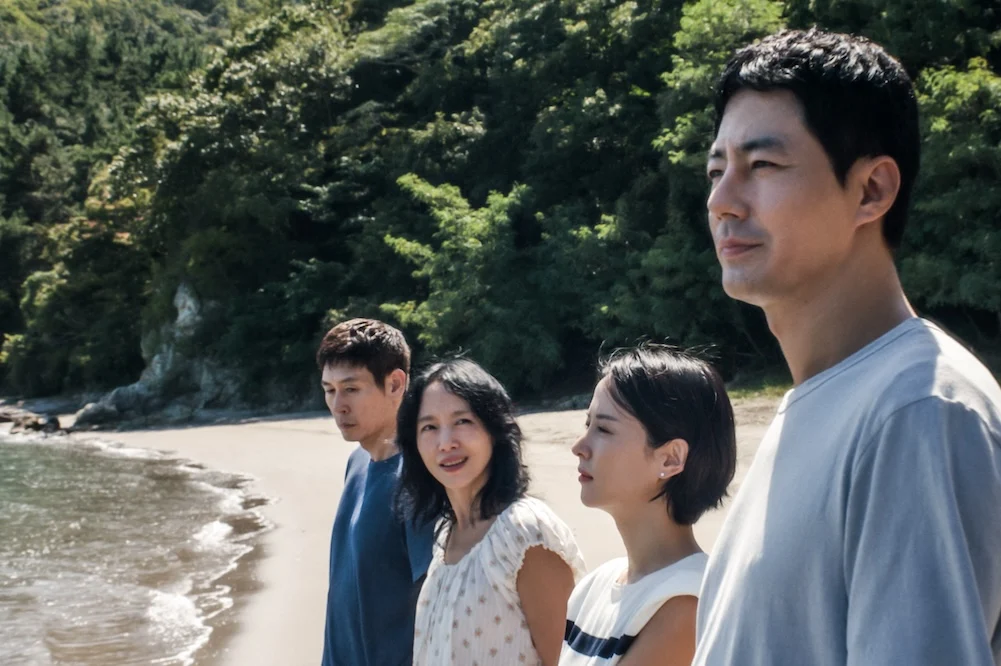
- The Coastal Estate: The friendship draws Mi-ok into the orbit of Ye-ji’s husband, Sang-woo (Zo In-sung), a man of wealth and enigma. The transition from the dusty, industrial town to the couple’s opulent seaside villa—a place Mi-ok likens to a setting from a novel—marks the film’s emotional pivot.
- The Unraveling: As Mi-ok is seduced by the aesthetic comforts of the upper class, her own home begins to appear diminished in her eyes. The marble picnic table, once a symbol of hope and community, is suddenly perceived as "cheap" and "shabby."
Supporting Data: The Tenth Commandment and the Anatomy of Covetousness
Possible Love serves as the second entry in a multi-auteur project inspired by Krzysztof Kieślowski and Krzysztof Piesiewicz’s legendary Dekalog. While Lee’s film does not mirror the specific narrative of Dekalog 10, it is deeply rooted in the moral inquiry of the Tenth Commandment: "Thou shalt not covet."
In traditional theology, covetousness is a "thought crime." It is the only commandment that governs the interior landscape of the human mind. Lee uses this premise to challenge the audience: How can a director make the internal, invisible process of desire so viscerally cinematic?
The film highlights the predatory nature of "the gaze." Ye-ji’s desire to capture Mi-ok’s pain on film is a subtle critique of the filmmaker’s own potential for exploitation. By framing Mi-ok’s life as a narrative to be consumed, the affluent characters inadvertently reshape her reality. Lee, however, refuses to judge his characters with a heavy hand. Instead, he treats them with a profound, almost uncomfortable, intimacy, allowing the audience to recognize their own secret, "unknowably strange" selves within these fictional archetypes.
Implications: The Burden of Aspiration
One of the most searing sequences in Possible Love involves a flashback to Mi-ok’s childhood. Her mother, a car washer, once slapped a hose from young Mi-ok’s hands because she saw her daughter imitating the very labor that defined her own struggle.
This leads to a haunting question for the contemporary viewer: Does the drive to teach our children to "dream big" actually serve them, or does it merely prime them for a lifetime of dissatisfaction in a world where social mobility is increasingly stagnant? When Mi-ok witnesses her son, Cheol, bonding with the villa’s groundskeeper, the moment is laden with the heavy, silent weight of class inheritance. She does not intervene; she watches, paralyzed by the realization that the system of inequality is already shaping the boy’s future.
Official Responses and Critical Reception
Early screenings have seen critics laud the film as a return to form for Lee Chang-dong, whose ability to weave radical social commentary into the tapestry of a personal drama remains peerless.
"Lee is a wizard of the interior," wrote one critic. "He manages to make the act of not doing something—not speaking, not acting, not owning—as compelling as any high-stakes thriller." The performances, particularly that of Jeon Do-yeon, have been cited as career-best, with industry observers predicting a strong awards-season push. The film’s refusal to provide an easy, moralistic ending has been praised as a hallmark of Lee’s mature, "unshowy" filmmaking style.
Conclusion: The Wisdom of the Tangerine
In its final moments, Possible Love arrives at a conclusion that is as generous as it is rueful. Mi-ok and Ho-seok find themselves back at their modest home, sitting on the marble bench the husband once built in a fit of naive optimism.
The struggle they endured was, in many ways, a loss. They have been patronized, exploited, and briefly seduced by a world they cannot inhabit. Yet, in that loss, they find a strange, quiet comfort. They realize that the "novel" they were chasing—the life they were not meant to lead—was never theirs to write.
Lee Chang-dong’s film suggests that the ultimate act of liberation is not the attainment of one’s desires, but the shedding of the illusion that those desires are necessary for a meaningful existence. It is a profound meditation on the "not-coveting" of things, and the acceptance of the life that remains when the pretenses are stripped away. Just as in Burning, we are left with the final, shimmering truth: even if the pretense is convincing, it is often better to accept the silence of the room, to recognize the void, and to understand, with grace and peace, that there is no tangerine.
