
Beneath the Surface: Hans Zimmer and JADE Unite for the Epic Sound of Blue Planet III
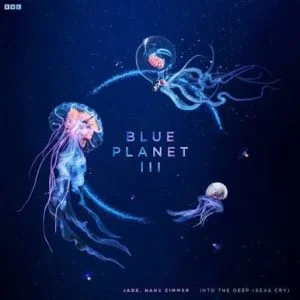
October 6, 2026 – As the global audience prepares for the return of the BBC’s most iconic natural history franchise, the musical landscape of the deep sea is being set by a powerhouse collaboration. Today, RCA Records officially released "Into the Deep (Seas Cry)," the haunting, atmospheric lead track for the upcoming documentary series Blue Planet III.
The track, which serves as the sonic heartbeat for the new series, features the soaring vocals of pop powerhouse JADE, fused with the cinematic, sweeping soundscapes of Academy Award-winning composer Hans Zimmer. This collaboration marks a significant moment in television scoring, blending contemporary pop sensibilities with the grandeur of high-stakes nature filmmaking.
The Main Facts: A Convergence of Icons
The announcement of "Into the Deep (Seas Cry)" confirms the musical direction for the highly anticipated third installment of the Blue Planet series. The track was co-written by Thom Lukas of Bleeding Fingers Music, with lyrical contributions from JADE (Jade Thirlwall), Pablo Bowman, and Fin Dow-Smith.
The song is not merely a promotional tie-in; it is the central thematic anchor for the series, which is set to explore the most remote and mysterious corners of our oceans. Blue Planet III, once again narrated by the legendary Sir David Attenborough, promises to utilize revolutionary filming technology to document marine environments that have remained largely unseen by human eyes.
"Into the Deep (Seas Cry)" is currently available across all major digital streaming platforms, including Amazon Music, Spotify, and Apple Music. The release comes alongside an extended trailer for the series, which showcases the breathtaking visuals audiences have come to expect from the BBC’s natural history unit.
Chronology: The Road to the Deep
To understand the weight of this release, one must look at the trajectory of the Blue Planet franchise and its relationship with music.
- 2001: The original Blue Planet series premiered, establishing a new benchmark for nature documentary filmmaking. The score, by George Fenton, became a cornerstone of environmental media.
- 2017: Blue Planet II pushed boundaries even further, featuring a collaborative score by Hans Zimmer and Jacob Shea, alongside Radiohead. The song "(ocean) bloom" became an instant classic, signaling a shift toward modern, cross-genre collaborations in nature documentaries.
- Early 2025: Rumors began to circulate regarding the development of a third series, with reports confirming that the BBC Natural History Unit was deploying new submersibles capable of reaching previously unreachable depths.
- Summer 2026: Hans Zimmer and his team at Bleeding Fingers Music began sessions to develop the sonic identity of the series. The search for a vocalist who could balance technical precision with emotional vulnerability led to the recruitment of JADE.
- October 6, 2026: The official release of "Into the Deep (Seas Cry)" signals the final countdown to the series premiere on BBC One and BBC iPlayer.
Supporting Data: The Anatomy of a Soundtrack
The production of Blue Planet III is an exercise in data-driven storytelling. The series was filmed over four years, involving 1,500 days of filming across 45 countries. However, the score serves as the connective tissue that makes this data digestible for the viewer.
The Role of Bleeding Fingers Music
Bleeding Fingers Music, the boutique production house co-founded by Zimmer, has become the industry standard for large-scale documentary scoring. By integrating a team of composers, including Thomas Lukas, the production house ensures a consistent, immersive soundscape that transitions seamlessly between the vastness of the open ocean and the microscopic detail of deep-sea flora.
Technological Advancements
The audio production team utilized "spatial audio" techniques to match the series’ ultra-high-definition footage. Because the series was filmed using new, low-light, and silent-propulsion ROVs (Remotely Operated Vehicles), the sound design required a score that could fill the void left by the lack of traditional ambient noise in the deep ocean. "Into the Deep (Seas Cry)" utilizes sub-bass frequencies and ethereal choral arrangements to mimic the pressure and vastness of the midnight zone—the layer of the ocean where sunlight fails to penetrate.
Official Responses and Creative Vision
The creative team behind the track has been vocal about the importance of the project, emphasizing that the music is intended to act as a call to action regarding ocean conservation.
In a recent press statement, Hans Zimmer noted the difficulty of scoring the ocean: "The ocean doesn’t have a singular voice. It is a cacophony of currents, life, and silence. To score Blue Planet III, we needed a human element—a voice that could bridge the gap between the audience and the alien world beneath the waves. JADE brought a sensitivity that was essential to the composition."
JADE (Jade Thirlwall) expressed her excitement about the project, stating: "Writing for the ocean is very different from writing for the radio. There is an inherent rhythm in the tide that we tried to capture. Working with Hans was a masterclass in storytelling. We wanted the song to feel like a lullaby for the planet, but also a warning of how fragile these environments are."
The BBC Natural History Unit echoed these sentiments, highlighting that while the visual spectacle of the series is its primary draw, the music is what will linger in the memories of the audience long after the final episode concludes.
Implications: The Future of Documentary Soundscapes
The release of "Into the Deep (Seas Cry)" carries significant implications for the future of the documentary genre.
1. The "Pop-ification" of Nature Documentaries
Critics and analysts have noted that by bringing in pop stars like JADE, the BBC is intentionally bridging the gap between niche environmental interest and mainstream popular culture. This strategy serves to bring younger demographics to the series, turning a documentary into a "cultural event" rather than just an educational program.
2. Environmental Advocacy Through Music
The lyrics of "Into the Deep (Seas Cry)"—though not explicitly protest-oriented—carry an undercurrent of melancholy and stewardship. As climate change continues to impact marine ecosystems, the use of music as a vehicle for environmental messaging is becoming more direct. This partnership serves as a soft-power tool for conservation awareness, embedding the "health of the ocean" narrative into the listener’s subconscious via streaming playlists.
3. The New Standard for Scores
The collaboration sets a new standard for how television series are promoted. With the release of the track weeks ahead of the series premiere, the BBC is utilizing a "music-first" marketing strategy. This creates a psychological priming effect: by the time the viewer sits down to watch the premiere, they have already developed an emotional connection to the show’s theme, significantly increasing viewer retention rates.
Conclusion: A Deep Dive into the Unknown
As the Blue Planet III launch approaches, the anticipation is not merely for the visuals, but for the synthesis of art and nature. "Into the Deep (Seas Cry)" stands as a testament to the fact that even the most remote parts of our world are deeply connected to the human experience.
With Hans Zimmer’s masterful command of orchestral swells and JADE’s evocative vocal performance, the stage is set for a series that will likely redefine our relationship with the ocean. The series, slated to premiere this fall, is more than a television event; it is an immersive exploration of the final, great wilderness of our planet.
Listeners are encouraged to stream the track, explore the extended trailer, and prepare for the series premiere on BBC One and BBC iPlayer. Whether you are a fan of natural history or a follower of contemporary pop, the convergence of these two worlds promises a viewing—and listening—experience that is as profound as the deep seas themselves.
For more information on the production of Blue Planet III and further updates on the soundtrack, stay tuned to the BBC and official music distribution channels.
