
The Sound of Survival: How Michael Giacchino Crafted the Haunting Score for Society of the Snow
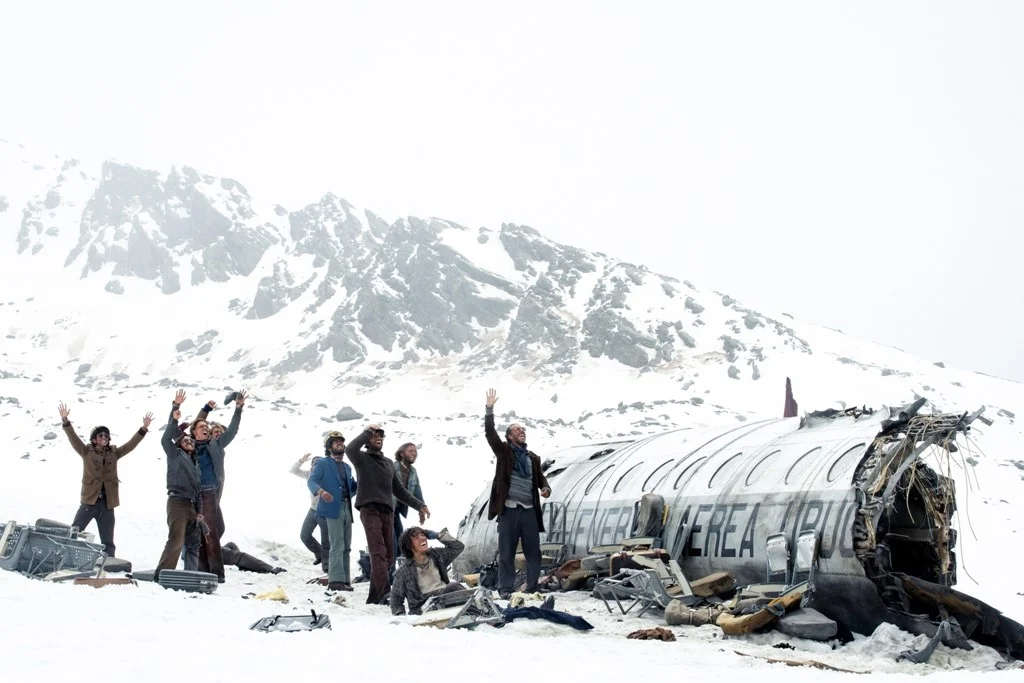
When director J. A. Bayona set out to adapt the harrowing 1972 survival story of the Uruguayan rugby team—the infamous flight that crashed into the frozen, unforgiving peaks of the Andes—he knew the film’s sonic landscape would be as vital as its visuals. However, he did not initially plan for his longtime friend and frequent collaborator, Oscar-winning composer Michael Giacchino, to score the project.
The partnership, which has flourished through blockbusters like Jurassic World: Fallen Kingdom, was born this time out of an organic, visceral reaction. After screening a rough cut of the film for Giacchino, Bayona witnessed something that transcended the typical director-composer consultation. Giacchino was so profoundly moved by the footage that the conversation immediately shifted from casual observation to a deep, technical dive into the requirements of percussion and guitar. By the next morning, the composer had already begun sketching the musical architecture for what would become one of his most spiritual and challenging assignments to date.
The Genesis of a Haunting Soundtrack
The decision to bring Giacchino on board was instantaneous. Bayona, recognizing the depth of his collaborator’s emotional resonance with the material, invited him to compose the entirety of the film. For Giacchino, whose credits include the whimsical Up and the upcoming horror remake Them!, this project demanded a radical shift in perspective.
"Society of the Snow challenged me in ways that I never understood I could be challenged," Giacchino told IndieWire. "I always treat the characters, whether they are animated or live-action, as if they were real people. My music comes from putting myself into their mind and soul. For this film, I felt an enormous responsibility to be as honest as I could about this traumatic experience. It wasn’t just about sadness and loss; it was about the act of waking up in an alien environment, taking one step at an excruciating time, and living in the constant shadow of the unknown."

A Chronology of Artistic Adaptation
The musical process was defined by a philosophy of restraint. In the early stages of composition, Giacchino found himself constantly iterating toward a "less is more" approach. The environment of the Andes—a vast, silent, and indifferent expanse—dictated that the music could not be overbearing. It needed to exist in the margins, mirroring the isolation of the survivors.
To achieve this, Giacchino opted for a small, tight ensemble rather than a sprawling, bombastic orchestra. He bypassed the traditional heavy brass sections often associated with epic survival films, favoring instead a more intimate, internal soundscape. Recording at the iconic Abbey Road Studios in London, the goal was to capture a sense of human vulnerability against the backdrop of geological scale.
The score’s development was deeply informed by the cultural heritage of the survivors. Giacchino, encouraged by Bayona, wove in authentic Uruguayan elements. He utilized the charango (a traditional Andean string instrument) and tambores de candombe (Uruguayan drums), alongside a choir singing in the Mapuche language.
"We chose words that translate to ‘Mother Earth’ or ‘Nature,’" Giacchino explained. "The irony is that the very place that brought them to the brink of death also held the elements that forced their survival. My focus remained on the internal state of the people who still carry this experience close to their hearts."

The Technicality of Silence and Sound
One of the most unique aspects of the scoring process was the conscious decision to avoid musical interference during the film’s most explosive moments. Giacchino intentionally left the plane crash and the subsequent avalanche sequences unscored.
"The sound team had those moments brilliantly covered with their own horrific, realistic soundscapes," he noted. "Adding music there would have been an intrusion on the reality of what happened. I wanted the music to represent the psyche of the survivors, not the violence of the environment."
Instead, the composer experimented with unorthodox sound production, manipulating guitar and piano strings to create haunting, ethereal textures that mirrored the bleak, metallic, and icy surroundings of the crash site. These sonic experiments provided the backdrop for the survivors’ internal monologues and their struggle to maintain a connection to their faith and humanity.
A Tribute to the Departed
Perhaps the most significant pillar of the score is its dedication to those who did not survive. Giacchino emphasized that the film serves as a testament to the entire party, not just those who eventually made it home.

"It’s more about the ones who didn’t make it home," Giacchino said. "The survivors have had many years to tell their stories, but this film provided a chance to honor those who gave everything they had. It was vital to Juan Antonio that we focus on the collective spirit of the group—both the living and the dead."
Official Reception and Legacy
The true test of the score came when Giacchino finally met the real-life survivors of the 1972 crash. Approaching the meeting with significant trepidation, he feared that his artistic interpretation might misrepresent the gravity of their experience.
The reaction, however, was one of profound validation. The survivors expressed that the music captured the essence of their struggle—the quiet, desperate endurance and the existential weight of their ordeal. This feedback served as the ultimate metric of success for the composer.
"I was exhausted at the end of each day," Giacchino admitted. "I was digging deeper, philosophically, than I ever have before. I realized early on that I could never fully reach the absolute truth of what they felt, but I hoped to make the best possible attempt to express that truth for them—for the survivors and for those who were left on the mountain."

Implications for Future Filmmaking
Society of the Snow stands as a masterclass in how a score can elevate a narrative from a procedural survival story to a spiritual meditation. By prioritizing emotional honesty over conventional cinematic tropes, Giacchino and Bayona have created a work that feels less like a film and more like an act of collective memory.
As the film prepares for its wider release—hitting select theaters on December 22, 2023, before arriving on Netflix on January 4, 2024—the conversation surrounding its production highlights a shift toward more nuanced, empathetic storytelling in the survival genre. For Giacchino, the experience has fundamentally altered his approach to his craft, reinforcing his belief that the most powerful music is that which dares to be quiet, to listen, and to reflect the profound complexity of the human condition.
The legacy of the 1972 flight is no longer just a story of survival; it is now a symphony of resilience, captured in strings, drums, and the voices of a choir, echoing the endurance of the human spirit against the backdrop of the highest peaks on Earth.
