
Behind the Lens and Beyond the Budget: The Hard-Earned Philosophy of Indie Filmmaker Jason Kartalian
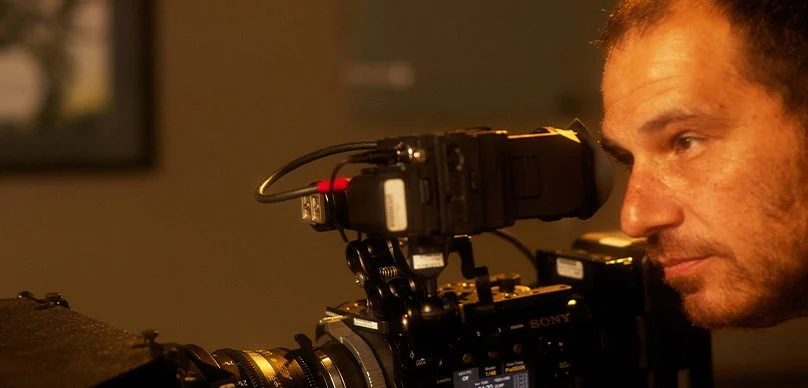
There is a pristine, academic version of filmmaking that exists strictly within the confines of textbooks, diagrammed classrooms, and meticulously planned shot lists. In this theoretical world, lighting ratios are absolute, schedules are never compromised, and equipment functions with unwavering perfection.
Then there is the reality of the trenches: racing furiously against a setting sun, discovering that a crucial sequence refuses to work on camera, watching a primary hard drive abruptly fail, battling an uncooperative location, and realizing that twelve pages of dialogue still need to be photographed before the crew can call a wrap.
For writer, director, and producer Jason Kartalian—known for independent features such as Driller and Seahorses—the latter version is intimately familiar. Kartalian has spent his professional life navigating the beautiful, often harrowing chaos of independent filmmaking. In this arena, creative ingenuity is not merely an artistic luxury; it is the fundamental mechanism that allows a movie to survive.
Main Facts: The Anatomy of Independent Survival
Independent cinema operates without the safety nets of major studio financing. For Kartalian, surviving this landscape requires a holistic understanding of the medium, deep respect for collaboration, and an unwavering commitment to emotional truth over technical vanity.
- The Practitioner: Jason Kartalian is an accomplished indie filmmaker, writer, and director whose credits include Driller, Seahorses, and his directorial feature debut, originally titled Pedestrian and later released as One False Step.
- Core Philosophy: Filmmaking is fundamentally an exercise in navigating adversity. Technical perfection is secondary to emotional resonance; if a scene lacks human truth, high-end equipment means very little.
- Practical Production Stance: Low-budget sets require pragmatic decision-making. Kartalian advocates for securing the master shot early to guarantee the scene exists, preventing hours of wasted time on excessive, unused coverage.
- Distribution Realities: Self-funding and self-distributing Seahorses taught Kartalian that uploading a film to a platform is only half the battle. Availability does not equate to audience awareness.
Chronology: From the Backlot to the Director’s Chair
Kartalian’s relationship with the film industry began unusually early, deeply rooted in the golden era of classic Hollywood character acting.
Growing Up on the Lot
His father, Buck Kartalian, was a ubiquitous working character actor whose impressive credits included seminal films such as the original Planet of the Apes (1968), Cool Hand Luke (1967), and The Outlaw Josey Wales (1976). As a child, Jason frequently visited active sets, observing firsthand how crews constructed artificial worlds and how complex scenes were pieced together frame by frame.
Supported by a family that nurtured his artistic curiosity, Kartalian began making rudimentary movies for family gatherings. He experimented with early consumer technology, cycling through Super 8 and VHS cameras. Over time, he realized he felt significantly more comfortable behind the camera than in front of it. Watching the inherently unpredictable, transient life of a working actor also profoundly shaped his outlook. Filmmaking offered an empowering alternative: the ability to initiate creative work rather than perpetually waiting for someone else’s permission.
The Directorial Debut and Early Lessons
That upbringing directly influenced how Kartalian approached working with talent. On his first feature film, One False Step, he cast and directed his own father alongside a roster of seasoned character actors.
The experience instilled a deep sense of professional humility. Rather than obsessing entirely over expensive camera packages, exotic lenses, and technical perfection, Kartalian learned that filmmakers must constantly remember the ultimate objective of these tools: to make an audience feel. Writing, acting, cinematography, lighting, and production design are simply disparate components of a single emotional machine.
Supporting Data & Production Methodology: Pragmatism on Set
When operating on a restricted independent budget, time quickly becomes the most precious and volatile commodity on set. Kartalian cautions against the common trap of burning precious hours capturing endless, redundant coverage that may ultimately end up on the cutting room floor.
The Master Shot Strategy
Kartalian recalls observing a low-budget production spend an extraordinary amount of time repeatedly filming an actor entering a doorway, only for the entire entrance sequence to be completely omitted from the final cut.
In contrast, his own operational philosophy is strictly pragmatic: capture the scene first. When the production clock is working against him, Kartalian prefers to secure the entire sequence in a comprehensive master shot.
"At least we got the scene," is the guiding logic.
Once the core story safely exists on camera, additional coverage and alternative angles can be layered in to enhance the narrative—ensuring the film can survive even if circumstances or weather suddenly force a premature shutdown.
Surviving the Elements
The capacity to weather sudden disruptions is a prerequisite for indie survival. While shooting Driller at night on a remote Malibu ranch, Kartalian and his cast faced blistering cold temperatures, rugged terrain, dangerous wildlife including snakes and tarantulas, swarming bees, and actors required to perform in minimal clothing.
While such trials initially inspire daydreams of shooting entirely within the safety of controlled indoor environments, Kartalian notes that controlled locations simply introduce an entirely different set of logistical headaches.
"Filmmaking is about dealing with adversity," Kartalian states simply.
Whether battling nature or managing studio constraints, production stability relies entirely on the strength of the core team. When actors, producers, and crew members mutually trust one another, a production becomes remarkably difficult to derail.
Official Perspectives and Industry Insights
Beyond his direct creative duties, Kartalian firmly believes that independent directors benefit immensely from a comprehensive working knowledge of every department around them.
Technical Literacy and Post-Production Safeguards
While he does not necessarily advocate for directors acting as their own cinematographers, Kartalian insists that a director must understand cameras, lighting packages, lenses, sound recording, and grip equipment well enough to remain functional when things inevitably go wrong. This technical literacy is not about micromanaging department heads; it is about understanding realistic possibilities and preventing an entire production from grinding to a halt because of a single point of failure.
This pragmatic mindset extends seamlessly into post-production:
- Paper Trails: Insist on putting all agreements in writing.
- Data Management: Collect, verify, and offload footage at the conclusion of every single shooting day.
- Redundancy: Maintain multiple physical and digital backups throughout the editing process.
These lessons lack glamour, but experiencing a catastrophic drive failure and losing an entire feature film is significantly less glamorous.
The Value (and Limits) of Film School
Reflecting on his time at California State University, Northridge (CSUN), Kartalian holds a nuanced view of formal film education. While he valued the writing curriculum and the opportunity to connect with inspiring professors, he maintains that the true craft of filmmaking can only be mastered on active sets.
Textbooks can teach nomenclature, camera mechanics, and shot framing. However, the truly critical lessons—diplomacy, leadership, crisis management, collaborative problem-solving, and the cultivation of a distinct artistic voice—must be forged through experience. Kartalian encourages emerging filmmakers to build their own education by volunteering on productions, studying masterworks, and aggressively putting theory into practice.
Implications for the Future of Independent Cinema
Kartalian’s unique creative vision is most clearly exemplified by his feature Seahorses. Frustrated by traditional gatekeepers, he largely self-funded the project using capital earned from commercial and freelance work. The project was deeply personal, driven by a point in his career where external validation no longer mattered; he simply needed to make the film for himself.
The Realities of Self-Distribution
Seahorses went on to achieve considerable festival recognition and secured international distribution. Opting to self-distribute rather than surrender long-term rights to third-party entities, Kartalian confronted another uncomfortable industry reality: simply uploading a completed film to a streaming platform or VOD aggregator is never the finish line.
"Availability isn’t awareness," Kartalian notes.
In the modern digital landscape, the filmmaker must actively generate marketing momentum and convince audiences why a project deserves their valuable time.
Summary Advice for Independent Creators
For aspiring independent filmmakers embarking on their own journey, Kartalian’s career offers a definitive blueprint:
- Master the tools, but never worship them.
- Protect your raw footage fiercely.
- Understand the jobs of the people surrounding you.
- Build a crew grounded in absolute trust.
- Prioritize character and emotional truth over rigid plot mechanics.
- Invest financial resources strictly into what the audience will visibly experience.
- Make stories that you genuinely, deeply care about.
Ultimately, audiences sitting in a theater or streaming at home are blissfully unaware of the logistical exhaustion, broken equipment, budget compromises, and sleepless nights required to bring a vision to life.
As Kartalian observes with hard-earned wisdom:
"They don’t see the pain and suffering… They see what we show them."
That realization remains both the ultimate cruelty and the profound magic of independent filmmaking.
