
The Amyrlin’s Gambit: Egwene al’Vere Consolidates Power in Towers of Midnight
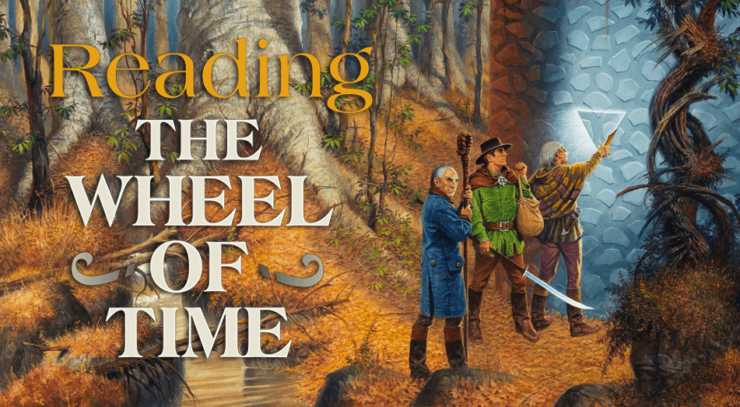
The political landscape of the Westlands is undergoing a seismic shift as Egwene al’Vere, the newly reunified Amyrlin Seat of the White Tower, accelerates her efforts to stabilize a fractured Aes Sedai hierarchy. In the latest installment of the chronicles surrounding the lead-up to the Last Battle, specifically Chapter 14 of Towers of Midnight, the Amyrlin has moved beyond mere survival. She is now actively managing a complex web of alliances, institutional reforms, and personal conflicts that threaten to either secure her position or see her undone by the very traditions she seeks to modernize.
Main Facts: A Convergence in the World of Dreams
Egwene’s recent activities center on Tel’aran’rhiod, the World of Dreams. Utilizing this ethereal realm as a strategic command center, Egwene has initiated a series of high-level meetings that are critical to her vision of a unified resistance against the Shadow. Her primary objectives are threefold: securing the allegiance and guidance of the Aiel Wise Ones, integrating the newly independent influences of Elayne Trakand and Nynaeve al’Meara into the Tower’s structure, and navigating the volatile unpredictability of Rand al’Thor, the Dragon Reborn.
The Amyrlin’s journey began on a familiar, symbolic hillside in the Dream World—the same location where her early training occurred. Her internal monologue reveals a leader who has transitioned from a student of the Dream to a master of it, recognizing that her authority now extends far beyond the physical walls of Tar Valon.
Chronology: A Sequence of Diplomatic and Martial Engagements
The progression of events in this chapter serves as a masterclass in political maneuvering:
- The Wise Ones’ Validation: Egwene met with Amys and Bair in the Heart of the Stone of Tear. The meeting resulted in the formal recognition of her status as Amyrlin, signified by the creation of the striped stole. The dialogue highlighted the lingering tension between Aiel cultural expectations and Egwene’s role as the leader of the White Tower.
- Strategic Education Reform: Egwene negotiated a groundbreaking agreement to allow Accepted to train under the Wise Ones. By framing this as a cultural exchange, she successfully masked her intent to elevate the standards of Aes Sedai training.
- The Dragon’s Paradox: A tense discussion regarding Rand al’Thor’s stated intention to break the remaining seals on the Dark One’s prison highlighted the growing divide between the Amyrlin and the Dragon Reborn.
- Internal Consolidation: A private meeting with Nynaeve al’Meara and Elayne Trakand served to solidify the personal and professional loyalty of these two key figures, both of whom possess the potential to challenge or bolster Egwene’s authority.
- Hostile Intervention: The chapter reached a violent climax when Alviarin, a high-ranking member of the Black Ajah, attempted an assassination in the Dream World. The resulting conflict saw the accidental death of another Black Ajah operative, Talva, illustrating the internal instability of the Shadow’s ranks.
Supporting Data: The Philosophical and Tactical Framework
The significance of these events is underscored by the recurring imagery of the "Rose Window" in the Hall of the Tower within Tel’aran’rhiod. The appearance of the Dragon’s Fang alongside the Flame of Tar Valon suggests a subconscious—or perhaps supernatural—acknowledgment of a necessary synergy between the Amyrlin and the Dragon Reborn.
This visual metaphor aligns with the ancient Chinese concepts of Yin and Yang, representing two halves of a whole. In the context of the One Power, the friction between saidin and saidar is not merely destructive; it is the engine of the Wheel. Egwene’s realization that she and Rand must balance their authority—rather than one dominating the other—is a crucial step in the maturation of her leadership.
Furthermore, Egwene’s decision to utilize Nynaeve and Elayne is a strategic necessity. By demanding that they submit to the traditional hierarchies—including the Three Oaths—Egwene is not acting out of petty tyranny. She is creating a standardized framework that allows her to trust her subordinates implicitly. Her ability to challenge Nynaeve’s inherent aversion to authority by appealing to her sense of logic and professional pride demonstrates a sophisticated understanding of human psychology.
Official Responses and Internal Tensions
The White Tower remains a hotbed of political friction. While the Ajah heads have nominally accepted Egwene as Amyrlin to prevent further civil war, the underlying skepticism among the rank-and-file sisters remains a significant hurdle. Many sisters view Egwene as an "unknown quantity," a leader born of crisis who has yet to prove her administrative mettle in peacetime.
The Wise Ones, meanwhile, represent a different kind of pressure. Their lingering desire for Egwene to abandon the "fools of the White Tower" and return to the Aiel tradition acts as a constant reminder of the cultural isolationism that still plagues the world. Yet, their willingness to support her—and their pride in her development—suggests that Egwene has successfully bridged the gap between the two cultures.
The most concerning response, however, comes from the Shadow. The failed assassination attempt by Alviarin highlights that the Dark One’s followers are not only active but desperate. The fact that Alviarin inadvertently killed her own ally, Talva, suggests a chaotic, self-destructive element within the Shadow that Egwene may be able to exploit in future encounters.
Implications: The Road to the Last Battle
The implications of these developments are profound. As the Last Battle draws near, the window for learning and consolidation is closing. Egwene’s realization that her situation mirrors—yet contrasts—with Rand’s is telling. While Rand has moved toward a state of singular, enlightened focus, Egwene is mired in the "uncountable" tasks of governance.
1. The Necessity of Cooperation
The narrative trajectory points toward an inevitable collaboration between the Amyrlin and the Dragon. Whether this involves the use of Callandor or a joint effort to seal the Bore, the success of the light depends on the unification of male and female channelers. Egwene’s resistance to Rand’s plan to break the seals is not necessarily a sign of her being wrong; it is a sign of the essential system of checks and balances that must exist to prevent the kind of catastrophe that occurred in the Age of Legends.
2. The Battle of Wills
The looming confrontation with Mesaana in the World of Dreams is an anticipated turning point. Having witnessed Nynaeve’s victory over Moghedien and Rand’s struggles with Ishmael, the reader understands that such battles are won through the mastery of the mind and the manipulation of the Dream. Egwene’s confidence in her ability to handle Mesaana suggests she is preparing for a trial that will define her tenure as Amyrlin.
3. The Future of the Aes Sedai
Egwene’s push to have sisters trained by the Wise Ones, and her insistence on the proper raising of Nynaeve and Elayne, indicates a fundamental shift in the culture of the White Tower. By breaking down the barriers of the Tower’s traditional secrecy and arrogance, she is creating a more resilient, better-informed, and less insular organization. This is not merely a political victory; it is an evolution of the Aes Sedai that may well be the decisive factor in the survival of the world.
4. Leadership Under Pressure
Finally, the comparison to the reigns of previous leaders like Siuan Sanche and Morgase Trakand provides a sobering perspective. Egwene does not have the luxury of years to cement her power. She is building a plane while flying it, and the fact that she has managed to retain the respect of both the Wise Ones and the novices is a testament to her unique capabilities.
As we look toward the subsequent chapters, the questions remain: Will Egwene and Rand reach a consensus on the seals before the Last Battle, or will their fundamental disagreements create a rift that the Shadow can exploit? And how will the Ajah heads react once they realize that Egwene’s reforms are not temporary, but intended to reshape the White Tower forever? One thing is certain: the Amyrlin Seat is no longer a figurehead. She is the architect of the final resistance, and the Pattern is moving exactly as she directs it.
