
A High-Octane Homecoming: FilmQuest Kicks Off 13th Year with a Celebration of Utah Indie Spirit
The atmosphere inside Provo’s Velour Live Music Gallery on the evening of October 22 was nothing short of electric. As the doors opened for the 13th annual FilmQuest festival, the air was thick with the scent of fresh, buttery popcorn, the hum of burgeoning professional networks, and an unmistakable, localized pride.
"Motherfucking Utah, let’s go!"
The rallying cry set the tone for a ten-day cinematic marathon that promises to push the boundaries of genre filmmaking. While the festival has long been a destination for genre enthusiasts, this year’s opening night felt particularly anchored in the local soil. The headliner, the high-octane motorcycle action feature Whiskey Throttle, served as both a technical showcase for Utah-based talent and a defiant statement that the Beehive State remains a formidable powerhouse for independent production.
Setting the Stage: A Nostalgic Homecoming
The Velour Live Music Gallery provided an intimate, almost subterranean atmosphere for the premiere. Eschewing the cold, clinical feel of modern multiplexes, the venue was adorned with spooky, immersive décor that leaned into the festival’s identity as a home for horror, fantasy, and sci-fi enthusiasts.
Before the feature began, the screen acted as a time machine. The audience was treated to a curated reel of 1980s-era movie trailers and vintage toy commercials—think Masters of the Universe and neon-drenched action spots. This deliberate aesthetic choice transformed the screening room into a communal hub, echoing the "fandom" vibes that FilmQuest has cultivated since its inception. It was a space where, in the minutes before the lights dimmed, filmmakers, actors, and fans mingled with the ease of old friends, reinforcing the festival’s reputation as a launchpad for future collaborations.
Chronology of an Opening Night
The evening’s proceedings were helmed by FilmQuest founder and director Jonathan Martin, a man who functions as much as a curator as a tireless advocate for the regional film scene. Martin’s opening remarks were a masterclass in crowd-pleasing showmanship. With a blend of wit and biting local humor, he took playful swings at the neighboring state of Idaho and, perhaps more pointedly, at the Sundance Film Festival for its recent decision to relocate its long-standing operations away from Utah.
The crowd, comprised largely of indie creatives and genre devotees, responded with raucous support, particularly when Martin addressed the "elephant in the room" of modern filmmaking. During the opening announcements, he declared that none of the films selected for this year’s festival utilized Artificial Intelligence in their production. The declaration was met with sustained applause—a clear indication that for this specific demographic, the human element of storytelling is non-negotiable. For those in the room, AI is not merely an efficiency tool; it is perceived as an existential threat to the integrity of art and the livelihood of the creative class.
The screening program followed a carefully calibrated structure. Consistent with the festival’s tradition of "thematic pairing," two short films were presented before the main event, setting the narrative and tonal stage for Whiskey Throttle.
The Shorts: A Prelude of Local and International Talent
The first short, Relict, brought the focus back to Utah. A product of the Brigham Young University (BYU) Department of Theatre and Media Arts, the film was a visually arresting, atmospheric exploration of an anthropologist’s obsessive pursuit of a mysterious creature. Directed by twin brothers Andrew and James Harker, the film served as their senior thesis—a fact that left many in the audience stunned by the technical polish on display. During the subsequent Q&A, Jonathan Martin teased that the brothers have already completed a feature-length script, signaling that the Harker twins are a creative duo to watch.
The second short, Marv, offered a sharp, hilarious pivot. Directed by Australian filmmaker Andrew Gardner, the film acts as a meta-parody of the Saw franchise. It follows a clown named Marv who, in the midst of torturing a family, realizes he has made a logistical error, turning the gore-filled scenario into something akin to a dark, high-stakes episode of Curb Your Enthusiasm. Gardner’s mastery of comic timing and subversion of horror tropes was a clear hit, leading many in the audience to suggest that he would be an ideal candidate to inject new life into the Scary Movie franchise.
Whiskey Throttle: A Masterclass in Practical Stunts
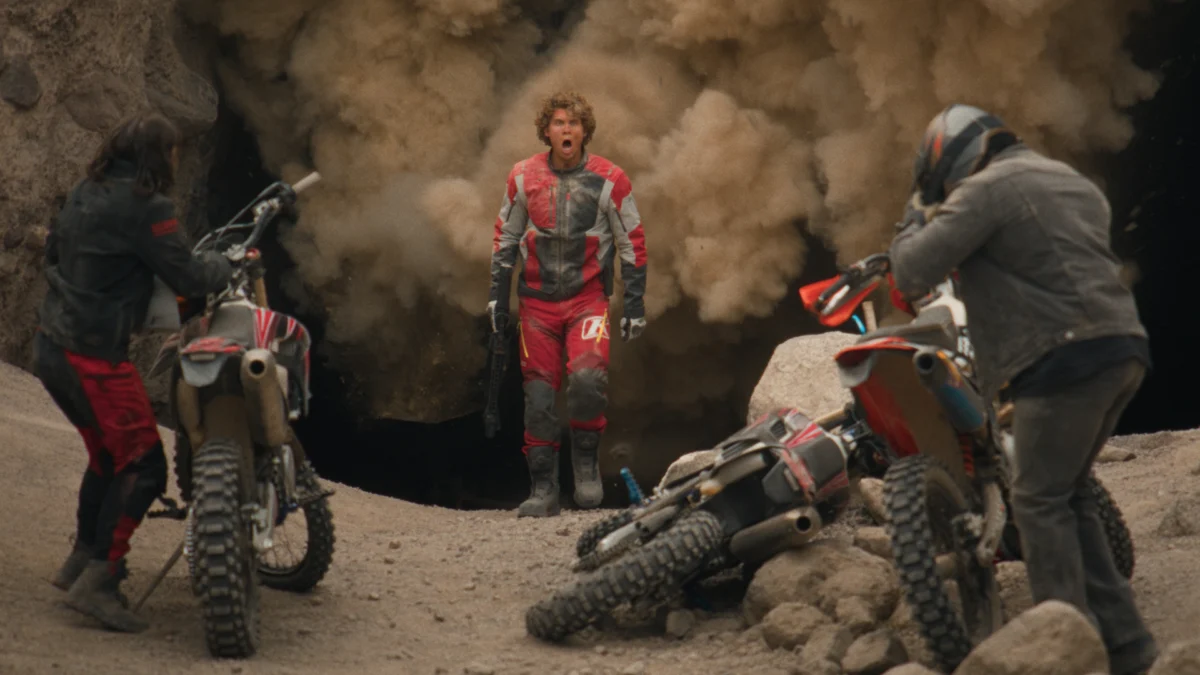
The main event, Whiskey Throttle, did not disappoint. Directed by Jacob Schwarz, the film is a relentless, high-speed chase through the Utah desert, following a biker gang in pursuit of a mysterious rider who has assassinated a cartel leader and made off with a high-value crypto wallet.
The film serves as a visceral reminder of the power of practical stunt work. Eschewing the weightless, often sterile look of digital effects, Whiskey Throttle leans into the grit of real motorcycles kicking up real sand. The camerawork was a standout feature, capturing the speed and intensity of the desert landscape with a dynamic flair that kept the audience on the edge of their seats. Every explosion and stunt sequence was met with enthusiastic cheers, validating the production’s commitment to "old school" filmmaking techniques.
Official Responses and Industry Implications
The post-screening Q&A provided a glimpse into the collaborative ecosystem that made Whiskey Throttle possible. Producer Dave Hunter, representing the Utah-based banner Intension Industries, emphasized the deeply personal nature of the project. "My entire family is involved," Hunter noted, highlighting that his children served as the stunt riders for the production. "We had everybody that we knew involved in this film."
This sentiment was echoed by Derek Mellus, Production Manager for the Utah Film Commission. Mellus praised the production for its tactical use of the state’s diverse geography, which remains one of the most underrated assets in the film industry.
"If you have a road movie, you should be shooting it in Utah," Mellus told Variety. "Whether it’s going to higher elevation or to the deserts or to southern Utah, Red Rocks, we have it all here."
The implication of such a successful premiere is clear: Utah’s film infrastructure is maturing. While larger festivals may grab headlines, the local industry is quietly building a self-sustaining ecosystem where familial support, state-level incentives, and technical expertise converge to create globally viable content.
Implications for the Future of Independent Film
As the night concluded, the energy in the Velour Live Music Gallery remained palpable. While Jonathan Martin eventually had to encourage the audience to continue their conversations outside—to accommodate a packed late-night screening—the buzz was infectious.
The success of the opening night of FilmQuest 2024 suggests a significant shift in the independent film landscape. By doubling down on the human element, fostering local talent, and championing practical, high-quality production values, the festival is positioning itself as a vital stronghold for creators who are disillusioned with the homogenization of mainstream cinema.
The film Whiskey Throttle, now represented for sales by Scatena & Rosner Films, is poised to carry this momentum forward. It stands as a proof-of-concept for what can be achieved when a community invests in its own backyard. As FilmQuest moves into its second decade, it is clear that the festival is not just a place to watch movies; it is a laboratory for the future of independent storytelling, one that is firmly, and proudly, rooted in Utah.
