
Aaron Sorkin Refines a Modern Classic: Inside the Long-Awaited Broadway Revival of ‘A Few Good Men’
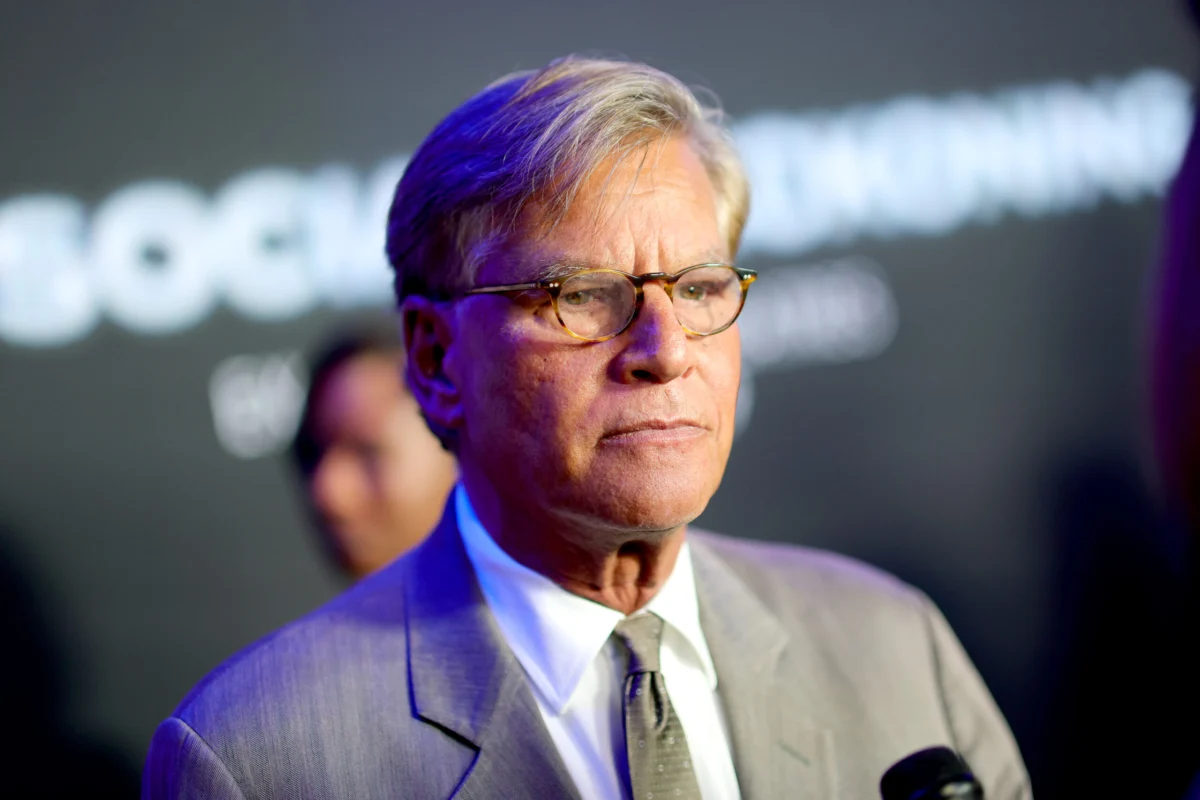
Nearly four decades after it first electrified audiences and cemented its place in American pop culture, A Few Good Men is returning to Broadway. But the military courtroom drama that launched Aaron Sorkin’s illustrious career is not merely stepping back onto the stage as a nostalgic artifact; it is arriving with a fresh coat of paint, a renewed sense of urgency, and a creative team determined to reexamine its core themes for a modern era.
Directed by Tony nominee Michael Arden, the revival is slated to begin preview performances on October 8 at Lincoln Center’s Vivian Beaumont Theater, with an official opening night scheduled for October 29. At a recent press conference introducing the cast and creative team, Sorkin admitted that despite the play’s iconic status—and the massive success of its 1992 Oscar-nominated film adaptation—he approached the revival with a writer’s critical eye, eager to polish a script he originally penned in his twenties.
Main Facts: The Return of a Masterpiece
The upcoming Lincoln Center production brings together a powerhouse creative team and an ensemble cast designed to honor Sorkin’s razor-sharp text while pushing its theatrical boundaries.
- The Creative Team: Written by Aaron Sorkin and directed by Michael Arden.
- Key Dates: Previews begin October 8; opening night is set for October 29 at the Vivian Beaumont Theater.
- Leading Cast: Tom Blyth stars as the ambitious Navy lawyer Lieutenant Daniel Kaffee, while longtime Sorkin collaborator Bradley Whitford takes on the formidable role of Colonel Nathan Jessep. They are joined by Krysta Rodriguez in a prominent ensemble role.
- The Scope: While the plot and character arcs remain unchanged, Sorkin has provided a script polish, tightening the dialogue and smoothing out clunky jokes from his original draft.
Chronology: From Debut to Broadway Revival
To understand the weight of this new production, it helps to look back at the trajectory of A Few Good Men and the enduring partnership between its creator and its new primary antagonist.
- 1989: A young, relatively unknown Aaron Sorkin writes A Few Good Men as his theatrical debut. The play becomes a massive Broadway hit, running for nearly 500 performances and earning Tom Hulce a Tony nomination for Best Actor in a Play. During this original run, a young actor named Bradley Whitford appears in a supporting role and serves as an understudy for the lead role of Kaffee.
- 1992: Rob Reiner directs the iconic feature film adaptation. Starring Tom Cruise as Kaffee, Demi Moore as Lt. Cmdr. Joanne Galloway, and Jack Nicholson as Col. Nathan Jessep, the film becomes a massive box-office hit and lands four Academy Award nominations, including Best Picture. Nicholson’s thunderous delivery of “You can’t handle the truth!” imprints itself permanently on the global lexicon.
- The Sorkin-Whitford Collaboration: Following their initial crossover on the play, Whitford and Sorkin embark on a decades-long creative partnership, collaborating across television masterworks including The West Wing and Studio 60 on the Sunset Strip.
- 2026: Sorkin and director Michael Arden spearhead the first major Broadway revival of the play in decades, treating the text not as a dusty museum piece, but as a living, breathing contemporary drama.
Supporting Data and Production Details
While theatrical revivals often lean heavily on reverence, Sorkin requested a unique approach from director Michael Arden: to treat the production as a brand-new play rather than a standard revival.
"I have been approached about revivals, and I’ve never really pursued it for a few reasons," Sorkin explained at the press conference. "One being that it was my first play; I was very young when I wrote it, and I thought I could do better. I asked Michael, ‘Could I please do a polish on the play?’"
Sorkin was quick to reassure fans that the core DNA of the story remains untouched. "I haven’t changed the plot or the characters," he noted. "It’s honestly just a dialogue polish; jokes that were clunkier are less clunky now."

Most importantly, the play’s legendary climax remains fully intact. Audiences can rest easy knowing that the iconic confrontation between Kaffee and Jessep—culminating in the immortal line "You can’t handle the truth!"—will be delivered by Bradley Whitford.
Speaking with press following the announcement, co-star Krysta Rodriguez praised Whitford’s fearless embrace of the heavy burden. "We had our first read-through, and at intermission I said, ‘I’m so glad Brad’s the only one who has got something to worry about. He’s got to deliver that line in about 40 minutes!’" Rodriguez teased. "And he takes that on with joy and with character—it’s perfect for our play."
For Whitford, stepping into the role immortalized by Jack Nicholson is the culmination of a full-circle moment. Having watched the play from the inside during its 1989 run, he was an immediate "yes" when Sorkin and Arden approached him.
"When you’re a writer and you find an actor like that, you handcuff them to a radiator and hope to work with them always," Sorkin joked of their 37-year working relationship.
Official Responses and Creative Vision
Director Michael Arden, fresh off a celebrated run directing the musical version of The Lost Boys—which earned him Tony recognition for his maximalist, visually stunning staging—brings a similarly ambitious aesthetic to Lincoln Center. Arden has promised a version of A Few Good Men that is "both epic and intimate in its scale."
"We wanted to try to give the play a visual gravitas, dexterity and colossal nature in the way that the text has," Arden explained. "We’re just chasing the great words of Aaron Sorkin with this design. You can expect something that’s really unforgettable visually. It’s really exciting, because you think about a play that really touches on how enormous the military is, and we get to echo that. It’s exciting to see these artists come together and create something that feels hopefully both operatic, cinematic, and incredibly personal—just like the language."
The production’s design philosophy aims to mirror the psychological heft of the script, blending the macro-level weight of military bureaucracy with the micro-level human tragedies that drive the plot forward.

Implications: A Timely Interrogation of Power and Law
Beyond the thrill of star-studded casting and sharp dialogue polishes, the 2026 revival of A Few Good Men arrives at a moment of profound global anxiety regarding institutional power, ethics, and accountability. Both Sorkin and Whitford noted that the play’s central moral questions feel sharper and more dangerous today than they did in the late 1980s.
"Suddenly we’re living in a world where there’s controversy about obeying illegal orders," Whitford observed, pointing to modern political and social shifts.
The actor expanded on the philosophical underpinnings of his character, Col. Jessep, connecting the marine colonel’s rigid worldview to larger global conflicts. "I think it goes to a very deep argument that we’re having in this country and in the world. How are we going to make it work on this shrinking little planet? Is it going to be through cooperation or agreements to obey the laws and use a legal system to arbitrate things that we disagree about? Or is it about dominance and obliteration? I think you can’t kill your way to a better future."
To help ground his performance, Whitford has also drawn inspiration from an unexpected literary source: Margaret Atwood. Referencing his time working on Hulu’s adaptation of The Handmaid’s Tale, Whitford shared a haunting quote from the author that has stuck with him throughout rehearsals: "It’s very hard for us to accept the fact that it was fun to be a fascist."
"I think about that playing Jessep," Whitford said. "Aaron cannot write an irony-deficient character, and it’s a very interesting mix of disturbing questions with a very entertaining evening [at the theater]."
As tickets go on sale and anticipation builds for the Lincoln Center engagement, the revival of A Few Good Men is shaping up to be far more than a nostalgia trip for theatergoers of a certain age. By pairing Sorkin’s freshly polished, razor-sharp dialogue with Arden’s visionary staging and a cast anchored by industry veterans like Whitford and exciting rising stars like Tom Blyth, this production promises to remind Broadway why the battle between institutional power and individual responsibility is a story that never grows old.
