
The Ghost of Rushville: Decoding the "Bad Optics" of Lanterns Episode 6
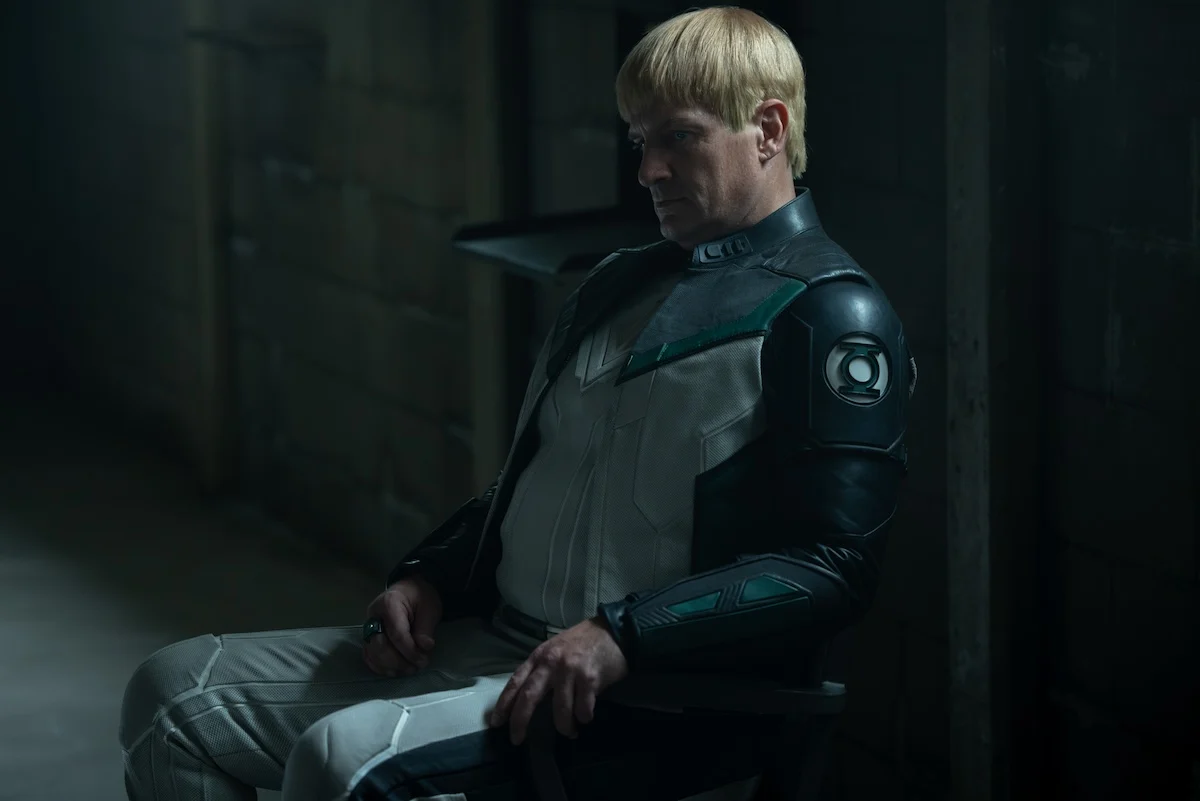
[Editor’s note: The following analysis contains significant spoilers for "Lanterns" Episode 6, "Bad Optics," including the full details of the climactic developments.]
The opening lines of Lanterns were always meant to haunt us. "Shit, am I dead?" the Hal-o-gram asked in the series premiere—a piece of meta-narrative foreshadowing that landed with visceral impact when the audience was confronted with the physical reality of Hal Jordan’s corpse. But as the sixth episode, "Bad Optics," draws to a close, the digital construct of Jordan offers a new, more weary reaction upon viewing his own exhumed remains: "Goddamnit."
While the mortal coil of Hal Jordan may be finished, the creative team behind Lanterns has made the bold, arguably genius decision to keep Kyle Chandler’s presence central to the narrative. By reviving Hal’s "backup consciousness," the show has effectively turned the mentor-mentee dynamic on its head. Hal is now his former protégé’s assistant, a digital specter navigating the moral wreckage of a decade-old tragedy. As John Stewart (Aaron Pierre) ventures deeper into the heart of the mystery surrounding Jordan’s demise, the series is evolving into a complex character study about accountability, the burden of legacy, and the corrosive nature of secrets in a dying town.

Main Facts: The Resurrection of a Digital Mentor
The central conceit of "Bad Optics" is the forced partnership between the living John Stewart and the digitized, flickering consciousness of Hal Jordan. After Stewart secures the return of Jordan’s ring—thanks to a begrudging assist from Guy Gardner (Nathan Fillion)—he takes the illicit step of activating the backup.
This isn’t just a technical gimmick; it is a narrative pivot. For five episodes, John Stewart has been the brooding center of the show, a man defined by his distance from the power he wields and the town that fears him. By tethering him to the Hal-o-gram, the writers are forcing Stewart to confront the very man he spent years resenting. The Hal-o-gram is not merely a database; it is a repository of Jordan’s wit, his ego, and his hidden regrets. As Stewart attempts to unlock the secrets of "The Fortress of Storage," he is forced to rely on a man who, in life, was his greatest obstacle and his most enigmatic superior.
Chronology: The Last Night in Rushville
The episode’s structure serves as a masterful exercise in non-linear tension. Through a series of flashbacks, we finally gain clarity on the final hours of Hal Jordan’s life. The night of his death, Jordan was not the reclusive hero of legend, nor the arrogant pilot of his youth. He was a man seeking a form of absolution that he knew was likely unattainable.

John Stewart, believing a lie fed to him by others, drove to Rushville that night expecting a sincere apology from his former mentor. What he found instead was a man who had accepted the weight of his own destruction. The two engaged in a heated debate at a local diner, a scene that stands as one of the most emotionally charged in the series to date.
Jordan’s insistence that he had "taken the fall" for the destruction of the town—serving ten years in prison—was met with Stewart’s cold, hard reality: "No, you didn’t take the fall. You fell." The dialogue crackled with years of unspoken resentment. Yet, before the night ended, Jordan offered a desperate, ominous warning: "Don’t tell anyone you were here. Please. Nobody." Whether this was an act of genuine protection for Stewart or a strategic move to keep his own investigation into the town’s decay clean remains the primary point of contention. Shortly after Stewart left, the man who had been going door-to-door, apologizing to the families he ruined, was dead.
Supporting Data: The Suspects and the Scrutiny
With the mystery of the murder now the driving force of the back half of the season, the episode meticulously categorizes the suspects.

- Sinestro: The lingering specter of the former mentor looms large. With news that Sinestro has escaped his space prison, he emerges as the most viable antagonist. His history of urging Jordan to take lethal action against Stewart suggests a motive that extends beyond mere professional rivalry.
- Noah: The son of Sheriff Kane has undergone a transformation that feels almost too calculated. From a child witness to a football star with political ambitions, his trajectory mirrors the "path to power" that Jordan warned about regarding the Manhunters. If Noah is indeed an asset of the enemy, he had every reason to eliminate the one man who understood the nature of his infiltration.
- Sheriff Kane: Despite the rapport she built with Jordan, her proximity to the scene and her role as the town’s gatekeeper make her a person of interest. Her grief may be genuine, but as Stewart notes, "You’re too real to fake cry," a defense that feels intentionally fragile.
- John Stewart: Though the narrative heavily implies his innocence, the lingering question of what transpired in those "lost hours" between his departure and the discovery of the body keeps the audience on edge.
Official Responses and Thematic Implications
The reaction to the episode has been swift, with particular focus on the "bad optics" of the show’s title. The phrase serves a double purpose: it references the literal investigation into a crime, but also the meta-commentary on the series itself. Is it problematic to center a story about a young Black hero on the legacy of a white mentor?
The writers, Justin Britt-Gibson and Damon Lindelof, seem to be addressing this head-on. By showing us that Jordan spent his final days "humbled," performing menial tasks for the people he harmed, the show is actively deconstructing the "white savior" trope. Jordan is not a hero to the citizens of Rushville; he is a nuisance, a weed that refused to be pulled. The show acknowledges that the power dynamic between Stewart and Jordan was fundamentally flawed, and by making the mentor a "ghost in the machine," they are allowing Stewart to move past the shadow of his predecessor.
Furthermore, the involvement of Carol Ferris (Amie MacKenzie) provides an essential emotional anchor. Her assertion that "he liked you, John, and I bet he never said it" reframes the entire mentor-mentee relationship. It suggests that Jordan’s cruelty was a mask for a deep-seated professional insecurity—a classic "divorced guy" energy that Chandler plays with devastating vulnerability.

The Future of the Force
As we move toward the season finale, the implications of this digital resurrection are profound. Can John Stewart truly become the Green Lantern the universe needs while tethered to the consciousness of the man who arguably broke the system?
The episode ends with the stark realization that Stewart is, in many ways, just as trapped in Rushville as Jordan was. As his brother Marcus poignantly notes, "You’ve been stuck in Rushville for 10 years, and you ain’t leaving until you finish whatever it is you and Hal motherfucking Jordan started out there."
The "Hal-o-gram" is not just a plot device; it is a mirror. It forces John Stewart to look at the man he once was, the man he once looked up to, and the man he is terrified of becoming. If the series is to find its footing for a potential second season, it must answer whether Stewart can integrate the lessons of the past without becoming consumed by them. For now, the "Bad Optics" of the case are clear: in the world of Lanterns, justice is not a straight line, but a loop of unresolved trauma, and the only way out is through the digital ghost of the man who started it all.

As the credits rolled on this B+ installment, the audience is left with one lingering question: Is the Hal-o-gram helping John solve the murder, or is it leading him into a trap set ten years ago? The answer, as always in this town, is likely buried deeper than the grave.
