
Stepping Out of the Shadows: Bringing Mary Bennet to Life in ‘The Other Bennet Sister’
In the sprawling, vibrant landscape of Jane Austen’s Pride and Prejudice, the Bennet sisters are etched into the public consciousness with distinct archetypes: the spirited Elizabeth, the beautiful Jane, the flighty Lydia, and the impressionable Kitty. Then, there is Mary—the scholarly, often misunderstood middle sister, frequently relegated to the background of the narrative, noted only for her clumsy piano playing or her pedantic moralizing.
However, in the new adaptation The Other Bennet Sister, created by Sarah Quintrell and based on the acclaimed novel by Janice Hadlow, the spotlight finally shifts. This production seeks to dismantle the caricature of Mary, offering a profound, nuanced exploration of what it meant to be an "unremarkable" woman in Regency England. In a recent episode of In Conversation, hosted by Critics Choice member Katey Rich, the cast and creators gathered to discuss the intricate process of breathing life into one of literature’s most overlooked figures.
The Core Narrative: Redefining the Middle Child
The Other Bennet Sister is not merely a retelling of familiar events; it is an origin story of self-actualization. The series centers on Mary Bennet, portrayed with poignant restraint by Ella Bruccoleri. Unlike her siblings, who are defined by their beauty or their social maneuvers, Mary is defined by her intellectual curiosity and her profound sense of isolation.
The narrative arc follows Mary as she navigates the suffocating expectations of Longbourn. In a household where the primary currency is marriage, Mary finds herself bankrupt. She is neither a prize for a suitor nor a participant in the social games that dominate her sisters’ lives. The story gains significant momentum when Mary moves to London—a departure that serves as the catalyst for her evolution. Away from the watchful, often critical eye of her mother and the towering shadow of Elizabeth, Mary begins to cultivate a life defined by personal agency, intellectual companionship, and the daunting, exhilarating prospect of self-discovery.
A Chronology of Development: From Page to Screen
The journey of The Other Bennet Sister from the bookshelf to the screen has been a meticulous endeavor.
- The Source Material: Janice Hadlow’s novel was published to critical acclaim, praised for its "rehabilitative" approach to Mary Bennet. Hadlow spent years researching the constraints of the era, focusing on the lack of social capital for women who did not conform to the beauty standards of the time.
- Adaptation Phase: Sarah Quintrell was tasked with the immense challenge of expanding the world of Longbourn while keeping the character study intimate. The script focused on the internal monologue of Mary, translating her intellectual life into visual storytelling.
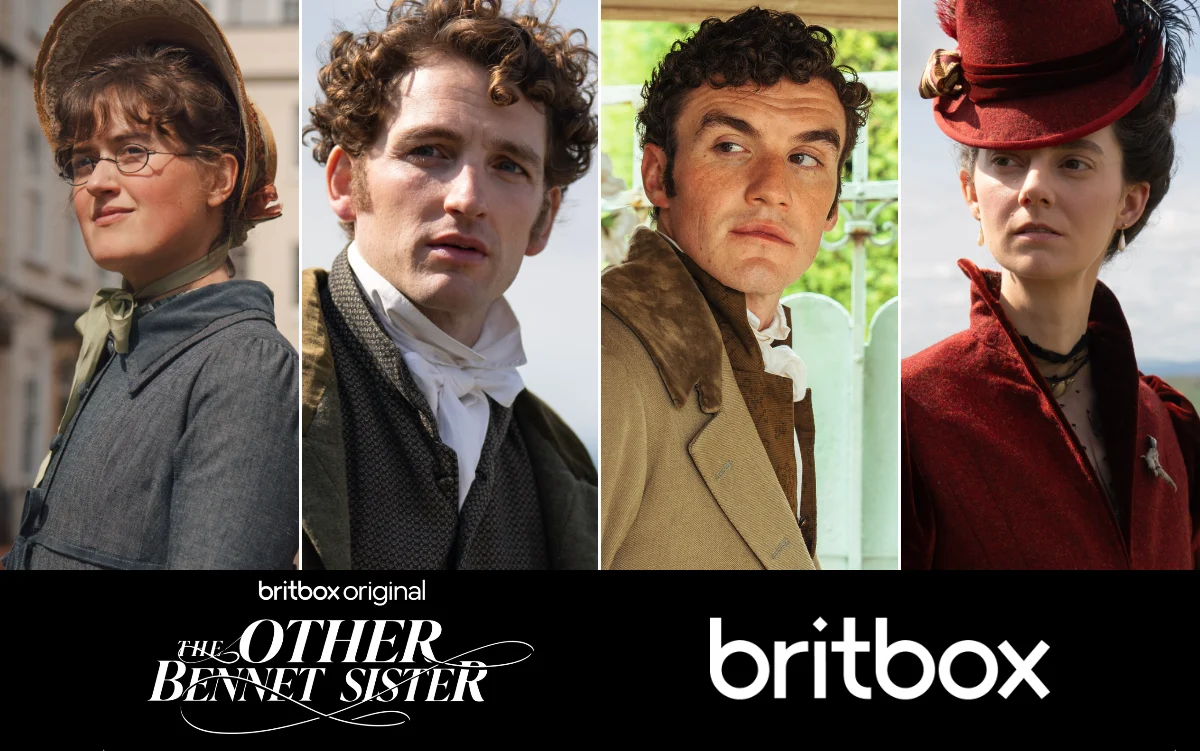
- Casting and Pre-Production: The production team sought actors who could balance the period-accurate sensibilities with the modern, humanizing themes of the script. Ella Bruccoleri was cast to embody Mary’s quiet strength, while Dónal Finn (Mr. Hayward), Laurie Davidson (Mr. Ryder), and Tanya Reynolds (Caroline Bingley) were brought on to represent the multifaceted pressures of the society Mary inhabits.
- Production: Filming took place across various period-accurate locations in the UK, designed to contrast the claustrophobic nature of the Bennet estate with the expansive, albeit dangerous, potential of London.
The Ensemble: Supporting the Protagonist’s Journey
A series is only as strong as its ensemble, and the In Conversation panel highlighted how each character acts as a mirror for Mary’s internal growth.
Ella Bruccoleri as Mary Bennet
Bruccoleri describes her portrayal of Mary as an exercise in "finding the music in the silence." She emphasizes that Mary’s pedantry is not a personality flaw, but a defense mechanism—a way to exert control in a world that consistently ignores her.
Tanya Reynolds as Caroline Bingley
Reynolds provides a fascinating foil to Mary. While Mary is a woman trying to find her place, Caroline Bingley is a woman desperately trying to keep hers. Reynolds discusses the "vulnerability masked by malice" that defines her character, providing a necessary tension that forces Mary to define her own moral compass against the backdrop of superficial social climbing.
Dónal Finn and Laurie Davidson
As Mr. Hayward and Mr. Ryder, Finn and Davidson represent the shifting landscape of masculine expectations in the series. They interact with Mary not as a marriage prospect, but as a peer—a revolutionary dynamic for the character. Their performances highlight the "unspoken longing" that resides in the margins of the story, showing that while Mary learns to love herself, she also learns to navigate the complexities of platonic and romantic intimacy.
Official Responses and Creative Intent
During the In Conversation session, creator Sarah Quintrell addressed the necessity of expanding the Austen canon. "We aren’t trying to ‘fix’ Jane Austen," Quintrell noted. "We are simply giving a voice to the person who was always in the room but never heard."
The cast echoed this sentiment, highlighting the relevance of Mary’s journey to modern audiences. Ella Bruccoleri noted that the feeling of being an "outsider" or the "lesser" sibling is a universal human experience. By stripping away the irony often used to describe Mary in Pride and Prejudice, the production invites the audience to empathize with her.
Critics have lauded the production’s commitment to historical accuracy, noting that the wardrobe, the dialogue, and the social mores are executed with a precision that highlights the starkness of Mary’s isolation. The creative team aimed to ensure that the audience feels the weight of the "marriage market," treating it as a high-stakes, life-or-death economic reality rather than a romantic comedy trope.
Implications: The Legacy of the "Overlooked"
The cultural implications of The Other Bennet Sister are significant. By centering a narrative on a woman who defies the traditional Regency heroine archetype, the production challenges the way we view the "wallflower."
1. The Deconstruction of the "Plain" Woman
Historically, literature and film have often used the "plain" sister as a punchline. The Other Bennet Sister forces a reckoning with this trope, asking why society values certain types of femininity over others. It suggests that intellectual depth is a form of beauty, one that requires a different kind of recognition.
2. Agency in a Constrained Society
The series serves as a case study in female agency. Mary’s discovery of her voice—both literally and metaphorically—is a testament to the idea that self-actualization is not dependent on marriage or social standing, but on the courage to step outside of one’s prescribed environment.
3. The Future of Period Dramas
This production sets a new standard for period adaptations. Rather than focusing on the "great romances" of the landed gentry, it pivots toward the psychological interiority of characters who were previously sidelined. It paves the way for future stories that explore the lives of the "other" characters in classic literature.
Conclusion: A New Perspective on a Classic
The Other Bennet Sister is more than just a companion piece to a classic novel; it is a profound reclamation of a story that had been told from only one angle for over two centuries. Through the performances of Ella Bruccoleri, Tanya Reynolds, Dónal Finn, and Laurie Davidson, the series transforms Mary Bennet from a footnote into a fully realized, complex human being.
As the cast discussed in their conversation with Katey Rich, the ultimate goal of the project was to provide a sense of agency to those who feel they are living in the shadows of others. In the final act, when Mary chooses to define her life on her own terms, she does so not just for herself, but for every viewer who has ever felt overlooked.
The series serves as a poignant reminder that while we may not be the protagonists of everyone else’s story, we are, unequivocally, the authors of our own. By shifting the focus, The Other Bennet Sister has not only revitalized a classic narrative but has also opened a door for a more inclusive, empathetic exploration of literature’s most iconic worlds.
