
The Visionary Lens Falls Silent: Nicolas Roeg, Master of Cinematic Fragmentation and Psychological Suspense, Dies at 90
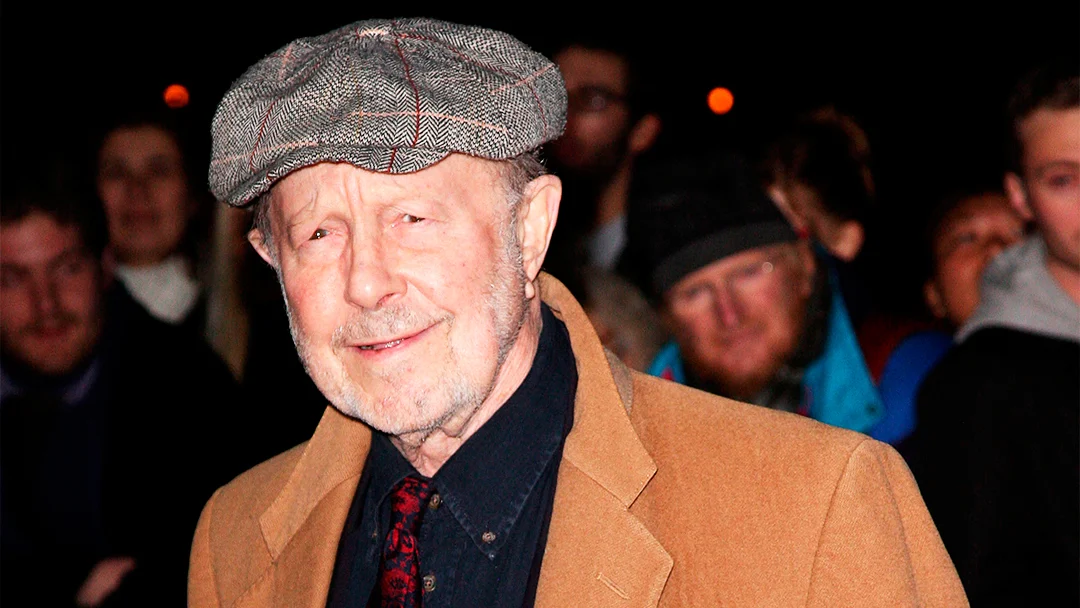
LONDON — Nicolas Roeg, the pioneering British film director and peerless cinematographer whose dizzying, fractured narratives and moody, psychologically acute aesthetics fundamentally reshaped modern cinema, has died at the age of 90. His son, Nicolas Roeg Jr., confirmed to the BBC that the legendary filmmaker passed away peacefully on Friday night.
Throughout a career that spanned more than half a century, Roeg emerged as one of the most daring visual stylists of the 20th century. Working with a distinctively dark palette, he tore down traditional linear storytelling, replacing it with associative editing, temporal shifts, and hypnotic visual motifs that left indelible marks on generations of auteurs. Filmmakers of subsequent decades, including Danny Boyle, Steven Soderbergh, and Christopher Nolan, frequently cited Roeg’s daring structural experiments as a profound influence on their own approaches to narrative.
From his early days grinding through the ranks of the British film industry to his status as an uncompromising arthouse visionary—and eventually, a master of subversive studio filmmaking—Roeg’s journey was defined by a refusal to pander to conventional cinematic grammar. He challenged audiences to piece together the fragments of his stories, treating film not merely as a medium for passive observation, but as an immersive, psychological experience.
Chronology of a Maverick: From Clapper Boy to Master Auteur
The Apprenticeship of an Eye (1928–1968)
Born Nicolas Jack Roeg in London on May 15, 1928, the future director’s entry into the film industry was entirely organic. Following his service in the British military, where he honed his technical understanding of visual projection as a projectionist, Roeg took a job in 1947 as an office boy and apprentice film editor. By 1950, he had secured a position at MGM’s London Studios, steadily ascending the ladder from clapper boy and assistant camera operator to lighting cameraman.
During the 1950s, Roeg contributed to a wide range of productions, serving as a camera operator on major international productions like George Cukor’s Bhowani Junction (1956) and Ken Hughes’ The Trials of Oscar Wilde (1960), alongside various low-budget quota quickies like Jazz Boat and The Great Van Robbery.
Roeg’s breakthrough moment as a cinematographer came when he served as the second-unit lenser on David Lean’s monumental 1962 epic Lawrence of Arabia. His striking eye for composition and natural light caught the attention of top-tier directors. Throughout the 1960s, Roeg became one of the most sought-after cinematographers in the business, lensing a string of visually prestigious films that included Roger Corman’s gothic horror The Masque of the Red Death (1964), François Truffaut’s dystopian classic Fahrenheit 451 (1966), John Schlesinger’s sweeping romance Far From the Madding Crowd (1967), and Richard Lester’s bittersweet drama Petulia (1968).
The Directorial Explosion and the 1970s Masterpieces
Having mastered the camera, Roeg felt constrained by merely executing other directors’ visions. He transitioned to the director’s chair in 1970, co-directing Performance with Donald Cammell. Starring Mick Jagger in his cinematic debut alongside James Fox, the film was an explosive, hallucinogenic deep-dive into identity, criminality, and counterculture subversion in swinging London.
Warner Bros. executives were so unnerved by the film’s nonlinear editing, sexual ambiguity, and fractured narrative that they initially refused to release it, fearing it would be entirely incomprehensible to mainstream audiences. Following recuts and a delayed release, Performance initially drew modest box-office returns, but decades later, it is celebrated as an undisputed masterpiece of British cinema.
Roeg quickly followed this with Walkabout (1971), a transcendent odyssey across the Australian Outback that he directed and shot himself. The narrative—following two privileged siblings abandoned in the desert who are aided by an Aboriginal youth on his traditional walkabout—cemented Roeg’s fascination with cultural alienation and mysticism.
In 1973, Roeg delivered what many consider his artistic zenith: Don’t Look Now, an occult psychological thriller set in a labyrinthine, watery Venice. Starring Julie Christie and Donald Sutherland as a grieving couple haunted by visions of their drowned daughter, the film utilized lightning-fast cross-cutting and an unsettling sense of dread to explore grief and premonition. Although overshadowed at the box office that year by William Friedkin’s juggernaut The Exorcist, Don’t Look Now has steadily grown in stature to be regarded as one of the greatest horror films ever made.
Roeg rounded out his legendary 1970s run with The Man Who Fell to Earth (1976), casting rock icon David Bowie as Thomas Jerome Newton, an extraterrestrial stranded on a capitalist planet. Utilizing Bowie’s otherworldly persona and androgynous appeal, Roeg crafted a melancholic science fiction parable about addiction, corporate exploitation, and profound loneliness. Paramount Pictures executive Barry Diller reportedly recoiled at the finished film, refusing to pay for it, which forced an independent release. Like much of Roeg’s filmography, time proved the studio wrong, turning the film into a revered cult classic.
Genre Subversion and Studio Assignments (1980–1999)
The 1980s saw Roeg continue to challenge expectations, beginning with Bad Timing (1980), a disturbingly intimate, structurally fragmented romantic tragedy that marked his first collaboration with actress Theresa Russell, who would soon become his second wife. While films like Insignificance (1985)—which imagines a fictional encounter between Marilyn Einstein, Albert Einstein, Joe DiMaggio, and Senator Joseph McCarthy—and Eureka (1983) appealed primarily to niche arthouse crowds, Roeg also proved capable of handling more commercial material.
His most widely seen and commercially accessible work came in 1990 with The Witches, a dark adaptation of Roald Dahl’s children’s novel produced by Jim Henson and starring Anjelica Huston as the Grand High Witch. The film became notorious for terrifying an entire generation of children with its uncompromising practical effects and macabre tone. Interestingly, author Roald Dahl was reportedly horrified by the cinematic adaptation because Roeg altered his original, bleaker book ending.
As the 1990s progressed, Roeg shifted his focus toward television movies and prestige international dramas, directing adaptations like Heart of Darkness (1993) starring Tim Roth and John Malkovich, Full Body Massage (1995), and the biblical epic Samson and Delilah (1996).
Later Years and Final Projects (2000–2018)
Roeg made a rare return to the big screen in 2007 with Puffball: The Devil’s Eyeball, a psychological thriller adapted from Fay Weldon’s novel, though it received limited distribution and a muted critical response.
Despite his declining output on screen in his later decades, his historical contributions to the medium were continuously celebrated by the international film community. In 1994, the British Film Institute (BFI) made Roeg a Fellow, honoring his lifetime of artistic risks. In 2011, the London Film Critics Circle presented him with the Dilys Powell Award for Excellence in Film. He also shared his wealth of wisdom and memories in his 2013 autobiography, The World Is Ever Changing.
Supporting Data: Selected Filmography & Accolades
- Cinematography Highlights:
- The Masque of the Red Death (1964)
- Fahrenheit 451 (1966)
- Far From the Madding Crowd (1967)
- Petulia (1968)
- Directorial Highlights:
- Performance (1970) — Co-directed with Donald Cammell
- Walkabout (1971)
- Don’t Look Now (1973)
- The Man Who Fell to Earth (1976)
- Bad Timing (1980)
- Eureka (1983)
- Insignificance (1985)
- The Witches (1990)
- Key Honors & Awards:
- British Film Institute (BFI) Fellowship (1994)
- London Film Critics Circle Dilys Powell Award (2011)
Official Responses and Tributes
The global film community reacted to the news of Roeg’s passing with an outpouring of grief, respect, and deep admiration for his singular artistic vision.
Filmmaker Edgar Wright took to social media to pay tribute, writing:
"Farewell Nicolas Roeg, one of the greatest directors and cinematographers of our country. A true master of cinematic time, space and psychology. Seek out his staggering run of films: Performance, Walkabout, Don’t Look Now, The Man Who Fell to Earth, Bad Timing…"
Director Duncan Jones, son of David Bowie, shared a personal memory of Roeg’s collaboration with his father:
"So sad to lose Nicolas Roeg. What an incredible talent. I’m so grateful he worked with my dad on The Man Who Fell to Earth; it remains one of the defining cinematic achievements of that era. Rest in peace."
Representatives from the British Film Institute released a statement highlighting his structural brilliance:
"Nicolas Roeg did not just make movies; he rebuilt the mechanics of cinematic perception. His fearlessness in breaking linear narrative opened up entirely new psychological dimensions for the medium. British cinema has lost a true original."
Implications: The Enduring Legacy of a Visual Icon
The death of Nicolas Roeg marks the closing chapter for a specific breed of British auteur—one who emerged from the technical trenches of studio backlots only to subvert the mainstream film industry from within.
Roeg’s insistence on trusting the intelligence of his audience set him apart in an era that increasingly favored clear-cut, exposition-heavy storytelling. By treating editing not as a mere tool for continuity, but as a mechanism to mirror human memory, trauma, and desire, he permanently altered the visual language of cinema.
His influence can be felt every time a modern thriller utilizes flash-forwards to portend doom, or when a science-fiction film opts for existential quietude over frantic spectacle. Nicolas Roeg’s films were demanding, beautiful, and deeply unsettling, ensuring that his celluloid legacy will continue to captivate, confound, and inspire cinephiles for generations to come.
Roeg is survived by his third wife, actress Harriet Harper; his four children from his first marriage to actress Susan Stephen—including producers Nicolas Roeg Jr. and Luc Roeg, and assistant directors Sholto J. Roeg and Waldo Roeg; and two children from his second marriage to actress Theresa Russell—actor Max Roeg and camera operator Statten Roeg.
