
Framerate Malpractice in 2026: The GoPro Mission 1 Pro ILS Controversy
In the fast-evolving landscape of professional video production, precision is not merely a preference—it is a technical necessity. As manufacturers race to push the boundaries of sensor technology and form factors, a persistent issue continues to plague the industry: the obfuscation of framerates. Despite industry-wide progress from major players like Blackmagic Design, Canon, Panasonic, and OBSBOT, GoPro has once again drawn the ire of professionals with the release of the new GoPro Mission 1 Pro ILS.
Priced at a premium MSRP of $699.99 (body-only), the Mission 1 Pro ILS arrives as a high-end tool, yet it carries over a legacy of "Framerate Malpractice"—a term coined to describe the deceptive labeling of non-integer framerates in camera menus. This ongoing oversight creates unnecessary friction for editors, producers, and camera operators, turning simple ingest workflows into complex technical troubleshooting sessions.
The Core of the Issue: Technical Deception
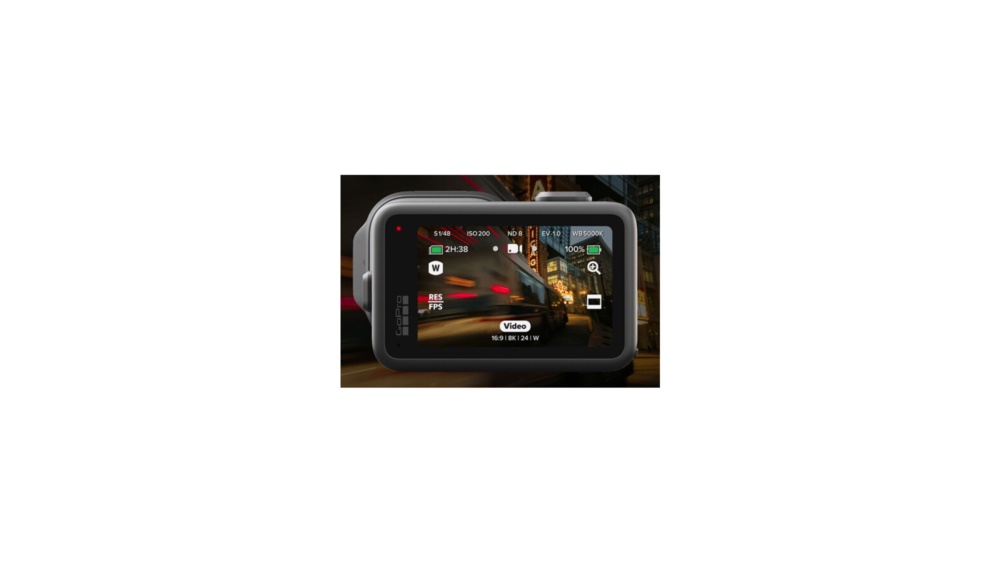
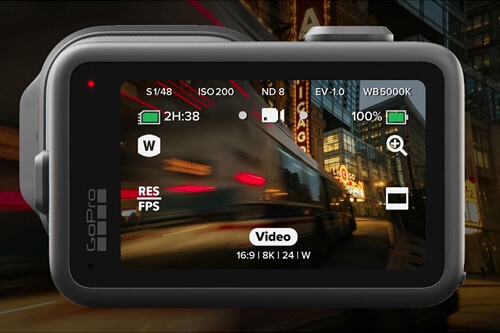
At the heart of the controversy is the camera’s menu system. While other reputable manufacturers have moved toward transparency—displaying true framerates to at least two decimal places (e.g., 23.976 fps, 59.94 fps)—GoPro continues to display these as simple integer values (e.g., 24, 60).
This is not a pedantic distinction. In the world of broadcast television and high-end digital cinema, the difference between 23.976 and 24, or 59.94 and 60, is the difference between a seamless multi-camera edit and a project riddled with audio-sync drift and dropped frames. By masking these fractional rates as integers, GoPro is effectively misrepresenting the technical specifications of its own hardware.
Defining the Standards
To understand the gravity of this "malpractice," one must look at the standard rates currently employed across the industry:
- Broadcast Television (Region Dependent): 23.976, 29.97, and 59.94 fps (legacy NTSC/PAL-M) and 25/50 fps (PAL/SECAM).
- DCI Digital Cinema: Exact 24 fps.
- Gaming and High-Frame-Rate Media: Exact 30 and 60 fps.
When a camera menu labels a 23.976 signal as "24," it misleads the user, often leading to incorrect sequence settings in non-linear editing (NLE) software. While the internet is more forgiving of these discrepancies than traditional over-the-air broadcast, professional consistency is the bedrock of quality production. When mixing footage from a properly calibrated Blackmagic camera with a GoPro, the discrepancy becomes immediately apparent, causing "havoc" in post-production.
Chronology of a Persistent Problem
The history of framerate issues in consumer-to-prosumer cameras is a long and frustrating one. For years, manufacturers ignored the distinction between fractional and integer rates, treating them as interchangeable under the umbrella of "24p" or "60p."
However, as cameras like the GoPro Mission 1 Pro ILS have moved from simple "action cams" into the realm of professional production—often used as crash cams on high-end film sets—the "good enough" approach of the past is no longer acceptable.
- Early 2020s: Industry experts and technical reviewers began documenting the rise of "framerate obfuscation," where manufacturers attempted to simplify user interfaces at the expense of technical accuracy.
- 2024-2025: The industry saw a wave of positive change. Manufacturers like Panasonic and Canon updated their firmware to reflect true decimal rates, acknowledging that their users were no longer just hobbyists, but seasoned professionals.
- 2026 (The Current State): The release of the GoPro Mission 1 Pro ILS serves as a regression. Despite the technical sophistication of the camera’s image processor, the UI remains anchored in the simplified, misleading conventions of a decade ago.
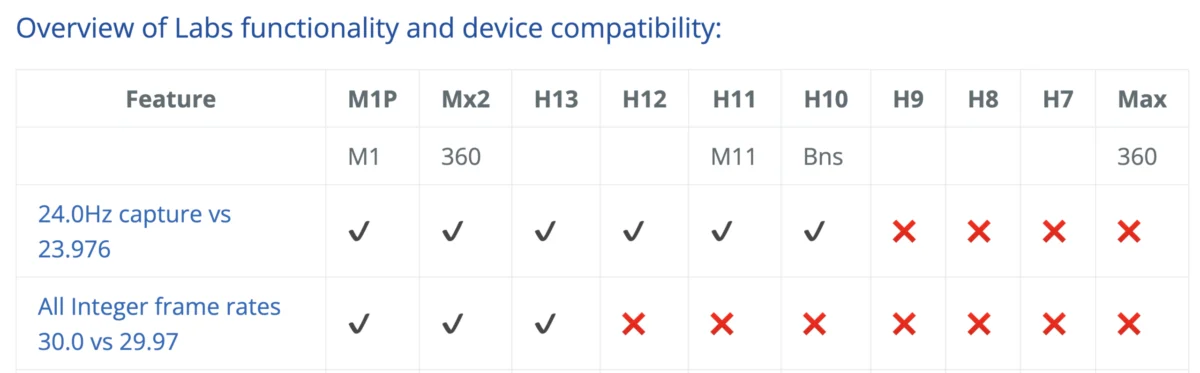
The "Post-Hack" Workaround: GoPro Labs
The existence of the GoPro Labs software serves as a tacit admission that the hardware is capable of better performance than what the stock menu allows. Through these experimental, user-downloadable tools, operators can modify the stock rates to function in true integer modes.
However, relying on a third-party, "hacked" firmware solution for basic professional functionality is a burden on the user. A professional camera should work accurately "out of the box." The fact that the user must seek out an experimental GitHub repository to achieve a standardized, professional-grade framerate is an indictment of the out-of-the-box user experience provided by GoPro.
Implications for the Professional Workflow
The fallout of this framerate mislabeling is felt most acutely in the edit suite.
1. Audio Drift
When a project is set to an exact 24 fps timeline, but the imported footage is actually 23.976, the audio will slowly lose synchronization over the duration of the clip. While some modern NLEs attempt to compensate for this, it often leads to unwanted interpolation or audio resampling, which degrades the final quality.
2. Multi-Camera Incompatibility
In a multi-camera environment, consistency is everything. If a main A-cam is outputting true 23.976 and the B-cam (the GoPro) is recorded at a mismatched or ambiguously labeled rate, the editor is forced to perform frame-rate conversion or "interpret footage" settings, which can introduce motion stutter or "judder."
3. Client Confusion
For freelance operators, the appearance of the menu on the back of the camera matters. When a client or a director asks for a specific framerate, and the camera display contradicts the reality of the captured file, it erodes trust. Accuracy in technical settings is part of the professional promise.
A Call for Transparency
The purpose of this critique is not to condemn GoPro for its hardware capabilities; the Mission 1 Pro ILS is, by many accounts, a powerful imaging device. The goal is to urge the manufacturer toward full transparency.
There is everything to gain by:
- Firmware Updates: Providing a simple update that enables the accurate display of fractional framerates in the primary menu.
- Professional Parity: Acknowledging that the "pro" in the camera’s name implies a professional-grade user interface.
- Standardization: Aligning with the industry-standard labeling conventions adopted by every other major manufacturer of professional video gear.
GoPro deserves credit for correctly implementing 25 and 50 fps modes (and their multiples) in their recent firmware, showing that they are capable of acknowledging regional broadcast standards. It is now time to extend that same level of care to the NTSC-derived rates that remain the most common source of error for global producers.
Conclusion
The "status quo" of the GoPro Mission 1 Pro ILS is one of unnecessary complexity. By continuing to display non-integer framerates as integers, GoPro is choosing simplicity for the casual user over accuracy for the professional.
In 2026, we have the technology to make this information clear, accessible, and accurate. A simple, free firmware update could bridge the gap between the camera’s current "deceptive" state and the professional standard that its users require. Until then, the "Framerate Malpractice" label remains, and the burden of technical correction continues to rest on the shoulders of the very people who rely on these cameras to tell their stories.
Disclaimer: None of the companies mentioned have paid for this content. The views expressed here are those of the author, based on technical testing and industry standards. For more information on professional video workflows, visit AllanTepper.com.
